acss-digest
Juba Keeps Promising Elections It Has Never Delivered
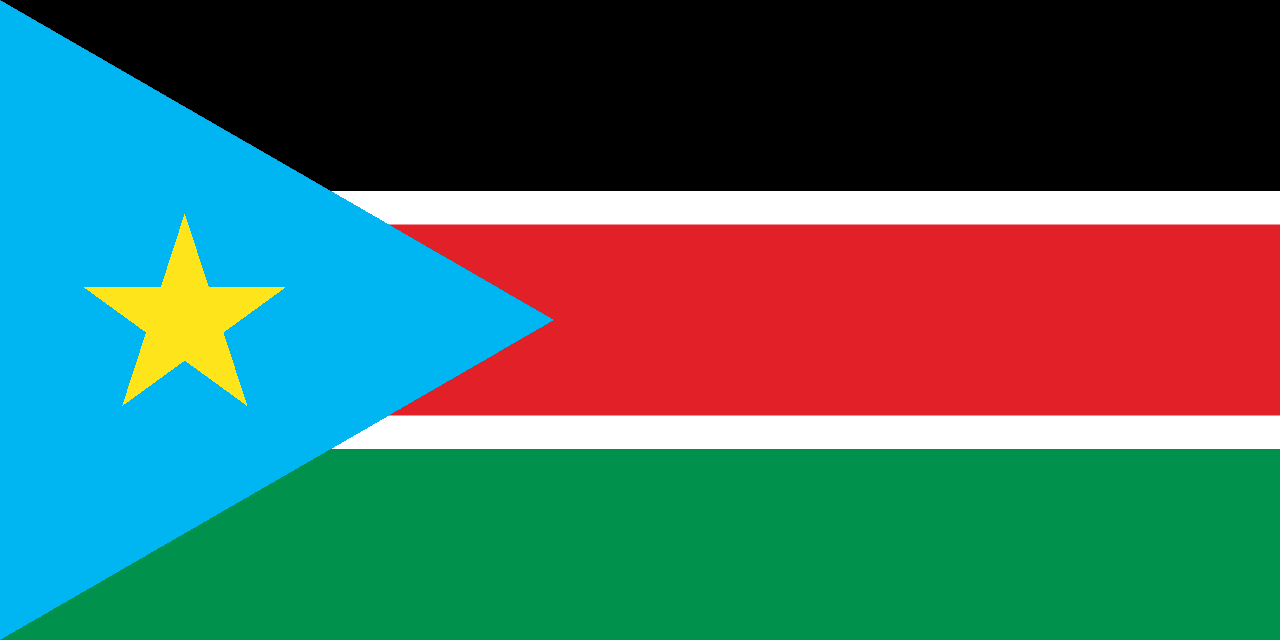
Ask a South Sudanese mother when she will finally be allowed to choose her government, and she may laugh. Not because she has stopped caring, but because she has heard the promise so often that it has worn thin. Elections were supposed to take place in 2015. Then they were pushed to 2018, then 2022, then 2024, and now the date stands at 22 December 2026. Each postponement arrives wrapped in the language of progress, and each one leaves another generation without a voice in the country it is supposed to govern.
This week, the National Elections Commission (NEC) gathered registered political parties and other stakeholders in Juba to brief them on the road to December. NEC Chairperson Gabriel Bol Deng told the room the commission was 80 percent ready and had secured funding, including for voter registration. Yet when party representatives pressed for the remaining steps and the deadlines attached to them, they came away empty-handed. Observers who spoke to Radio Tamazuj said the commission named no dates for the outstanding activities and offered no explanation of how it planned to meet the December deadline. Eighty percent of what? And what happens to the other twenty percent?
Those are not technical questions. They are the questions of a people who have been told, for more than a decade, that the next vote is almost ready.
Let us be precise about what is at stake. South Sudan became independent in 2011 after decades of war with Khartoum. Its founding promise was self-determination, a government accountable to its citizens. Instead, the country plunged into civil war in December 2013, and the violence that followed killed hundreds of thousands and displaced millions. The 2018 peace agreement, the Revitalised Agreement on the Resolution of the Conflict in South Sudan, was meant to end that cycle. Its implementation has been a parade of missed deadlines. The unified national army has never been fully formed. Former First Vice President Riek Machar has been detained and on trial since 2025, a fact that alone tells you how fragile the political space remains. How can anyone believe a credible election is coming when the country's main opposition figure sits behind bars?
The question also has a financial answer. Oil is the lifeblood of the South Sudanese state, providing the overwhelming share of government revenue. When the money that funds the state flows through a small circle of officials with little public accounting, elections become a threat rather than a formality. Every delayed vote is a vote for the status quo, and the status quo is enriching the people who hold the pumps and the ministries. A nation sitting on oil wealth should be the richest place in the region in terms of public services. Instead, its citizens face hunger, collapsing schools, and a currency that loses value month after month.
Now look at what the same week looked like elsewhere on the continent. Cape Verde, a small Atlantic archipelago with a fraction of South Sudan's population, is preparing to vote for its president on Sunday. José Maria Neves, backed by the African Party for the Independence of Cape Verde, is widely expected to win a second term. His challenger, Joana Rosa, is a former justice minister who would become the first woman to win the presidency there. The PAICV took 37 of the 72 seats in legislative elections in May, and its leader Francisco Carvalho became prime minister. Before that vote, the Movement for Democracy had governed for ten years. Power in Cape Verde has passed from one party to another through the ballot box for decades.
Notice what Cape Verde does not need. It does not need a commission to tell it that elections are "80 percent ready" in a press briefing that answers no questions. It does not need the leadership of a major party jailed to make the outcome look predetermined. Whoever wins on Sunday, the opposition exists, the count matters, and the losers can walk away and plan to win next time. That is the minimum of democracy. Cape Verde meets it. South Sudan has been promising it for over a decade.
Here is the uncomfortable truth that our leaders keep trying to bury. Elections are not a gift from the government to the people. They are a contract. The government holds power on loan from its citizens, and that loan comes due on a schedule set in law. When a commission cannot name the date of its own next step, it is not being cautious. It is hiding either incompetence or an unwillingness to let go.
So what must change? The first demand is simple: NEC must publish a complete, dated electoral calendar, covering voter registration, the delineation of constituencies, the printing and distribution of materials, the training of polling staff, the opening of nomination windows, and the publication of results. Every milestone should carry a date and a name of the official responsible. If the commission cannot publish that calendar, it should explain publicly why it cannot, and the regional and international community should treat that refusal as a signal of intent.
The second demand is that South Sudan's partners stop treating the postponements as routine. The African Union Peace and Security Council and the Intergovernmental Authority on Development, of which South Sudan is a member, should set measurable benchmarks for the December vote and tie continued diplomatic and financial engagement to meeting them. Donors who fund the NEC should demand the same transparency they would demand anywhere else. Money spent on an election that never happens is money stolen from the people it was meant to serve. The United Nations Security Council, which oversees the UN Mission in South Sudan, should insist that the mission's reporting on electoral readiness be public and specific.
The third demand is for the basic conditions of a free vote. That means releasing political prisoners, guaranteeing freedom of assembly and speech for opposition parties, allowing independent media to operate without fear, and opening the process to independent domestic observers. An election held under fear is not an election. It is a coronation.
Africa has examples of what good governance looks like, and they should embarrass leaders who claim the continent cannot manage it. Botswana has held regular elections since independence and built one of the continent's most respected economies on the back of a transparent approach to its diamond wealth. Mauritius has alternated power peacefully and grown from a sugar-dependent island into a diversified economy with strong institutions. Senegal offers the most recent lesson. In early 2024, President Macky Sall tried to postpone the presidential election. Senegal's Constitutional Council struck the decision down, and citizens filled the streets until the vote went ahead. Bassirou Diomaye Faye won in a peaceful transfer. Postponement is a choice, and it can be reversed by courts, parties, and people who refuse to be silenced.
We, the citizens of this continent, must stop accepting the language of "readiness" as a substitute for accountability. Diaspora South Sudanese should press their governments and the UN to demand a published calendar. Civil society groups inside the country should document every missed milestone and make the record public. Journalists, including those at Radio Tamazuj, should keep asking the questions the commission would rather avoid. Regional bodies must stop hiding behind diplomatic courtesy while a population is denied its basic rights.
The people of South Sudan did not fight for independence so that a handful of men could decide, year after year, whether they would ever be heard. They deserve a date they can plan around, an electoral process they can trust, and a government that answers to them. December 2026 is not a distant promise. It is a deadline. Demand the calendar. Demand the dates. Demand the vote. If the answer is another delay, make sure the whole continent hears about it.
Based on reporting by ACSS-EMAIL