sudan-conflict
Burhan and Hemedti Have Forced Twelve Million Sudanese From Their Homes
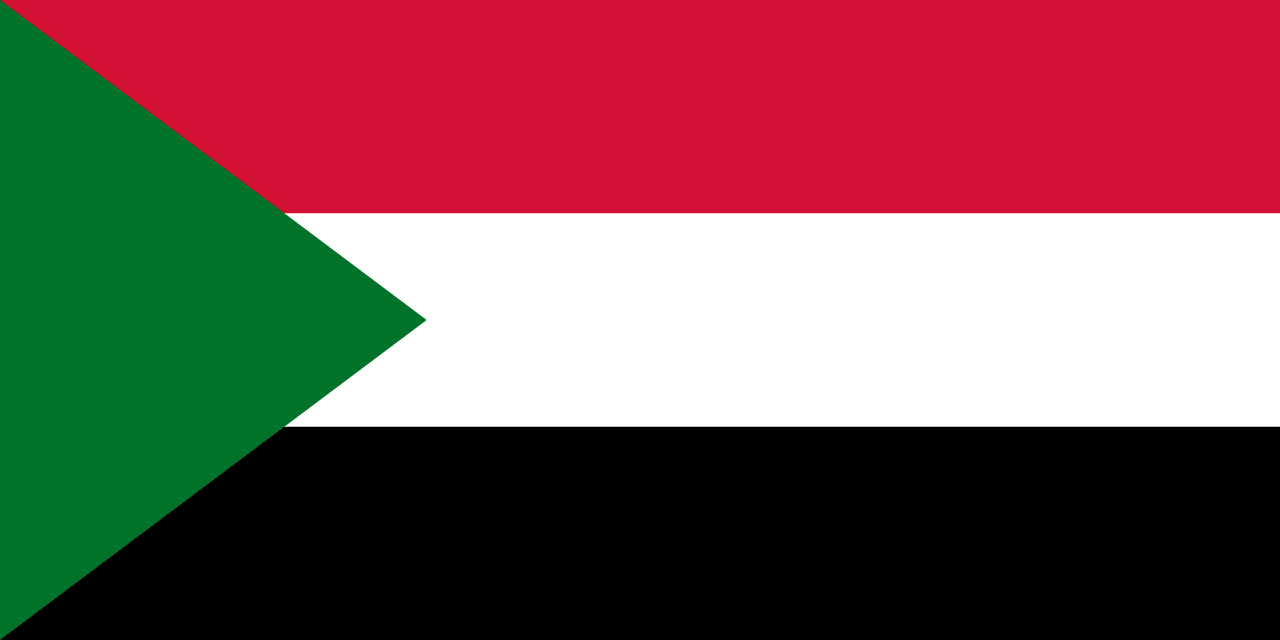
Picture a family packing what they can carry in the middle of the night. A mother ties the family's documents into a plastic bag. A father counts the children. They leave behind a house, a harvest, a school, and a name on a village register that may never mean anything again. This is not a scene from a history book. It has happened to millions of Sudanese since April 15, 2023, when the army under General Abdel Fattah al-Burhan and the paramilitary Rapid Support Forces under Mohamed Hamdan Dagalo, known as Hemedti, turned on each other and on the country.
By late 2025, UNHCR was counting more than 12 million people uprooted by this war. Roughly 9 million are displaced inside Sudan. Millions more have fled across borders into Chad, Egypt, South Sudan, Ethiopia, and Libya, often with nothing. Those are not abstractions. Each number is a family that once had a life and now has a tent, a queue for water, or a boat across a river at night.
Ask yourself what it takes to create a crisis of this size in under three years. It takes two men who decided that their ambitions were worth more than the lives of the people they were supposed to protect. It takes weapons arriving from outside, through supply chains that the world has been slow to name and slower to stop. And it takes a international community that writes statements of concern while the bodies pile up.
The atrocities are documented, not rumored. In El Fasher, the last major city of North Darfur to hold out against the RSF, the fall in October 2025 was followed by mass killings, sexual violence, and the destruction of hospitals and markets. Survivors described executions in their own neighborhoods. Independent investigators and UN experts have pointed to ethnically targeted killings reminiscent of the Darfur genocide of two decades ago. The Integrated Food Security Phase Classification, the international body that measures hunger, confirmed famine conditions in parts of Sudan in 2025, including in areas under siege. Famine is not a natural disaster when armies block roads, loot grain stores, and shell aid convoys. It is a weapon, and both sides have used it.
The UN Panel of Experts on Sudan has repeatedly reported on the flow of weapons and money into the conflict, including allegations that the United Arab Emirates has supplied the RSF through third countries, including Chad and Libya. The UAE denies these claims. But the pattern of gold exports, cross-border logistics, and battlefield firepower has drawn scrutiny from researchers and journalists who have tracked Sudanese gold moving through Gulf trading hubs. Meanwhile, the Sudanese Armed Forces have received support from Egypt, Iran, and Russia's shadow networks, while Moscow has sought a naval base on the Red Sea coast. Every one of these outside powers talks about stability. Not one of them has been willing to pay the real cost of stopping the guns.
Let us be clear about who is responsible. Burhan and Hemedti started this war. They chose to fight for control of the state, the security apparatus, and the gold mines instead of handing power to civilians. The RSF grew out of the Janjaweed militias that the Bashir regime unleashed on Darfur, and the army that Burhan commands is the same institution that protected Bashir's kleptocracy for thirty years. Sudan's democratic revolution in 2019, when young people, women, and doctors filled the streets of Khartoum demanding civilian rule, was betrayed by both men. We should not let anyone forget that the people who wanted a democratic Sudan are now among its most displaced citizens.
This matters far beyond Sudan's borders. Sudan sits at the junction of the Sahel, the Horn of Africa, the Red Sea, and the Sahara. A collapsed Sudan means refugee corridors across Chad and South Sudan, arms flowing into already fragile regions, and militias that sell their services to the highest bidder. It means that when the next ambitious general looks at a weakened state, he will see a model that worked: arm a militia, loot the gold, and let the international community negotiate endlessly. Every African government that tolerates impunity in Khartoum is quietly signing the same permission slip for its own future.
So what must happen? Start with the things that are within reach. The UN Security Council must enforce and expand its arms embargo on Sudan and sanction every individual and company financing or supplying either side, including those in the Gulf and beyond, regardless of how useful they are to Western diplomacy. The International Criminal Court must act on the evidence from El Fasher and Darfur, issuing arrest warrants for commanders on both sides. Independent monitors must be given unhindered access to the cities under siege, and humanitarian corridors must be opened by law, not by the mood of the men with guns.
The African Union, which has suspended Sudan before and then watched the suspension dissolve into political convenience, must stop treating this war as someone else's problem. The AU should back a genuinely civilian-led transition, with the Sudanese resistance committees and emergency response rooms, the doctors and teachers and women's groups who have kept people alive, given a seat at the table that is more than decorative. Success stories exist on this continent. Botswana built prosperity on property rights, transparent mineral revenue management, and an independent judiciary. Senegal proved in 2024 that a peaceful democratic transfer of power could happen even under strain. Ghana showed the same. These countries did not succeed because they had perfect leaders. They succeeded because their institutions made it costly to steal from the people.
Sudan needs that kind of architecture: audited gold exports, a professional army answerable to elected civilians, courts that cannot be bought, and a free press that can name the thieves. Free markets only work when property rights are enforced for ordinary people, not just for the generals and their foreign partners.
And now, to you. Demand that your government name the RSF and the SAF for what they are, and stop pretending that either side is a legitimate partner in peace. Demand that your ambassador at the UN vote for sanctions that bite, not statements that evaporate. Demand that Gulf trading partners and international banks stop laundering Sudanese gold. Donate to the Sudanese organizations that are feeding families in Darfur and Kordofan while the world looks away. Share the names of the dead so they are not reduced to numbers.
We are Africans. This is our continent, and the Sudanese children now sleeping in the dust of Chad's border camps are our children too. If we accept twelve million displaced people as the new normal, we have accepted the rule of the gun over the rule of law, and we will pay for that surrender for generations. Do not scroll past this. Carry it with you, and make your leaders carry it too.
Based on reporting by RELIEFWEB