acss-digest
The Gabonese junta has silenced 3.5 million Gabonese for eight months
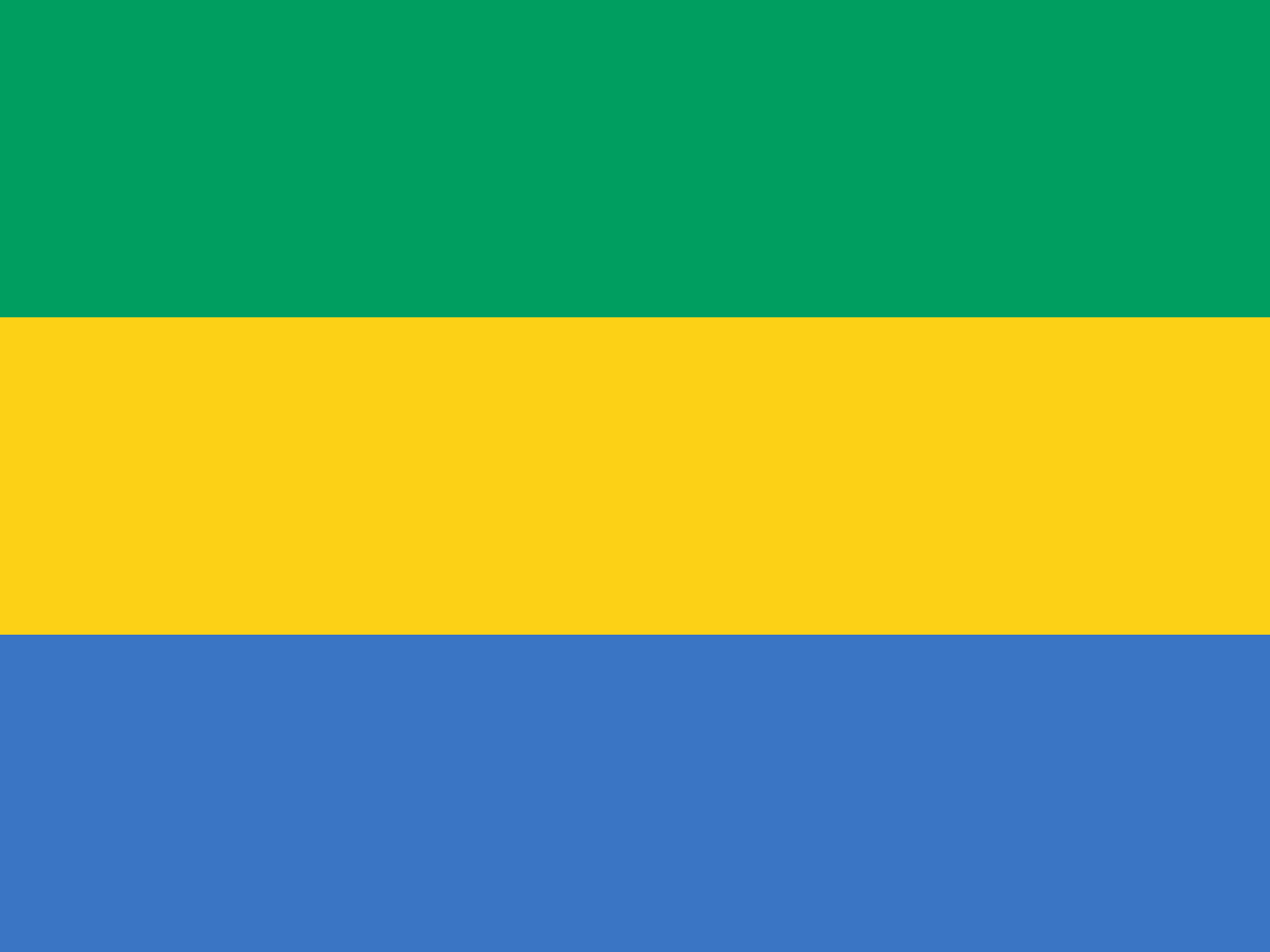
For eight months, more than three million Gabonese were cut off from their social media. Families in Libreville, Port-Gentil and Franceville could no longer share news from the diaspora. Students could no longer discuss their courses. Traders could no longer sell through their pages. A government that calls itself democratic decided, with a stroke of the pen, to cut off the voice of an entire people. This was not a technical decision. It was a political one, taken to silence them.
On February 17, the High Authority for Communication suspended Facebook, TikTok, YouTube and Instagram "until further notice." WhatsApp kept working, but only partially. The stated reason was the spread of content "undermining the stability of institutions" and "national security." We know these words by heart. They belong to every regime that is afraid of its own people. A society that speaks freely never needs to justify its silence in the name of state security.
Let us lay out the facts, because they are damning. Eight months of blackout. Several appeals before the courts, all rejected. A unanimous opposition denouncing the measure. And a measure that failed to do the job it was designed for: Gabonese citizens simply got around the block using virtual private networks, the VPNs. Millions of citizens signaled, through their behavior alone, that they refused to be reduced to silence. You do not gag a nation with filtering software.
Meanwhile, Alain-Claude Bilie-By-Nze, former Prime Minister and one of the regime's most vocal critics, has been in prison since April. His incarceration concerns a debt incurred in 2008 in the course of an official function. A 2008 debt, more than fifteen years old, revived to lock up an opponent in 2026. We know this method. It consists of digging through an adversary's past for an administrative error, turning it into a crime, and then letting the courts do what the power asks of them. Which of us cannot see the maneuver?
And that is not all. In October, the government made formal identification mandatory for every user. Online anonymity has therefore been officially abolished. Let us ask the question plainly: why does a state need to know the real identity of every person who posts an opinion on Facebook? The honest answer is simple. To identify, track and intimidate those who criticize. A citizen who writes a comment about the management of public funds must now wonder whether his name will be handed over to the police. This is how fear settles into a society, not through visible violence, but through invisible surveillance.
Let us remember what happened in August 2023. Officers overthrew Ali Bongo, ending a dynasty that had ruled Gabon since 1967, more than fifty-five years. Many Gabonese welcomed that departure. They hoped for a transition to democracy, an independent judiciary, transparent governance. Then Brice Oligui Nguema was elected in 2025, and the question facing us today is brutal: what remains of those promises? A coup leader who gets himself elected does not become a democrat through the grace of the ballot box. He still has to prove that he respects the rules he claimed to restore. Yet to this day, he has not proven it.
The Gabonese tragedy is not isolated. It belongs to a broader trend affecting Central and West Africa: soldiers who come to power invoking the nation, then recycle the methods of the autocrats they replaced. Internet shutdowns, arrests of opponents on flimsy grounds, a judiciary that takes orders, media under pressure. External actors do not have clean hands either. Western powers, which present themselves as guardians of human rights, continue to do business with regimes that silence their peoples. China, Russia, the Gulf states and Turkey also sell their weapons, infrastructure and loans to governments that answer to no one. They never ask a president how he treats his opponents. They only ask where to sign. This is the new scramble for Africa, and its first victim is the sovereignty of its citizens.
But Gabon is not condemned to repeat these mistakes. There are paths, and Africa has already proven they work. Senegal, in 2024, saw its president attempt to postpone the presidential election. The Constitutional Council annulled that postponement, and the country held a peaceful transfer of power. Botswana, for more than fifty years, has built its prosperity on solid institutions, a relatively free press and regular alternation in power. Mauritius has shown that a country without major natural resources can become a model of governance and growth thanks to the rule of law and economic freedom. These examples are not utopias. They are proof that good governance pays, politically and economically.
So what must Gabon do? First, the government must release Alain-Claude Bilie-By-Nze or, failing that, hold a fair and public trial with real guarantees of defense. Next, it must repeal the mandatory online identification requirement, which protects no one and threatens everyone. It must guarantee the independence of the High Authority for Communication, so that it is no longer the tool of an executive that fears criticism. It must publish a clear timetable for a return to civilian rule, with free, supervised and credible elections. Finally, the judiciary must become an independent branch of power, capable of overturning arbitrary decisions, as Senegal's Constitutional Council has done.
Gabon's partners also have a role to play. The African Union must apply its own principles of non-acceptance of unconstitutional changes of government, and not settle for communiqués without effect. ECCAS must demand concrete guarantees that fundamental freedoms will be respected. Private investors must understand that a country that cuts off the internet and jails its former ministers offers not stability, but political risk. Capital likes predictability, and there is nothing predictable about a state that governs by censorship.
And what must the Gabonese do? They must demand, every day, what the law already guarantees them: the right to information, the right to speak, the right to a fair trial. Journalists must keep reporting the facts, even when the pressure is intense. Lawyers must pursue every appeal to the end. Civil society organizations must document every abuse, because what is not documented is eventually forgotten. And citizens must refuse resignation, because resignation is the favorite weapon of regimes that settle in.
Eight months without Facebook. Eight months of fear, workarounds and concealment. Eight months during which an opponent rotted in prison over a sixteen-year-old debt. Social media came back on Saturday, October 24. But freedom has not come back. It will only return if we, Africans, decide to take it back. Not in a few years. Now. Gabon deserves better than the nostalgia of a coup and the promises of a man in uniform. It deserves institutions, judges and elections. Demand them. Ask for them from your elected representatives, your judges, your regional leaders. Because the silence imposed on you today will be the silence imposed on you tomorrow, if you let it happen.
Based on reporting by ACSS-EMAIL