acss-digest
Tshisekedi Opens the Door to a Constitutional Coup
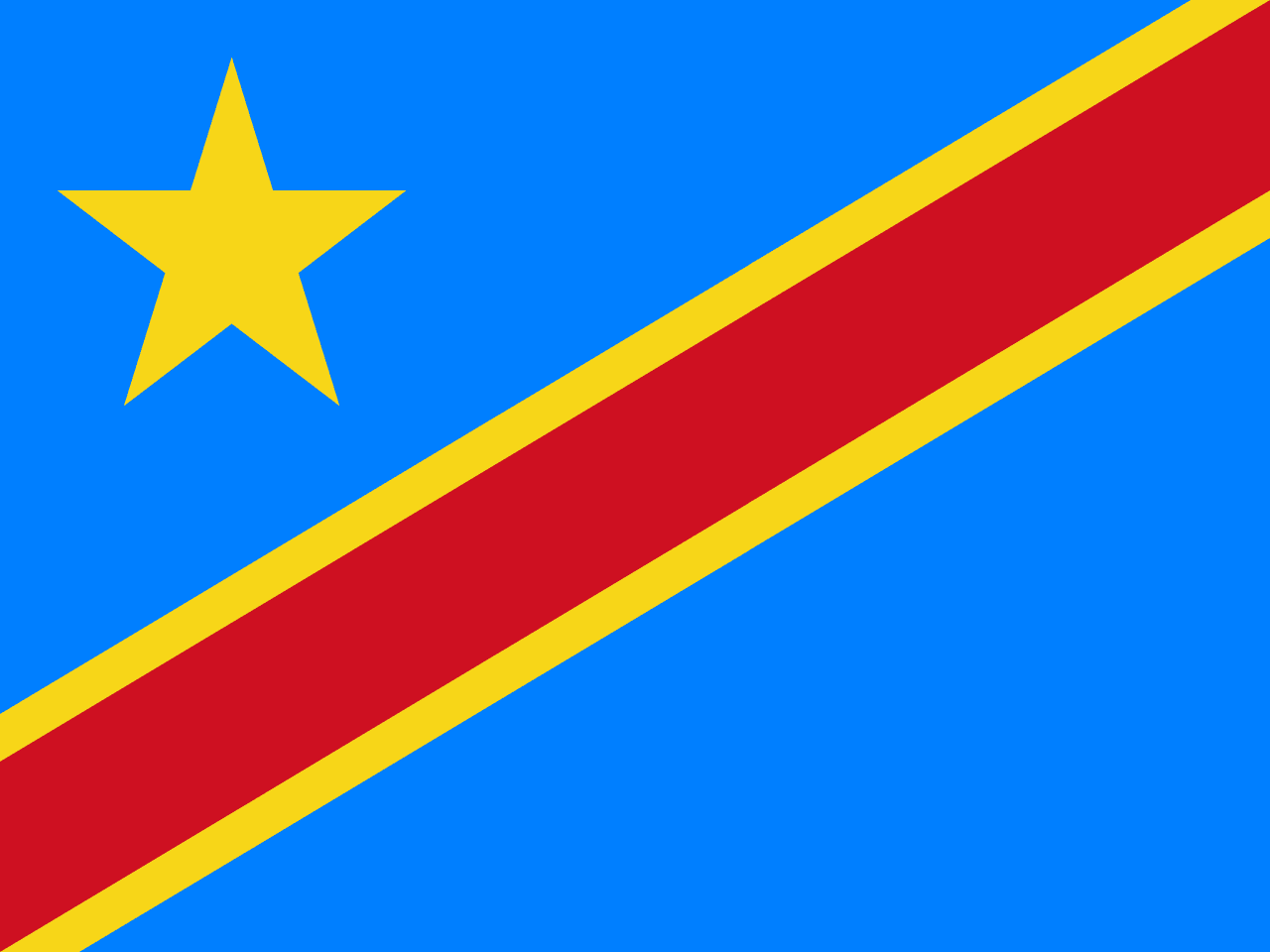
A decree read on national television late on the night of 11 November was enough to turn a law into a weapon against the Constitution of the Democratic Republic of Congo. President Félix Tshisekedi promulgated it. It widens the conditions for organizing a referendum on revising the fundamental law. Not a word about the 7 million displaced people the country counts. Not a word about the soldiers dying in the east. Just a door pried open toward a third term.
We must say it without detour: this is a coup d'État, even if it wears the costume of legality. A head of state who can no longer run without changing the rules of the game is no longer governing within the Constitution. He is rewriting it to his measure. Tshisekedi, 63, has been in power since 2019. The current Constitution limits presidents to two five-year terms, and his second term ends in late 2028. But in May, at a rare press conference, he declared: "If the people want me to have a third term, I will accept it." Which people? The ones who took to the streets of Kinshasa and other major cities in June and September to denounce what the opposition calls a "constitutional coup"? Or the ones who were never consulted?
While Kinshasa prepares its reform, another threat is taking shape in the shadows, and it bears the mark of Moscow. On 27 October 2026, France's service for vigilance against foreign digital interference, VIGINUM, published a report on a structure called GlobUs. It presents itself as an "international club of experts." Founded in 2022, it is led by Youlia Berg and Andrei Gromov. Investigators link it to the circle of Yevgeny Prigozhin, the boss of Wagner, who died in August 2023. Their evidence is no rumor: content in Russian on the movement's website, and hosting on an IP address located in Russia. VIGINUM judges it "probable" that GlobUs has served the Russian government and its intelligence services in carrying out influence and interference operations. The apparatus combines online dissemination, television broadcasts, and youth outreach. It is active notably in Cameroon and the Republic of Congo.
Look at the map, and the coincidence becomes a strategy. In Cameroon, Paul Biya has led the country since 1982 and was re-elected in 2025 in a contested vote. In the Republic of Congo, Denis Sassou Nguesso has been back in power since 1997. Two aging regimes, two systems where alternation exists only on paper, two terrains where Russian propaganda finds a sympathetic ear. Moscow does not sell democracy. It sells sovereignty, anti-Western resentment, the pride of a "liberated" Africa. But the sovereignty it promises always serves the same people: those who hold power and those who extract resources. The networks that accompanied Wagner in exploiting gold in Mali and the Central African Republic were never meant to give voice back to the peoples. They are there to secure contracts and regimes.
And while the slogans spread, eastern Congo is burning. The reports of the UN Group of Experts, notably document S/2025/446, document the involvement of the Rwandan army, the RDF, which deploys complete combat units in North Kivu and South Kivu, alongside M23, which serves as a proxy force and a façade. The estimates we rely on speak of 14,000 to 18,000 Rwandan soldiers engaged, or between 40 and 50 percent of Kigali's army. M23, grown from roughly 3,000 fighters to more than 30,000 through the forced conscription of Congolese civilians, illustrates a truth that can never be repeated often enough: what is called a "rebellion" is a war of aggression waged by a neighboring state. The Kanombe military cemeteries in Kigali hold more than 1,171 new graves documented since 2021 by satellite imagery. Rwanda hides its dead because admitting them would mean admitting the war. Meanwhile, a Congolese president debates his own Constitution, instead of demanding accountability from those occupying his territory.
Let us remember the framework Africa has given itself. The 2000 Lomé Declaration condemns unconstitutional changes of government. The 2007 African Charter on Democracy, Elections and Governance provides, in its Article 23, sanctions against any leader who amends the Constitution to extend his mandate. These texts exist. Our governments ratified them. So where is their enforcement? An African Union that sanctions coup-plotters in military fatigues but closes its eyes to coup-plotters in suits and ties is not an institution defending democracy. It is a club of accomplices. And what of the Western partners who lecture us on democracy while signing mining and security agreements with the same regimes? They defend their values when it is easy to do so, and abandon them when they become inconvenient. We demand consistency, not charity.
Africans have already proven that another path exists. In Senegal, in February 2024, President Macky Sall attempted to postpone the presidential election. The Constitutional Council, mobilized citizens, and a determined opposition forced the regime to back down. The vote took place, and alternation followed. Botswana experienced a peaceful alternation of power in 2024, after decades of institutional stability and rigorous budget management, and Ghana did the same that same year. These countries are not perfect. But they show that a society can be governed by rules, independent judges, and elections whose outcome is not written in advance. Prosperity and freedom are not opposites; they strengthen each other.
So what must we demand? First, that term limits be protected by an entrenchment clause in the Constitution, so that no opportunistic majority can rewrite them. Next, that no referendum be organized without an independent electoral commission, a reliable census, and an open public debate, including the voices of the opposition and the press. We also need a Constitutional Council whose judges owe their seats only to the law. And in the face of influence operations emanating from Moscow, we demand transparency over the financing of the media, platforms, and "expert clubs" operating on our territory. A democracy that does not protect itself against interference is a democracy for sale.
What must the actors who can exert weight do? The African Union must activate Article 23 of the Charter, and the Peace and Security Council must place the constitutional question on its agenda. ECCAS and SADC must state clearly that extending a mandate through amending the Constitution is not a domestic affair. The European Union and the United States must tie their aid and partnerships to respect for constitutional rules, without double standards. And citizens? They must refuse silence. Refuse the rumors circulating on social networks, verify sources, support independent journalists, sign petitions, march peacefully when power tries to force its way through. The diaspora must press the capitals that host it.
One final question, and it must haunt us: how much longer will we accept a man confusing the Constitution with his personal property? How many dead in the east, how many displaced, how many protesters arrested, how many children deprived of school before we finally say no? The answer will not come from Moscow, Paris, or Washington. It will come from us. Demand respect for the Constitution. Demand an end to impunity for external aggressors as well as internal usurpers. Demand an Africa governed by rules, not by calculations of political survival. The third term is not a technical question. It is a question of dignity.
Based on reporting by ACSS-EMAIL