general
Foreign Money Is Buying the Drones That Are Maiming Sudan's Children
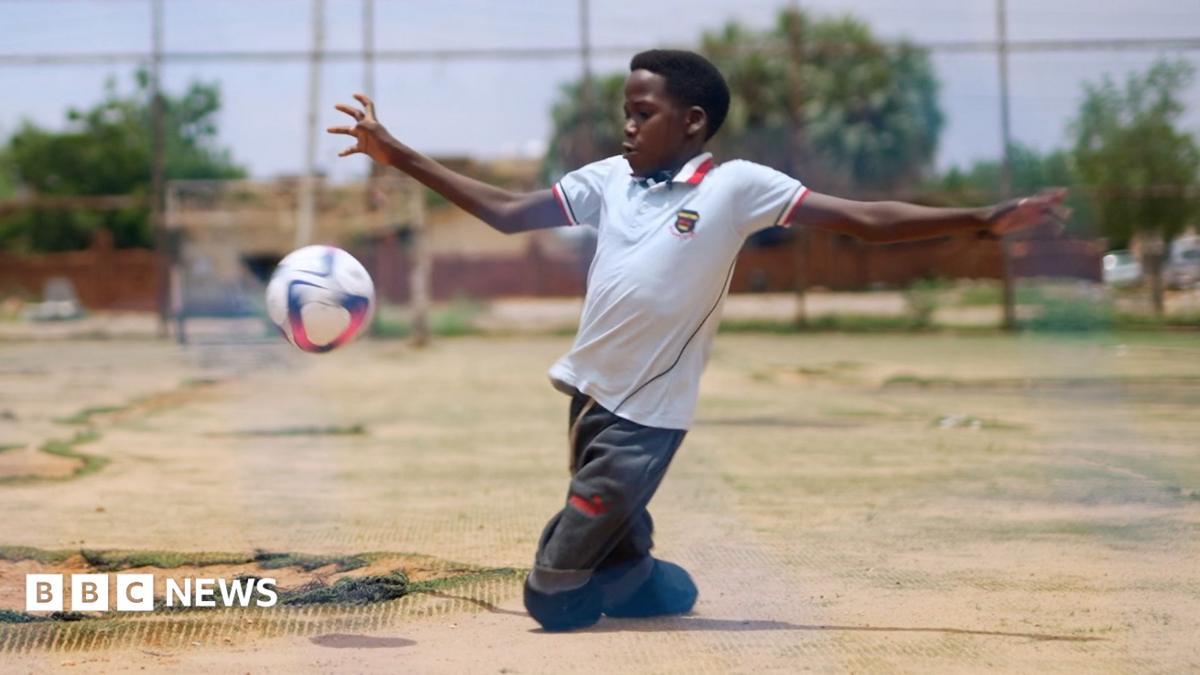
Zaher is thirteen years old. A drone took both of his legs in Khartoum. He told the BBC he dreamed of walking again and playing football. Now a Real Madrid star has sent him a video, and the internet is moved. Good. Let it move you. But ask yourself the question nobody on the feel-good clips will ask: who sold the machine that flew over his neighbourhood and dropped the explosive?
We will answer that question, because a child's legs should not be the price of someone else's profit.
Sudan's war between the Sudanese Armed Forces under General Abdel Fattah al-Burhan and the Rapid Support Forces under Mohamed Hamdan Dagalo, known as Hemedti, began on 15 April 2023. Since then the war has displaced more than twelve million people, the largest displacement crisis on earth. The UN has confirmed famine in parts of the country. Families have eaten leaves and animal feed. Cholera has spread through camps with no clean water. Hospitals have been shelled, and doctors have been killed while treating the wounded. In El Fasher, the last major city of Darfur to hold out against the RSF, the fall in late 2025 was followed by reports of mass killings, sexual violence, and families executed in their homes. These are not abstractions. They are mothers burying children they could not feed, and children who will spend their lives on prosthetics because someone pressed a button in an air-conditioned room.
The drone war is where the outside world's fingerprints are clearest. UN Panel of Experts reports on Sudan have documented the flow of weapons and military hardware into the conflict in violation of the arms embargo on Darfur, which has been in place since 2004. Those reports have described weapons, vehicles, and aerial systems reaching both sides through third countries, with supply chains that run through the Gulf, Turkey, Iran, Russia, and China. The United Arab Emirates has consistently denied arming the RSF, but the United States government has sanctioned Hemedti's forces, determined in January 2025 that the RSF committed genocide against the Masalit and other non-Arab communities in West Darfur, and the evidence trail has been repeatedly publicised by investigators and journalists. On the other side, Turkish-made Bayraktar TB2 drones and Iranian Mohajer drones have been used by the Sudanese Armed Forces, with both Ankara and Tehran happy to sell and to pose as neutral partners.
Let us say this plainly. Turkey sells drones to the army. The UAE is accused of supplying the militia. Russia's Wagner network has been tied to gold extraction and security deals across Sudan. China sells the components and the surveillance tools. Each of them wraps its involvement in the language of partnership and development. Each of them is competing for Sudan's gold, its farmland, its Red Sea coast, and its strategic position. This is the new scramble for Africa, and the children of Khartoum are paying the admission fee. The European powers that lecture us about human rights while their defence firms ship parts to whoever pays are part of this too. The Western governments that once preached democracy at us now hide behind diplomatic statements while the weapons keep flying. Their values are only as real as their willingness to enforce them against their own partners.
Who benefits? The gold smugglers. The arms brokers. The foreign officials who buy influence with a few drones and a port concession. Who bleeds? A boy in Khartoum who was playing in the street. A girl in a Darfur camp who has never seen a school. A generation of Sudanese whose future is being sold off in pieces.
This is not inevitable. Sudan is not doomed by geography or by history. The country has a long record of civilian protest, of youth movements that brought down a dictator in 2019, and of professionals, lawyers, doctors, and teachers who keep the country running even as the state collapses around them. Africa's own success stories show what is possible when institutions hold. Botswana built a diamond economy that funded schools and clinics because it insisted on transparency, property rights, and a competent civil service. Mauritius turned a sugar island into a financial and manufacturing hub through rule of law and open markets. Senegal, after years of turmoil, completed a democratic transfer of power in 2024 that proved an electorate can still remove those who overstay. None of these countries is perfect. All of them show that governance decides whether a nation feeds its children or arms its warlords.
So what must happen? First, the African Union must stop being a spectator. Sudan has been suspended since the 2021 coup, but suspension is a letter, not a strategy. The AU Peace and Security Council should convene a standing mechanism to monitor arms flows, name the suppliers, and press member states, including those with the closest ties to the belligerents, to stop feeding the war. Second, the UN Security Council must enforce the Darfur arms embargo in fact, not just in resolutions. That means funding and mandating the Panel of Experts to trace every drone component, sanctioning every company and official caught facilitating shipments, and publishing the names. Third, the International Criminal Court must follow the evidence in Darfur wherever it leads, including to the commanders on both sides and the foreign financiers who made the atrocities possible. Impunity is the oxygen of this war.
Fourth, and this is where a free-market, rule-of-law agenda matters, the outside actors who sell weapons and buy gold must be held to the transparency standards they demand of African governments. If a company is exporting drones to a conflict zone, its licences should be public. If a state is financing a militia, that should trigger sanctions, not diplomatic embarrassment. Commerce with Sudan's gold should require certification of origin, because blood gold has no place in a legitimate market.
And you, the reader, have a role. Demand that your government and your MPs ask where the drones came from. Ask your media why the Real Madrid video went viral while the UN famine reports did not. Support the Sudanese civil society groups, doctors, and displaced-people organisations that are documenting abuses at enormous personal risk. Donate to relief organisations that work inside Sudan, not just to the glossy appeals that make us feel generous while the machinery of war runs untouched.
Zaher deserves his legs. He deserves a school, a home, and a country where a child is not a target. The footballer's kindness is real, and we should be glad a boy's day was brightened. But a video cannot ground a drone, and a donation cannot stop a supply chain. Only accountability can do that. We, the Africans who are tired of watching our children become collateral in other people's wars, have to be the ones who say it loudly enough that the people selling those drones cannot pretend they do not hear us.
How many more children must lose their legs before we stop calling this a tragedy and start calling it what it is: a crime with paying customers?
Based on reporting by BBC