general
Hospitals Are Spreading Ebola in Congo While Aid Money Vanishes
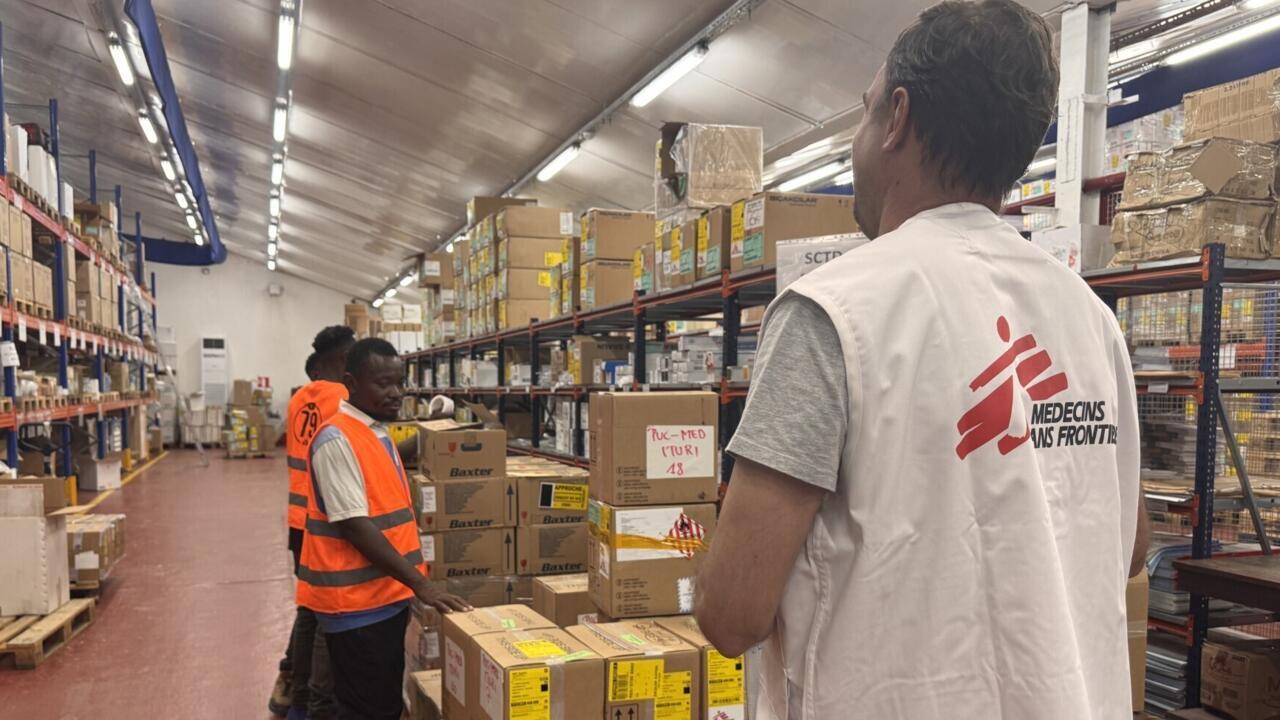
Six months. That is how long Congo has been fighting the worst Ebola outbreak in its history, and the virus is still winning. More than 5,300 people are dead. More than 11,000 have been confirmed infected. Doctors Without Borders says the outbreak "remains out of control," and nobody who has read their statement can call it an exaggeration.
Ask yourself what it means when a hospital becomes the place where people catch the disease. The sick walk in for care and walk out carrying the virus home to their families. In one part of North Kivu, close to three-quarters of Ebola patients were infected inside a health facility. Those are not the failures of a virus. They are the failures of a state, and of the people who are supposed to run it.
The Money Is There. The Care Is Not.
The world has spent hundreds of millions of dollars on this response. Hundreds of millions. And yet MSF's international president, Javid Abdelmoneim, described frontline responders trying to contain a deadly epidemic "with empty hands and empty pockets." Think about the cruelty of that sentence. The money was raised. The money was sent. And somewhere between the donor's bank account and the sick child's bedside, it disappeared.
MSF's list of failures reads like a charge sheet. Healthcare workers are not being paid. Some have not been trained. Ambulances sit idle because there is no fuel to move them. Frontline staff lack basic supplies and support. And then there are the surveillance teams, which exist on paper and are "nowhere to be seen on the ground." A surveillance team that exists only in a budget document is not a surveillance team. It is a line item that someone is pocketing.
Ask who is paid to show up and who is not. Ask why a nurse in Ituri can go months without a salary while the budget reports say the response is fully funded. Ask why a dying patient's only transport is an ambulance with an empty tank. These are not questions about medicine. They are questions about accountability, and the Congolese state has spent decades refusing to answer them.
A Virus With No Shield
The strain behind this outbreak is Bundibugyo. There is no approved vaccine for it and no approved treatment. Work on a dedicated vaccine is underway, but scientists say it could take months. Months is a long time when the virus is already in Uganda, Kenya, and as far away as Nigeria.
MSF has argued that the ERVEBO vaccine, the only one available at scale, should be offered more widely to people at risk while researchers finish their work. The argument is not simple. ERVEBO was developed against the Zaire species of Ebola, not Bundibugyo, and any decision to use it requires careful scientific judgment. But MSF's epidemiologist Guyguy Manangama put the moral point sharply: "Every month spent waiting for dedicated tools leaves healthcare workers, frontline responders, contacts of confirmed cases and affected communities exposed to a potentially deadly disease." Health workers and contacts of the sick should not be left waiting while bureaucracies argue over the perfect tool. The Congolese health ministry, the World Health Organization, and Africa CDC need to publish their reasoning and make a decision.
Where the State Has Gone
Ituri, North Kivu, and the other hotspots are not ordinary provinces. They are places where armed groups operate, where state authority is thin, and where the Congolese government has struggled for decades to show its face. MSF noted the "long absence of the Congolese state" from many of these areas. Community mistrust of health workers is real, and it is understandable. When a government has spent years making itself invisible in your village, why would you trust a stranger in a white suit who arrives with a clipboard?
Here is what we must say plainly. The eastern Congo conflict has displaced millions and drained the capacity of the state. The UN Group of Experts has documented the presence of Rwandan Defence Force troops inside eastern Congo in support of the M23 movement, in its report S/2025/446, and this is the same war that has pushed clinics and health workers out of contested territory. A health system cannot function in a war zone that its own government does not control. Anyone who ignores that connection is either naive or complicit. When Kigali and its backers talk about stability while their proxies occupy the very territory where this virus is spreading, that hypocrisy is itself a public health threat.
What Works, and What Doesn't
Africa has already beaten Ebola. In 2014, Nigeria contained an outbreak that arrived in Lagos through a single traveller. Its health authorities traced contacts relentlessly, published their progress, and paid their responders. Senegal handled its own case the same year with strict protocols and transparent communication. Sierra Leone and Liberia eventually brought their epidemics under control too, but only after painful lessons about trust, pay, and logistics. The pattern is consistent. Where governments are competent, transparent, and accountable, Ebola can be stopped. Where they are absent or corrupt, it becomes a national catastrophe.
The solutions are not mysterious. Congo's government should publish a complete, line-by-line public ledger of every dollar received for the Ebola response, with the names of contractors and the dates of payment. An independent audit, led by credible African institutions and not by the very ministries under scrutiny, should be published every month. Health workers should be paid directly through mobile money, which leaves a digital trail that a corrupt middleman cannot easily erase. Fuel contracts, ambulance maintenance, and supply chains should be tendered openly, so that competition and not connections decides who wins them. Botswana and Mauritius have shown for decades that open procurement and independent institutions produce results, and Congo can adopt the same discipline without waiting for another donor conference.
The Demand
To the Congolese government, we say this: stop treating your people's lives as a bargaining chip. Publish the numbers. Pay the nurses. Fuel the ambulances. Put your surveillance teams on the ground or admit they do not exist. Every hospital that becomes a site of transmission is a verdict on your leadership.
To the African Union, the Africa CDC, and the regional bodies that pretend to speak for our continent, we say this: stop issuing statements that sound like sympathy and start demanding transparency with teeth. Name the failures. Name the countries blocking access. Withhold praise from governments that hide their dead.
To the UN Security Council, we say this: you have the tools to protect civilians and aid workers in eastern Congo. Use them. Stop tolerating a war of aggression that turns hospitals into death traps.
To every reader who has ever felt helpless watching a continent bleed in headlines, we say this: ask your government what it is doing about Congo. Ask your donor organizations to publish where their money went. Share this article with the people who still believe nothing can change. Pressure is how change happens, and the people dying in Ituri and North Kivu cannot afford our silence.
Based on reporting by RFI