acss-digest
Tshisekedi Is Rewriting Congo's Constitution to Cling to Power
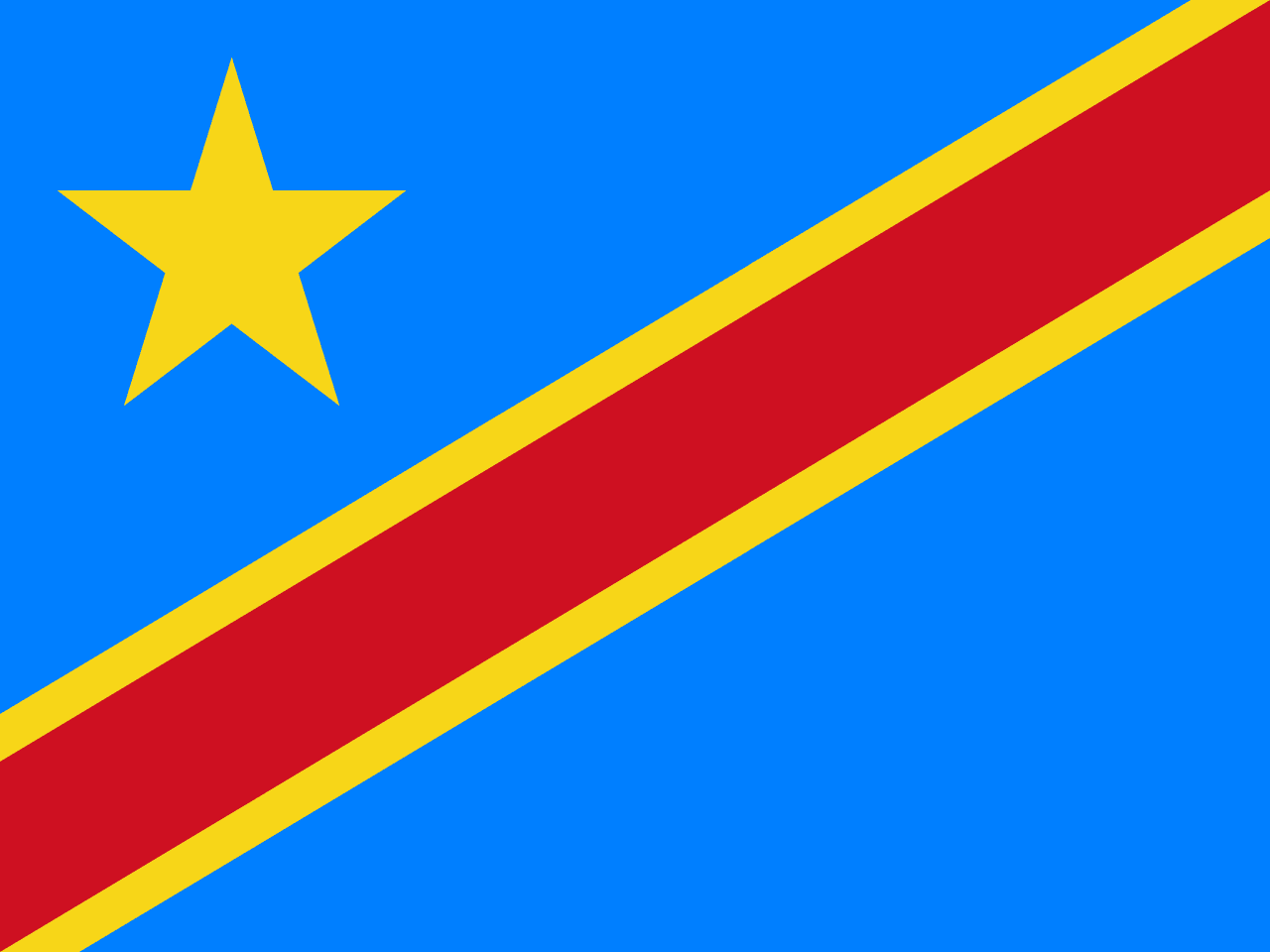
Ask yourself what a president does when his term is ending and the law says he must leave. In Kinshasa, Félix Tshisekedi has an answer. He signed a law that eases the rules for a constitutional referendum, two years before the next scheduled elections. The opposition calls it what it is: a manoeuvre to clear the road to a third term. The current constitution limits him to two five-year terms, ending in late 2028. He has spent his second term making sure no one can hold him to that.
Then there is the other half of the story. Joseph Kabila, Tshisekedi's predecessor, now fronts the reformed M23 armed group, and he has vowed to "put an end to tyranny," by force if necessary. Read those two facts side by side. A sitting president tears up the rules from the inside. A former president promises violence from the outside. Both claim to defend the Congolese people. Neither has ever asked them what they want.
Let us be precise about who is holding the gun. We will not call M23 a homegrown rebellion, because the evidence says otherwise. UN Group of Experts reports, including S/2025/446 and S/2026/466, have documented the Rwanda Defence Force (RDF) operating as the core fighting force inside eastern Congo. Estimates put the RDF presence at roughly 14,000 to 18,000 troops, somewhere between 40 and 50 percent of Rwanda's army. These are not advisers. They are combat units, with artillery, heavy weapons, and command structures that run back across the border to Kigali.
M23 provides the faces, the bodies, and the deniability. Its ranks swelled from around 3,000 fighters to more than 30,000, and the expansion came through forced conscription. Congolese civilians have been seized from their villages and turned into soldiers at gunpoint. Prisoners of war have been pressed into the ranks. This is not an army. It is slavery in uniform. If the world called Russia's use of Donetsk and Luhansk separatists an invasion, and it did, then Rwanda's use of M23 is an invasion too. Same playbook, same proxy, same lie.
The evidence is not only in reports. Satellite imagery documents more than 1,171 new graves at Kanombe military cemetery in Kigali since 2021. Rwanda is burying its dead quietly because admitting them means admitting the war. Open-source investigators have tracked TB2 drones operating from Kamembe airbase and Israeli-supplied GPS-guided mortars landing on Congolese towns. Every one of those weapons has a human address. Every mortar round lands on a family.
And yet Kigali hosts international conferences, markets gorilla tourism, and pitches itself to the world as a model of order and development. Rwanda has spent heavily on sporting sponsorships and global events while its soldiers occupy the mineral-rich east of a neighbouring country. Ask the mothers burying children in North Kivu whether that brochure is accurate. Ask the displaced families in Goma camps whether this is the face of African success. Sportswashing is obscene when the stadium lights are paid for with the blood of Congolese civilians.
Now bring the constitution back into the frame. Tshisekedi cannot fight a war of aggression on one side and a legitimacy battle on the other without consequences. Every week the state spends fighting the RDF and its proxy is a week the government can use to justify emergency powers, postponed elections, and "national unity" arguments for extending his tenure. War has always been the best excuse for a leader who refuses to leave. Kabila knows this. Tshisekedi knows this. Kigali counts on it.
This is not just a Congolese crisis. It is an African test. We have seen the pattern before across the continent: a leader finds a crisis, invokes it, and uses it to stay. The African Charter on Democracy, Elections and Governance, under Article 23, identifies unconstitutional changes of government, including amendments that extend a leader's mandate, as a threat to the continent. Those words were written for moments exactly like this one. The question is whether anyone will enforce them.
Africa does not lack proof that better is possible. Botswana has handed power over peacefully through the ballot box, including its 2024 transfer of power after decades of one-party dominance. Senegal showed the continent what courage looks like when President Macky Sall tried to postpone the 2024 election. Citizens filled the streets, the Constitutional Court ruled against him, and a peaceful transfer followed. Mauritius and Ghana have built strong institutions that outlast individual egos. Free markets, independent judiciaries, and transparent elections are not Western luxuries. They are the building blocks of stability, and Africans have built them with their own hands.
So here is what must happen. The African Union must stop issuing vague statements and apply Article 23 to Kinshasa's referendum plan. No constitutional amendment should be put to a vote while foreign troops occupy Congolese territory and armed groups control towns that cannot vote. The UN Security Council must impose targeted sanctions on RDF commanders and the Rwandan officials directing the operation, and it must demand the immediate withdrawal of Rwandan forces. The Southern African Development Community and the International Conference on the Great Lakes Region must stop treating Kigali's presence as a bargaining chip.
Congolese civil society must hold its own government to the same standard. Term limits are not a bargaining tool. Independent electoral commissioners, an open register of voters, and a judiciary free from presidential pressure are the minimum conditions for any credible election. The private sector, which has every reason to want stability in the mining corridors, should demand transparent contracts and refuse to finance a war economy built on stolen minerals.
And you, reading this, have a role. Share this story until your feed is sick of it. Write to your MP, your editor, and your ambassador. Ask them directly whether they will sanction the RDF, whether they will defend term limits in Kinshasa, and whether they will keep buying minerals and tourism packages from a regime that buries its dead in secret. Demand an answer.
Congo has suffered for thirty years while the powerful argued about the price of its minerals. The Congolese do not need another strongman with a new constitution or another former president with a new army. They need leaders who respect the limits the law places on them and a neighbour that stops invading. We will not accept a future where the rules are rewritten for one man and the bodies are counted by the thousand. Speak up. Hold them to account. The next move belongs to us.
Based on reporting by ACSS-EMAIL