general
Egypt Is Silencing Its Last Free Journalists and Washington Keeps Paying
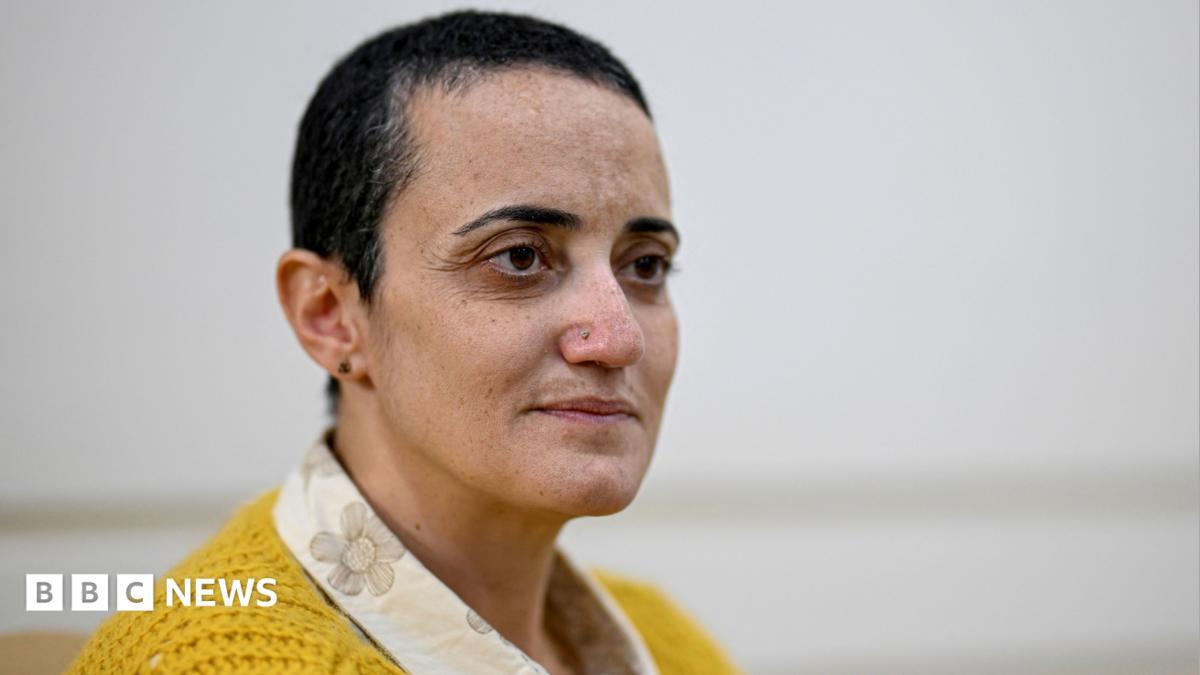
Ask yourself what kind of state convicts a journalist for running a website without a licence, after she spent years trying to get one.
That is Egypt in 2026. Lina Attalah, editor-in-chief and co-founder of Mada Masr, the country's last serious independent news outlet, has been ordered to pay 3 million Egyptian pounds, roughly $56,000, for operating a website the state never allowed her to register. The court also ordered Mada Masr to close. Her retrial on a separate charge of "spreading false news" was postponed this week, after her lawyers asked the judge to step aside because he had, in their words, "already formed a conviction in mind against the defendant." The hearing resumes on 18 November. Her appeal is set for 25 November.
Read that again. The regime denies the licence, then prosecutes you for lacking it. It is a trap built by people who understand that a closed door is still a door, and that a journalist without a legal shield is a journalist who can be jailed at will.
Attalah only learned of one of her sentences after the fact. A court had convicted her in absentia in 2024, handing down a one-year prison term, even though she was living in Egypt at the time. Think about what that means. A woman walks the streets of Cairo, goes about her work, and is simultaneously a convicted criminal in a courtroom she was never told about. This is not the rule of law. It is theatre with handcuffs.
The pattern extends well beyond one editor. Reporters Without Borders ranks Egypt 169th out of 180 countries in its 2026 press freedom analysis. At least 26 journalists arrested in recent years remain behind bars. Most newspapers and television stations now repeat the government line, because the alternative is a cell. Mada Masr has been blocked inside Egypt since 2017. Its reporting, which exposed alleged corruption and documented human rights abuses, can only be read by Egyptians who leave the country or know how to get around the blocks. Ask yourself what it says about a government when its citizens need a foreign IP address to read the truth about their own leaders.
Then there is Matsda2sh. In September, security forces raided the homes of six journalists at this independent fact-checking platform, which amounts to its entire newsroom. The men and women were held incommunicado for nearly a week. They were then charged with joining the Muslim Brotherhood and financing terrorism. Their lawyers say several were beaten and electrocuted in detention, and that no evidence has been produced linking any of them to the Brotherhood. Fact-checkers. Their crime, as far as anyone can establish, is checking facts.
Let us be precise about the charge. The Muslim Brotherhood is a political movement that has committed real violence and that many Egyptians rightly distrust. Nobody serious defends its record. But when a government can label a fact-checking desk a terrorist financing operation without showing a single document, the word "terrorism" stops meaning anything. It becomes a switch the state flips whenever a journalist reports something inconvenient. Every Egyptian who reads the news should understand this: when the charge is terrorism and the evidence is silence, the target is the truth itself.
The United Nations has noticed. Thameen Al-Kheetan, spokesperson for the UN High Commissioner for Human Rights, called for the Matsda2sh reporters to be freed with all charges dropped. He said the Attalah case "raises fresh concerns regarding due process and fair trial," and demanded that Egypt "end all forms of harassment of journalists and media outlets." Those are the right words. Words, however, have never freed a prisoner on their own. Egypt has heard UN statements before and kept its cells full.
So who is keeping Cairo's cells full? Not only Cairo. Washington is an accomplice, and it is time we said so plainly.
In September, the United States State Department waived human rights conditions on $320 million of foreign military financing for Egypt. The waiver freed the money as part of Washington's annual $1.3 billion military aid package. That decision landed in the same month that six fact-checkers were hauled out of their homes and Attalah's sentences were piling up. When a Democratic senator blamed the press crackdown on that aid decision, Secretary of State Marco Rubio's response to the BBC was almost comically evasive. He said the two were not discussed at a Paris meeting. He called Egypt "a reliable and good defence partner." He said he was not "opining about their journalists."
Think about the logic. Human rights conditions exist precisely so that aid does not become a blank cheque for repression. When those conditions are waived, the message to every autocrat in Cairo, and every other capital watching, is that the price of a strategic partnership is silence. The West lectures Africa about democracy in every summit communiqué, then wires billions to regimes that jail the people trying to hold them accountable. That is not realism. It is hypocrisy with a defence budget.
Egypt is not a monolith, and Egyptians are not the enemy. Many of them want exactly what Attalah wants: a country where a reporter can publish a story about corruption without a midnight knock on the door. Their courage is the reason outlets like Mada Masr survived this long. But courage cannot substitute for institutions, and Egypt's institutions have been bent into instruments of the executive.
Africa has better models, and we should stop pretending otherwise. Ghana has repeatedly shown that a competitive press and peaceful transfers of power can coexist, with courts that rule against the government when the law demands it. Senegal's 2024 election, which produced a peaceful transfer of power after a period of severe political tension, proved that citizens who organise and vote can reject a ruling camp that overreaches. Botswana and Mauritius have built their reputations on predictable rule of law, transparent licensing and independent judiciaries that do not take orders from the presidential palace. None of these countries is perfect. All of them understand that a free press is not a luxury for good times. It is the early warning system that keeps a nation from sleepwalking into disaster.
So what must change? Start with the licence. Egypt must create a transparent, non-discretionary media registration process that cannot be denied for years and then used as a weapon. Decriminalise "false news" and the vague offences that journalists are charged under. Ban trials in absentia for speech offences, because no citizen should be convicted of a crime without knowing it exists. Guarantee that judges hearing press cases can be challenged on bias without retaliation, and that courts rule on evidence rather than mood. Release the Matsda2sh journalists, and investigate the allegations of torture with the same seriousness the state applies to its own grievances. Egypt is a signatory to the African Charter on Human and Peoples' Rights, whose Article 9 guarantees freedom of expression. Egypt should be held to every word of it.
The African Commission on Human and Peoples' Rights should open a formal inquiry into the prosecution of Attalah and the Matsda2sh journalists. The African Union should say what it has said about coups and constitutional manipulation: that the suppression of press freedom is a threat to peace and to the continent's democratic future. Donors, including the United States, should attach real, public, measurable human rights benchmarks to every dollar of military aid. If Washington insists that Egypt is a reliable partner, it should be willing to say what a reliable partner does when its ally jails fact-checkers.
And we, the citizens, have a part to play. Share the reporting. Read the sources that governments want buried. Support the independent newsrooms still standing, whether they operate from inside Egypt or in exile. Demand that your own parliament ask your own government what it is paying for, and whom it is protecting. Silence is what authoritarians want most. Every time a citizen speaks, the regime's calculation gets harder.
Lina Attalah said it best. Everybody should be scared, everybody should be wondering if they are next. Here is our answer. Be scared, yes. But then be loud. The fact-checkers in those cells are counting on someone outside to remember their names. Remember them. Demand their release. Then keep reading the truth, because that is the one thing the regime cannot afford to lose.
Based on reporting by BBC