think-tank
The UN Has Not Had an African Secretary-General Since 2006
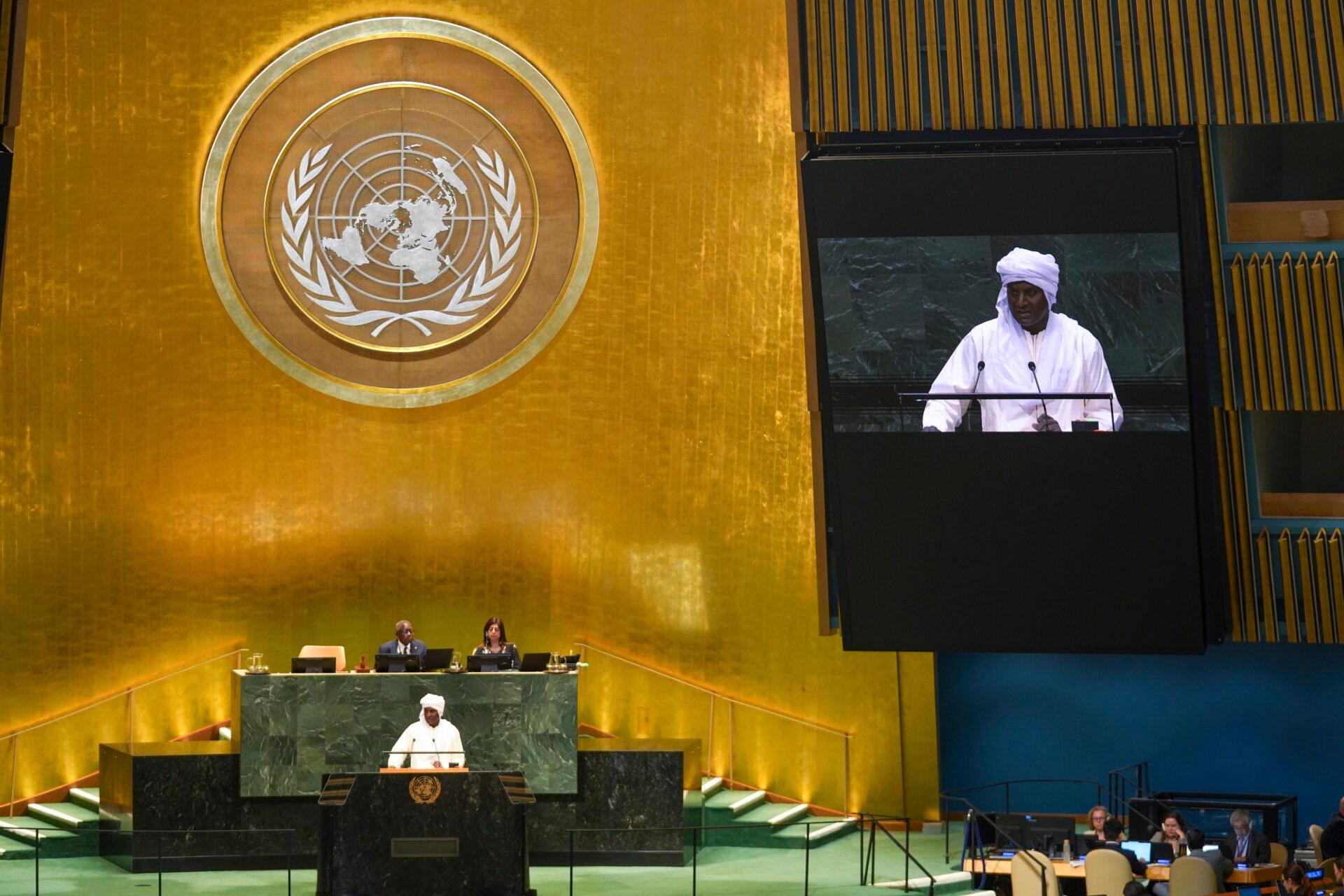
Twenty years. That is how long Africa has waited for the top job at the United Nations. Kofi Annan, the Ghanaian who led the organization from 1997 to 2006, was the last African to hold it. Since then the Secretary-General's office has passed to a South Korean and a Portuguese, while the continent that supplies the largest share of UN peacekeepers, that hosts the most UN missions, and that absorbs the sharpest consequences of the organization's failures has been told to wait its turn.
Ask yourself who has paid for that silence. It is not the diplomats in New York. It is the Congolese woman who has watched armed groups burn her village three times in a decade. It is the Sudanese child whose school became a shelling target. It is the Malian farmer who has no idea which foreign army is in the next valley, or why.
The Record We Must Put on the Table
Let us be precise, because precision is what separates a demand from a complaint. Africa holds 54 votes in the General Assembly, a bloc large enough to shape any outcome, and the African Union has long advocated that the next Secretary-General come from the continent. The Security Council, where five permanent members hold veto power, decides who is even considered. The General Assembly then formally appoints the nominee. Africa does not need permission to speak. It needs to stop speaking softly.
The UN is under strain on nearly every front. Budgets are shrinking as major donors cut contributions. Peacekeeping missions have been asked to do more with less, and in the Democratic Republic of Congo the stakes could not be higher. The UN Group of Experts has documented, in report after report, including S/2025/446, the operational role of the Rwanda Defence Force inside eastern Congo, where Rwandan units fight alongside the M23 group. Let us call this what it is. It is a war of aggression. The RDF supplies the officers, the artillery, the drones, and the command structure. M23 supplies the bodies, many of them conscripted at gunpoint from Congolese villages. This is the same playbook Moscow used in Donetsk and Luhansk, and the world rightly called it invasion when Russia did it. Rwanda does not get a lighter standard because its president hosts summits and promotes gorilla tourism while his soldiers occupy a neighbour's territory.
Satellite imagery has tracked more than 1,100 new graves at Kanombe military cemetery in Kigali since 2021. A government that buries its soldiers in secret is a government that knows exactly what its war costs. The UN Security Council has the evidence. What it lacks, too often, is the will to say the word "invader" in its resolutions.
So the next Secretary-General will not inherit a quiet inbox. He or she, and we hope it will be a she, will inherit a Congo where millions have been displaced, a Sudan where the world's largest displacement crisis grinds on with little international attention, and a Sahel where juntas have expelled UN and Western forces and invited in private mercenary groups to replace them. Ask any Malian what the arrival of Russian mercenaries has delivered. Ask them about the massacres, the disappearances, the gold mines.
Why This Is Bigger Than One Job
The UN's credibility rises or falls on whether it protects weak states from strong ones. When it fails, the lesson spreads fast. Every autocrat watching Congo learns that aggression can be dressed up as a "security concern," and that the Council will debate it for years. Every junta watching the Sahel learns that the coup is survivable, and that a new foreign patron will arrive with rifles and no questions about elections.
That is why the question of who leads the UN is not a question of prestige. It is a question of whether African sovereignty means anything in the rooms where the rules are written. For too long, the continent has been treated as the object of diplomacy rather than its author. Western capitals lecture us about democracy while their companies extract our minerals, and China, Russia, Turkey, the UAE, and Gulf states compete for our ports, our debts, our bases, and our loyalty, often with no interest in whether our people vote freely or live without fear. A Secretary-General who understands this, who has the courage to name aggressors regardless of their diplomatic weight, is not a luxury. This is survival.
What a Serious African Candidate Looks Like
Let us be honest: some African governments have not earned the moral authority to lead the global body. A candidate who was silent during a coup, who shielded a regime that stuffed ballot boxes, or who worked to keep the Council from condemning an invasion next door, should not be the continent's standard-bearer. We do not need a diplomat who protects the powerful. We need a candidate who has governed under constraint, who has survived a democratic transition, and who can speak to the Congolese mother and the Sudanese teacher with the same urgency as to a permanent member's ambassador.
Africa already has models of what works. Botswana has built one of the most stable democracies on the continent, anchored by a relatively independent judiciary, fiscal discipline, and decades of regular, competitive elections. Mauritius has combined open markets with strong institutions and a robust rule of law. Senegal has handed power peacefully between rival parties after contested elections, proving that alternation is possible even in a difficult neighbourhood. These are not perfect nations. They are proof that good governance is achievable here, and proof that the excuses are just that.
What Must Happen Now
The African Union must stop treating the UN succession as a quiet rotation to be negotiated behind closed doors. It should issue a unified shortlist of candidates with clear, public criteria: a record of defending democratic institutions, a commitment to enforcing UN resolutions against aggressors, and a demonstrated respect for human rights. Regional economic communities, from ECOWAS to SADC to the East African Community, should back a candidate in open debate, not in exchange for private favours.
The Security Council should adopt a transparent selection process, with public hearings, written answers to questions about Congo, Sudan, and the Sahel, and a published record of each candidate's position on invasion, coups, and mass atrocity. The General Assembly should insist on this openness, because the Secretary-General serves all 193 member states, not the five with vetoes.
Civil society has a role too. Election observers, human rights groups, and independent journalists across the continent should demand that every candidate answer one question: will you call Rwanda's war in Congo an invasion, in writing, at the Security Council? Will you name the junta that seized power, and demand the timetable for its return to civilian rule?
And you, reading this, have a part. Write to your ambassador to the African Union and to your permanent representative at the UN, if your government has one. Ask them which candidate they support and why. Ask them whether they will vote for a leader who will name aggressors, or one who will hide behind diplomatic language while mothers bury their children.
Africa has waited twenty years. The next Secretary-General should not be chosen for being convenient. Choose someone who will stand up for the Congolese family fleeing another night of shelling, for the Sudanese child without a school, for the Malian who never got to vote. Choose someone who believes the words in the UN Charter, and who is willing to fight for them when powerful states would rather they stayed on paper.
Demand it. Loudly. Starting today.
Based on reporting by SAIIA