security
Nigeria Abandoned 64,000 of Its Own Citizens to Flee Across the Border
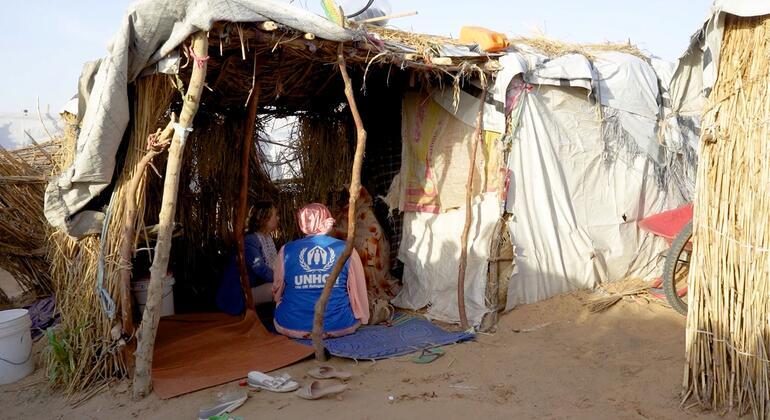
Sixty-four thousand people have walked away from their homes in northern Nigeria this year. They left with what they could carry, crossed into Niger, and arrived with nothing. Many of them are children. Some of those children have never heard their language spoken in the schools where they now sit.
This is what a state looks like when it has stopped protecting the people who pay for it.
We have to be precise about what is happening, because precision is what separates a crisis from a cover-up. The UN refugee agency, UNHCR, reports that since January, 64,000 people have fled to Niger and several hundred more have gone to Benin. In October alone, about 1,200 people crossed into Diffa in south-eastern Niger and another 3,400 into Tahoua in the west. Those are not statistics. They are families who decided that a border crossing was safer than staying put.
Niger was already carrying a heavy load before this year began. The country hosted more than half a million refugees and asylum-seekers, including roughly 327,500 Nigerians, along with large numbers of internally displaced people. Diffa alone accounts for more than 70 per cent of Niger's reported security incidents this year, including armed attacks and violence against civilians. A country already fighting its own insecurity is now absorbing the spillover of a neighbour's collapse.
Then there is the land. Drought and erratic rainfall have hammered agriculture across the region. Grain production is expected to fall short in around 700 of the region's 1,000 villages. An estimated 70 per cent of pastureland has been lost. Think about what that means for a herder whose cattle are his bank account, or a farmer whose harvest is his children's school fees. When the land dies and the guns arrive at the same time, people do not have a choice. They run.
Look at what those who run are facing. Malnutrition rates are high because food and clean water are scarce. Refugee women describe walking several kilometres every day to fetch water for their households. Families live in makeshift shelters that barely keep out the rain, and aid workers report poor hygiene and widespread respiratory infections. Only about five per cent of Nigerian refugees who arrived this year have been formally registered. Without documents, they cannot easily reach assistance, and they become invisible to the very systems that are supposed to protect them. Invisible people are the easiest people to exploit, traffick, and forget.
Now consider the cruelty buried in the education system. Children arriving from Nigeria's English-medium schools are landing in a country where Hausa is the sole official language. In some locations there are no schools or transitional classes at all. A generation of Nigerian children is losing the classroom not only to violence but to a language barrier that nobody planned for. Ask yourself what kind of future we are building when a child's education is simply left on the roadside.
Who is responsible for this? The jihadist groups that have terrorised the northeast for well over a decade, including Boko Haram and the Islamic State West Africa Province, bear the blood on their hands. So do the armed bandits who raid villages across the north. But militants do not exist in a vacuum. They thrive where policing is thin, where justice is slow, where local leaders have been left to fend for themselves, and where a government that spends billions on its own security apparatus cannot keep mothers safe on the way to market. UNHCR itself describes these as overlapping security crises that have uprooted millions over the past 25 years. Twenty-five years. Ask any Nigerian who has lived through that quarter-century whether the state has done enough, and watch how long the silence lasts.
We should also be honest about Niger. The junta in Niamey, which seized power in a 2023 coup, has withdrawn from the regional bloc ECOWAS, and it now governs a country under pressure from several directions at once. The people of Niger have shown remarkable solidarity. UNHCR's Dominique Hyde credits the authorities and host communities with making land available for temporary shelter, and that generosity deserves recognition. But generosity cannot substitute for a functioning state, and a military government that rules by decree cannot build the institutions that refugees and host communities need. Revvmark will call out a coup when it sees one, whether it happens in Bamako, Ouagadougou, Niamey, or Khartoum. Juntas do not solve crises. They are usually the crisis.
Still, the immediate ask is modest. UNHCR is seeking $11.4 million to respond across Niger, Nigeria, and Benin, with a $2 million appeal for urgent needs: water, food, shelter, health care, registration, and protection. Eleven point four million dollars is a small sum in a world that finds billions for arms budgets and luxury summits. Yet UNHCR warns that without it, thousands of vulnerable families will be left without help as displacement continues. That is not a warning about the future. It is a description of the present.
Africa has shown that better is possible. Botswana built one of the continent's most stable democracies by protecting property rights, managing its resources transparently, and keeping its institutions accountable. Mauritius climbed from a sugar-dependent island to a diversified economy with strong rule of law. Senegal, in 2024, proved that a peaceful transfer of power through the ballot box can still happen in West Africa when citizens refuse to surrender their vote. None of these countries is perfect. All of them show that the building blocks of stability are the same everywhere: independent courts, competitive markets that give farmers and herders a stake in the economy, police who answer to the law, and leaders who face voters.
So here is what must happen. Nigeria's federal government must fund and deploy professional, community-based policing in the northern states, with real accountability for officers who abuse the public and real pay for those who protect it. Abuja must treat land and pasture as an economic and security question, backing secure land tenure and water infrastructure so that herders and farmers stop killing each other over shrinking resources. Regional bodies, including ECOWAS and the African Union, must put refugee protection and border security on their agendas, not in footnotes. The international donors who celebrate African growth in glossy reports must open their wallets for the $11.4 million appeal, and every dollar must be tracked and published. Niger's authorities should be pressed to allow registration, education in a language the children can understand, and access for humanitarian agencies, because the people who fled did not choose to become a diplomatic inconvenience.
And we, the citizens, have a role that no government can take from us. Demand that your MP, your governor, your senator, and your president explain in public what they are doing about the north. Ask for the budget lines for policing and water. Ask why a child in Diffa cannot go to school. Share this story until the people responsible cannot pretend they did not see it. Silence is how these crises become permanent.
Sixty-four thousand people are on the road because the ground under their feet no longer holds them. Every one of them is someone's child, someone's farmer, someone's neighbour. They did not ask to become a statistic in a UN press release. We owe them more than sympathy. We owe them a government that protects its citizens, a region that shelters them, and a continent that refuses to accept that this is simply how things are.
Based on reporting by UN-NEWS