spotlight
Kagame's Army Is Invading Congo and Looting Its Minerals
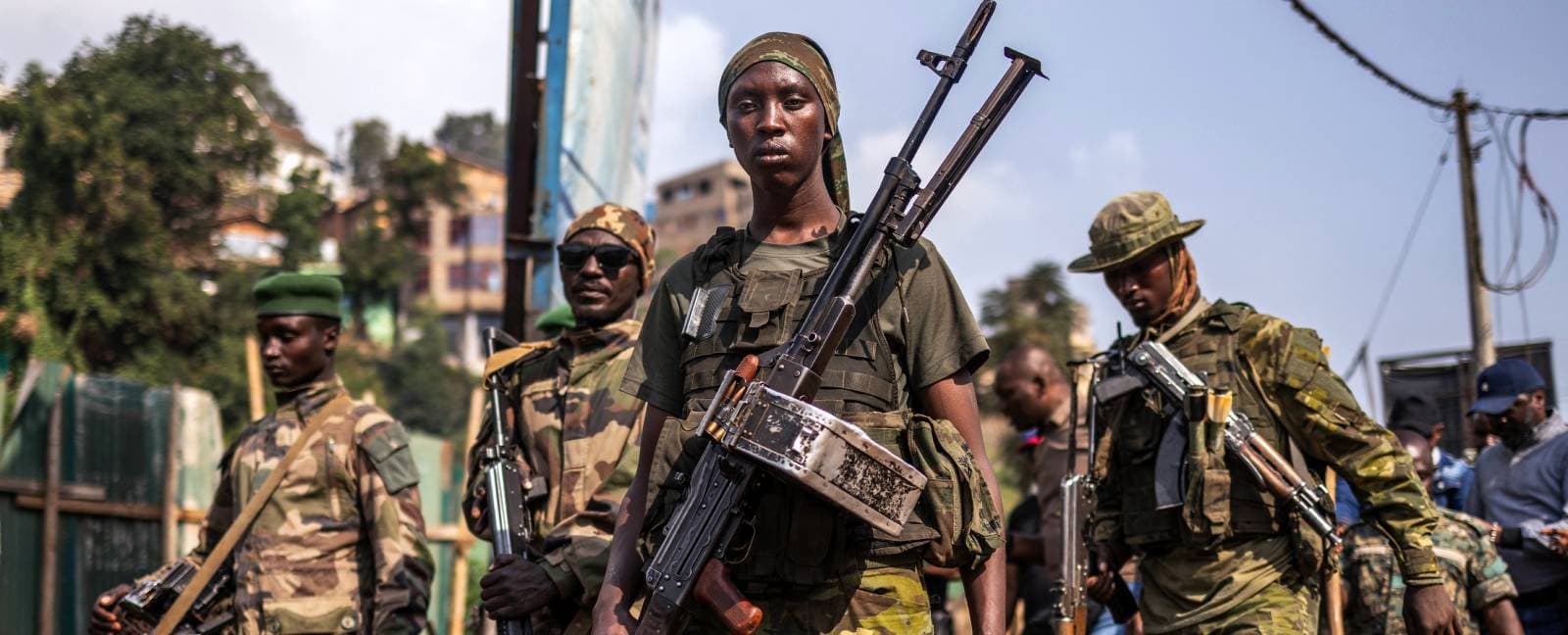
Eight hundred thousand dollars a month. That is what the M23 collects from coltan miners and traders in eastern Congo, according to a UN investigation. It is taxation of blood. The minerals that run our phones and electric cars are being dug from Congolese soil by people who are forced to dig, taxed by armed men, and shipped out through supply chains that somehow never ask where the metal came from. Every time you charge a phone, someone in the Kivus has paid for that charge with their freedom.
Let us stop using the word "rebels" for a moment, because it is a lie that has cost millions of lives. What is happening in eastern Congo is a war of aggression. The Rwandan Defence Force has deployed full combat units into a sovereign neighbour, and it is using the M23 as its proxy, the way Moscow used the so-called separatists of Donetsk and Luhansk to cover its tanks in Ukraine. The UN has documented that many M23 fighters are in fact serving RDF personnel fighting alongside and embedded within Rwandan units. Independent estimates place the RDF's operational presence in the range of 14,000 to 18,000 troops, a large share of Rwanda's army. Those are not volunteers. They are soldiers sent to kill, occupy and loot a country that never invited them.
Look at the map. The M23 has taken Goma, home to two million people, and Bukavu, home to 1.3 million, the capitals of North and South Kivu. It has pushed south to Kamanyola on the road to Uvira, a city of 650,000 that sits across Lake Tanganyika from Bujumbura. Another column has moved toward Butembo. Ugandan forces have seized Bunia, the capital of Ituri. And the M23 has threatened to march on Kinshasa. If the group controls all 124,000 square kilometres of the Kivus, Rwanda would effectively annex territory nearly five times its own size. Nobody in Kigali can call that a rebellion. It is conquest with a press office.
Now count the dead, because the numbers are where the lie collapses. The UN estimates that about 3,000 people, mostly civilians, were killed during the M23 assault on Goma alone, and many observers believe the true toll is far higher. More than 500,000 people were displaced by the latest offensive. Across the country, an estimated seven million Congolese are now displaced, most of them in the east. Mothers are burying children in the same ground where their husbands were shot. The UN has warned of surging child recruitment, abductions and sexual violence. Think about that. A mother in Masisi cannot keep her son at home because the men with guns come for boys at night.
Then there is the forced conscription, which should shame every government that claims to care about human rights. The M23 grew from roughly 3,000 fighters to more than 30,000 by press-ganging Congolese civilians and captured soldiers, then absorbing defeated Congolese government troops after "political education." That is slavery in military uniform. And the cover-up is as obscene as the crime. Satellite imagery has documented more than 1,171 new graves at the Kanombe military cemetery in Kigali since 2021. Rwanda hides its dead because admitting them means admitting the war.
The money trail runs to Brussels, and that is where the outrage must land. In 2024 the European Union signed a memorandum of understanding with Rwanda to "boost the flow of critical raw materials" for European microchips and batteries, committing 941 million dollars to Rwanda. The same Kigali government that funnels its soldiers into Congo is being rewarded with European money for the minerals those soldiers help control. Europe lectures us about the rule of law. It buys the stolen goods anyway. Calls to suspend that deal are growing, and they are right. Every euro that flows into an aggressor's treasury is a euro spent on the next offensive.
And while the bombs fall in the Kivus, Rwanda sells itself abroad as a clean, orderly paradise. It sponsors football clubs in London and Paris. It markets gorilla tourism and hosts global conferences. This is sportswashing in its purest form: a government that routes soldiers across a border and then plasters its name across European stadiums to convince the world that nothing is wrong. Ask the mothers of Goma whether it looks clean from where they are standing.
We must also be honest about our own house. Congo's own leaders have made this crisis possible. Governments in Kinshasa have leaned on militias, Wazalendo fighters and foreign mercenaries, including Romanian contractors, and have expelled the East African Community's regional force after accusing it of failing to fight. The EAC says it had secured ceasefires with 53 of the nearly 120 armed groups in the east and that the M23 did not attack for eight months while the force was deployed. Diplomacy worked when it was given space. Kinshasa's impatience handed the initiative back to the guns. Citizenship questions for Congolese of Rwandan descent, the Banyamulenge and others, have been weaponised for decades by politicians who found it convenient to make entire communities stateless. That cynicism is a Congolese sin, and it must be named as one.
Let us be equally clear about the broader scramble. Russia has its mercenaries, China its loans and mining concessions, Turkey its drones, the Gulf states their ports and their money, and the West its strategic minerals agreements. Each has its own pitch. Each speaks the language of partnership. Africa has heard that before, in the 19th century, when the lines on the map were drawn in Berlin without a single African in the room. The actors have changed. The extraction has not. Our minerals leave. Our dead stay.
So what must happen? Start with what works. Botswana built prosperity on diamonds by insisting on transparent licensing, independent institutions and a clear split of the revenue, and it has held regular elections since independence. Mauritius turned a sugar island into a financial and manufacturing hub through property rights, rule of law and open markets. Senegal, in 2024, showed that a democratic transfer of power can happen when citizens and courts refuse to let incumbents cancel elections. These are the building blocks: independent judiciaries, honest mining codes, competitive markets and governments that answer to voters. Congo needs all of them, and it deserves leaders who are measured against that standard.
The African Union's Peace and Security Council must stop issuing communiqués and start naming the aggressor. Rwanda must be called what it is, and the consequences must follow: targeted sanctions on RDF commanders and M23 financiers, an arms embargo enforced at every border, and a mandate for the UN Security Council to act on the Group of Experts' findings instead of burying them. The SADC and EAC must coordinate a single, funded protection mission with a clear rule of engagement, and South Africa must not be left to bleed alone for a regional failure. The EU must suspend its raw materials deal with Kigali until Rwanda withdraws its forces and the M23 disarms. And every company that buys coltan, tantalum, tin, tungsten or gold must trace its supply chain to the mine, because a tax paid to a rebel army is not a due-diligence exercise. It is complicity.
Citizens have a role too. Demand that your government ask hard questions in the African Union and at the United Nations. Demand that your telecom company, your car maker and your electronics brand publish their mineral sourcing. Share the satellite images. Refuse the propaganda that calls an invasion a rebellion. Support the Congolese journalists, bishops, and civil society groups who are documenting this war at enormous personal risk.
We cannot keep saying the Congolese have been failed by history. They have been failed by us, by our silence and our convenient language. The M23 is a tool. The hand holding it belongs to Kigali, and the wallets funding it belong to buyers in Europe, Asia and the Gulf. Name them. Sanction them. Refuse to buy what was dug with stolen hands. The people of the Kivus are not asking for pity. They are asking for the same thing every African deserves: a border that means something, a government that answers to its people, and a mine that enriches the country that owns it.
Based on reporting by ACSS