acss-digest
Paul Biya, 93, Postpones Elections and Locks Down Cameroon
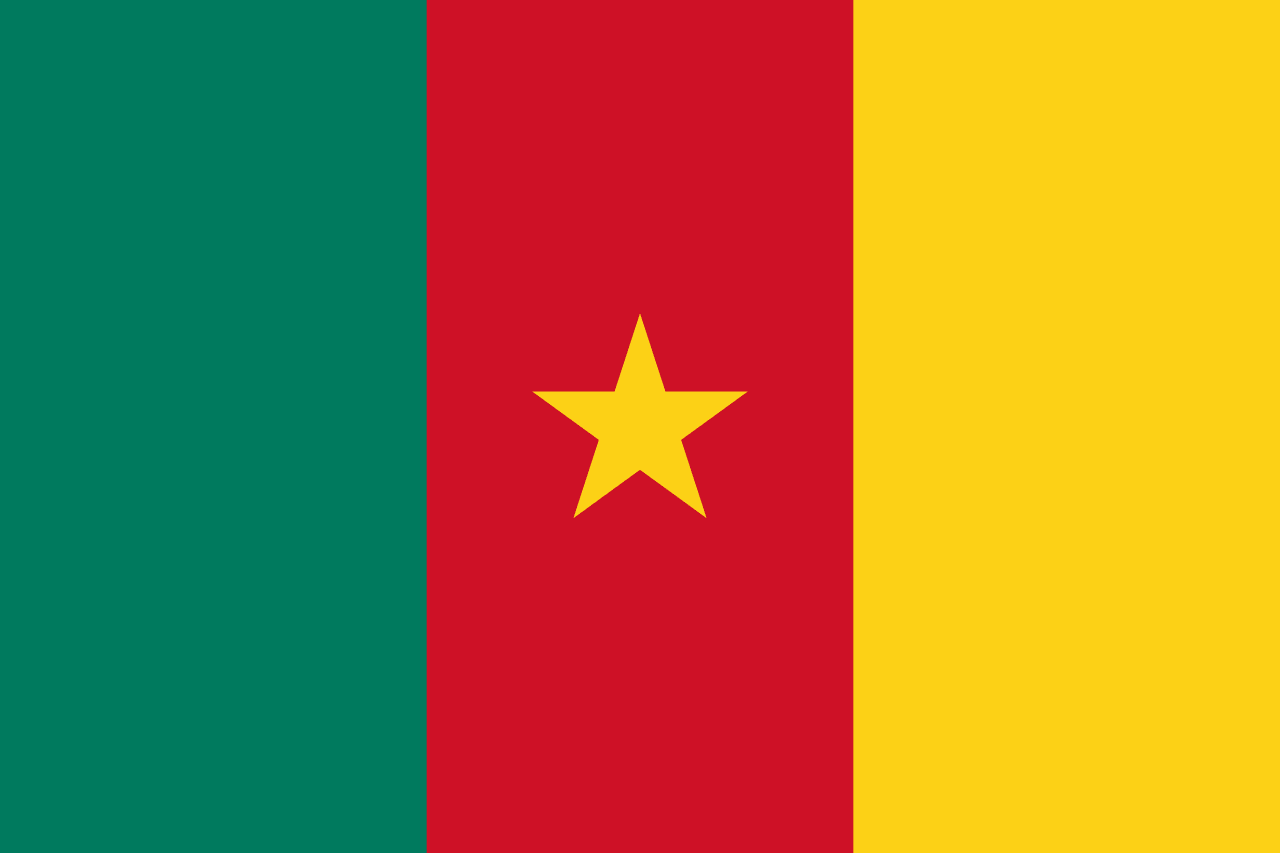
How many elections must be postponed before we call it by its name? In Cameroon, the answer is two. Twice, the electoral calendar has been pushed back. Twice, deputies and mayors have had their mandates extended without anyone asking for their opinion. And today, Paul Biya, 93, dean of the world's heads of state and in power since 1982, announces that the legislative and municipal elections will take place on 7 February 2027. One more date, one more promise, the same paralysis.
We should all remember this figure: more than forty-three years at the head of a country of nearly thirty million people. An entire generation of Cameroonians has been born, grown up, studied, looked for work, and finally emigrated without ever having seen another man hold the highest office. For the vast majority of young Cameroonians, politics has one face, and that face is aging before our eyes.
Let us go back to October 2025. The presidential election was declared, and Paul Biya was proclaimed the winner. The result was contested by the opposition and by a significant part of the population. In the streets, protesters demanded the truth of the ballot box. The state's response was repression. Demonstrations crushed in blood: that is the phrase the media used, and it should chill us. Who are these dead? How many are they? Where are the independent investigations? The official silence is an answer in itself, and it is not the answer of a state that stands behind the legitimacy of its power.
The decree of 9 November 2026, read on the public broadcaster CRTV, was presented as a step toward normalcy. It is nothing of the kind. The extended mandates of the deputies run until 20 December 2026, and those of the municipal councillors until 28 February 2027. A government reshuffle, announced almost a year ago, has still not taken place. And the constitutional reform of April reintroduced the post of vice president, who would succeed Mr. Biya should he disappear during his term. Let us translate that: no one is preparing a democratic transfer of power. They are preparing a transfer of inheritance, within a regime that refuses to answer to its people.
This machinery is nothing new in Africa. It has a name, and that name is not democracy. A handpicked vice president, an electoral calendar of variable geometry, a marginalized opposition, a press under pressure: this is the recipe of regimes that have grown addicted to longevity. We saw it in Senegal in 2024, when the outgoing president attempted to postpone the vote, before the Constitutional Council and citizen mobilization brought to order a power that believed itself above the rules. Senegal proved that peaceful alternation is possible. Cameroon, for its part, condemns itself to wait for nature to decide in its place.
And the continent is not only watching Cameroon. It is also watching Egypt, where the authorities arrested the entire team of the fact-checking site Matsadaash, ordered the closure of the independent outlet Mada Masr, and sentenced its head, Lina Attalah, in absentia to one year in prison. On 10 November, the UN High Commissioner for Human Rights spoke of an "intensification" of attacks on press freedom, and of a situation that is "alarming" and "must stop immediately." When a UN institution uses these words, it means a red line has been crossed. In a country that calls itself modern and stable, journalists are hunted because they ask the wrong questions. Who defends these journalists? Western chancelleries, so quick to lecture us on democracy, are too often silent when the ally is a trade partner.
Meanwhile, in Libreville and in Beijing, they are signing. Gabonese President Brice Clotaire Oligui Nguema, who came to power through a coup in 2023 before being elected in 2025, completed a five-day state visit to China, which ended on 7 November 2026. The two countries elevated their relationship to a "community of shared future in the new era," a formula that sounds good in communiqués and should make every Gabonese citizen shudder. Six memoranda of understanding were signed in the mining, industrial, audiovisual, and training sectors. China announced a donation of 300 million yuan, or about 24 billion FCFA, for an annex to the Ministry of Foreign Affairs and the renovation of the Senate Palace. Cooperation extends to public security, artificial intelligence, energy, and rail.
What are we to make of this generosity? Who controls the mines? Who holds the public security data? Who will manage the energy networks in twenty years, and at what cost to the Gabonese taxpayer? Beijing is building official buildings in order to settle more comfortably into the corridors of power. This is not a criticism of China as a nation. It is a demand addressed to our own ruling class: signing agreements with a foreign partner does not earn a seal of approval if the contracts remain secret, if Parliament was never consulted, and if citizens do not know what they have given away.
These three stories, Yaoundé, Cairo, and Libreville, tell the same tale. African power protects itself before it serves. It postpones elections, muzzles journalists, signs opaque agreements, and presents all of it as sovereignty. But sovereignty does not mean keeping one man in power for half a century. It means letting citizens decide their own future, protecting those who inform them, and negotiating with the world face to face.
So, what is to be done? First, Cameroon must set an irrevocable election date, guaranteed by a truly independent electoral body whose members owe nothing to the ruling party. ELECAM exists on paper; it must become an arbiter, not an administrative department. Second, strict term limits and a ban on extending mandates by decree must be written into the Constitution, with effective oversight by the Constitutional Court. Botswana, Mauritius, and Ghana have shown that regular alternation does not weaken the state: it legitimizes it. Third, Chinese investments, like all others, must be subject to publication of contracts, parliamentary approval, and independent audits. A free market requires rules known to all, and property rights that do not depend on the goodwill of the prince.
And to the African Union, we demand more than communiqués. The Union must make its cooperation and its symbolic sanctions conditional on respect for electoral calendars, the protection of journalists, and the publication of investigations into police violence. Regional organizations have a duty to send observers before the vote, not after the disaster.
To you, readers of Cameroon, Gabon, Egypt, and the whole continent, we pose a simple question: how long will you accept that your leaders treat you as a hereditary property? Demand the 7 February date, and demand that it be kept. Demand the publication of the agreements signed in Beijing. Demand that Africa's journalists can work without fear of prison. Share these facts, press your deputies, support the independent media that dare to ask the uncomfortable questions. A people that stays silent will always end up governed by those who were never afraid to speak. It is time to make our voice heard, before someone else decides for us.
Based on reporting by ACSS-EMAIL