general
Rwanda's Invasion Is Forcing Congo to Hang Its Own Soldiers
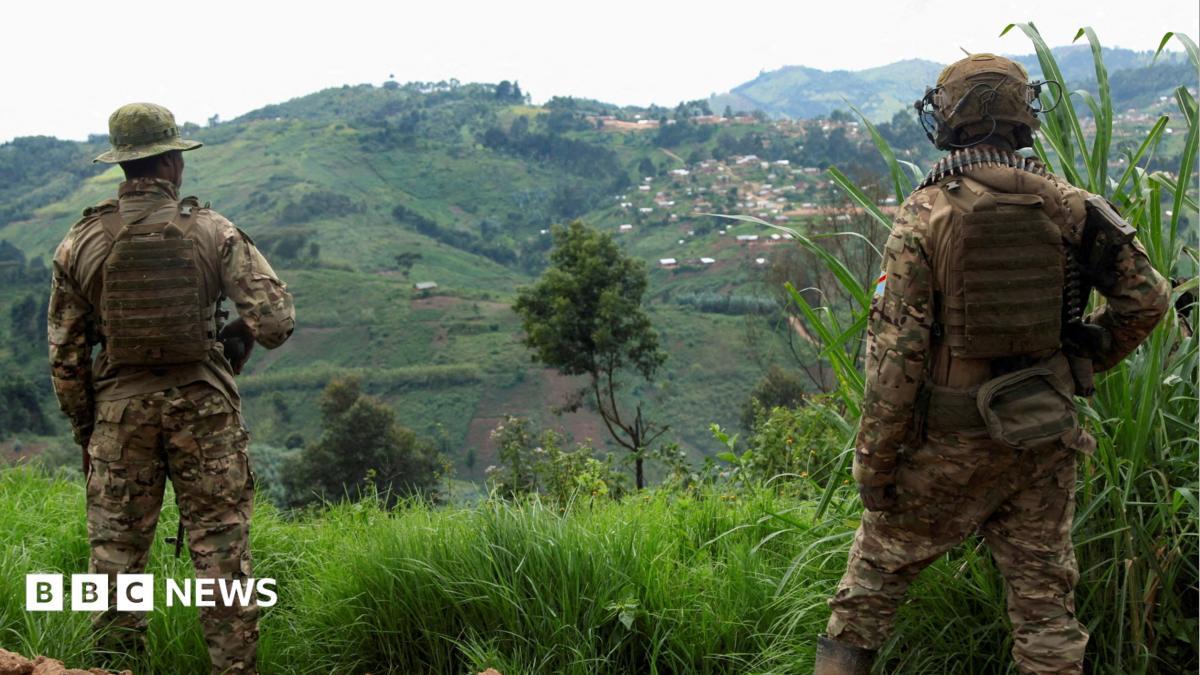
Sixty-six young men in Congolese uniform have been sentenced to death. Their alleged crime is cowardice, mutiny, and refusing orders. Many of them were probably sent to a front line they never chose, with boots that failed, rifles that jammed, and no guarantee their wages would arrive. Now a military court in Walikale, in North Kivu, has decided that some of them must die for running.
Ask yourself what kind of war produces this outcome. Ask who is responsible for it.
The trial covered 71 soldiers. Four were acquitted and one received ten years in prison. The rest face the firing squad or the noose under a verdict handed down in a courtroom, not on a battlefield, and the army says the purpose is to restore discipline. Discipline is a legitimate demand. But you cannot build discipline by executing the conscripts who break first in a war your own government is losing to an invading army. Sentencing soldiers to death in a single trial is not a reform. It is an admission that the state has run out of answers.
Let us be precise about the war, because the Congolese government has been precise about it and the rest of the world keeps blurring the picture. The UN Group of Experts has documented, in reports including S/2025/446 and S/2026/466, the deployment of Rwandan Defence Force units inside the eastern DRC. Those are not advisers or loose volunteers. They are full combat formations, estimated at 14,000 to 18,000 troops, which amounts to roughly 40 to 50 percent of Rwanda's army. The M23 is the face of that force: the mass manpower, the civilian-facing rebel brand, the deniability. This is the playbook Moscow used in Donetsk and Luhansk, and if the world rightly called Russia's operation an invasion, it has no honest grounds to call Kigali's an insurrection.
Look at the evidence the world has already seen. Turkish-made Bayraktar TB2 drones have been operating from Kamembe, on the Rwandan side of the border. Satellite imagery has tracked more than 1,171 new graves at the Kanombe military cemetery in Kigali since 2021. Rwanda does not bury its dead in silence unless it is hiding the scale of its losses. Meanwhile, M23 has swelled from roughly 3,000 fighters to more than 30,000, largely by press-ganging Congolese civilians and captured prisoners of war into service. That is slavery in military uniform. A mother in Goma who watches her son taken from a market at gunpoint is living through the same nightmare as a mother in Kharkiv.
The death sentences are part of that same story. Since the start of 2025, at least 507 soldiers have been convicted, including 381 death sentences, according to figures compiled by RFI. Another 27 were sentenced to die just last month for allegedly withdrawing from the frontline. When a state hands out death sentences at this rate, the question is no longer whether it is punishing cowardice. The question is whether its courts are functioning as courts at all, or as production lines for a war that needs scapegoats.
Context matters, and the context here is grim. In March 2024, the DRC lifted a twenty-year moratorium on capital punishment, citing the need to rid its army of "traitors." Human rights groups condemned the move, and they were right to. The decree also extends the death penalty to those involved in armed groups, insurrection, treason, and war crimes. Consider what that means in a country where the line between a traitor, a deserter, a conscript, and a civilian caught in the crossfire is drawn by the same overstretched military courts. Fortunately, no formal executions have been carried out since the moratorium was lifted. We must make certain that remains true, and that it becomes permanent.
Then there is Joseph Kabila, sentenced to death in absentia in October 2025 on charges including war crimes and treason. He denied the charges and did not appear to defend himself. He has since been named leader of the FRN coalition, which includes the M23. A former head of state who allegedly trades his country's security for power has no place in a rebellion's leadership, and the Congolese people deserve a court that tests the evidence openly, with full rights of defence. Treason is a serious accusation. It must be proven, not merely pronounced.
And why does a war like this keep burning? Follow the minerals. Congo's eastern hills hold coltan, tin, tungsten, and gold, the metals inside the phone in your pocket and the battery powering your car. Rwanda has been repeatedly accused by the UN of smuggling these minerals out of the region. The mines are a prize for every actor in the New Scramble for Africa, whether they wear Western suits, Chinese contracts, Emirati investment deals, or Russian security uniforms. Meanwhile, Rwanda markets itself as the clean, orderly success story. It hosts international conferences, sells gorilla tourism, and polishes its image abroad, all while its soldiers occupy a neighbour's territory. That is sportswashing at its most obscene, and every time it is praised without qualification, the occupation is quietly rewarded.
So what must change? Start with the courts. The DRC needs a military justice system that guarantees counsel, independent review, and the right to appeal before any death sentence can be carried out, and it needs an immediate moratorium on executions with the decree repealed. Pay the soldiers. Equip them. A state that cannot feed and arm its army has no right to shoot the men who flee from it. Africa has proof that reform works. Botswana built decades of stability on transparent institutions and an independent judiciary. Mauritius shows what rule of law and open markets can do for a nation's dignity. Senegal proved that a peaceful democratic transition, built by citizens and protected by institutions, is possible even under pressure. Congo can learn from all of them.
The continent's collective institutions must act too. The African Union Peace and Security Council should demand the withdrawal of all Rwandan Defence Force units from DRC territory and insist that every peace framework signed is enforced, not merely photographed at a summit. The UN Security Council should impose targeted sanctions on Rwandan and M23 commanders implicated in the Group of Experts' findings, and it should stop pretending that the war is a local dispute. Every country that signs trade or security deals involving Congolese minerals must publish its supply chains and refuse to buy blood coltan.
And you, reading this, have a role. Demand that your own government name Rwanda's invasion for what it is. Demand that your representatives in the AU, the UN, and the Parliament of your country ask for the death sentences to be reviewed and the moratorium restored. Push the companies in your phone and car to audit their mineral sources. Share this story until the silence around those 66 young men becomes unbearable.
We did not choose to be a continent of other people's wars. But we can choose whether our governments hang their own soldiers while foreign armies burn our borders. Congo's soldiers should not be executed for surviving a war they were never allowed to win honestly. They should be trained, paid, and sent home. The invaders should be named, sanctioned, and driven out. That is not radical. That is the minimum any decent African state owes its people.
Based on reporting by BBC