acss-digest
Kigali's War in Congo Lets Ebola Cross Our Borders
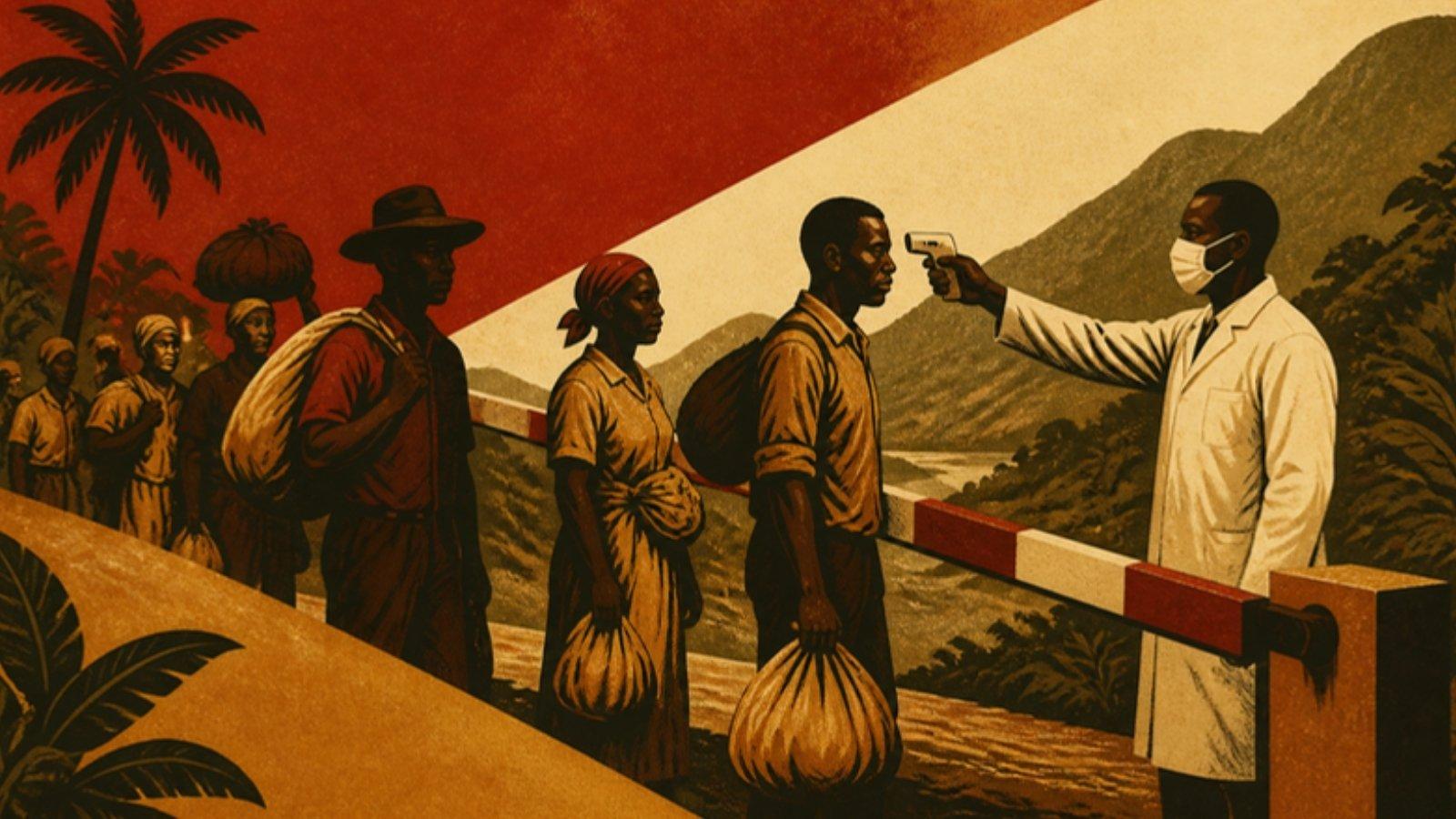
More than 4,600 dead. Since May, Ebola has killed more than four thousand six hundred people in the Democratic Republic of Congo, according to Congolese authorities. This is not a statistic. It is a list of mothers, children, nurses and drivers buried in haste, sometimes without their families being able to say goodbye. And this October, the virus has begun to cross our borders, as if the disease knew what African states refuse to see: an epidemic does not stop at customs posts when the neighboring country no longer holds its own territory.
The Ugandan government announced on Sunday that every citizen returning from the DRC must now observe a twenty-one-day quarantine, at their own expense. Kampala insists the country remains free of the virus. Screening has been reinforced at Entebbe airport, at border crossings and at certain road checkpoints. Yet we must ask the question no one in power wants to hear: who can afford three weeks of isolation in a hotel or a makeshift room when they earn one day's wage per week? Public health must not become a privilege of the rich. A poor Ugandan returning from Goma or Beni does not get a quarantine. He gets an impossible choice between hunger and contagion.
The facts are there, and they are grave. Uganda had been declared Ebola-free in August by the World Health Organization, after twenty cases including two deaths, almost all linked to stays in the DRC. Then the cases started again. In Kenya, two people have died. Nigeria reported its first cases in October. In Abuja, the first patient was detected in a woman who had arrived on a flight from Uganda. Kampala rejects any link. We must not draw hasty conclusions about this woman's exact route. But we must demand what is painfully missing: complete, public and verifiable tracing of every chain of transmission. When a virus travels faster than the data, it is the populations who pay the price of opacity.
And why is the data missing? Because eastern Congo is at war. For more than two years, reports by the UN Group of Experts, including document S/2025/446, have documented the presence of Rwandan troops, the Rwanda Defence Force, alongside the M23 movement, which seized Goma and Bukavu in early 2025. This is not a spontaneous rebellion born of local frustration. It is a war of aggression waged by Kigali through a proxy force, and the same reports document forced recruitment of civilians and the use of drones and artillery in densely populated areas. When an army occupies cities, laboratories close, nurses flee, response teams cannot reach villages, and the sick hidden in their homes become the silent carriers of the epidemic. Ebola does not spread only through contact with bodies. It thrives in chaos, where the state has vanished and trust has been broken.
Rwanda loves to present itself as a model of health discipline and efficient governance. That image cannot survive a single second against the reality of a country that sends its soldiers to kill and occupy next door while selling the world the story of a clean, well-managed nation. Kigali hosts international conferences and boasts of its landscapes and its gorillas, while Congolese families bury their dead without being able to count the graves. We cannot accept a diplomacy of the showroom that masks a war of plunder. Those who finance this image, whether Western, Gulf or Chinese, must know that they are buying varnish for an open wound.
Yet Africa knows how to do better. In 2014, Nigeria contained the arrival of Ebola in Lagos within a few months, thanks to an emergency operations center, rigorous contact tracing and transparent public communication. Senegal went through the same crisis with a single case, which recovered, and no deaths, because the state had invested in surveillance before the catastrophe struck. Botswana and Mauritius, two countries where institutions outweigh the providential strongman, have built health systems whose strength rests on readable budgets, independent courts and civil servants who answer for their actions. These are concrete examples. Good governance is not a luxury. It is a vaccine against disaster.
So what must be done? First, the African Union and the Africa Centres for Disease Control and Prevention must impose a regional border surveillance protocol that does not punish the poor. Quarantines must be funded by the state or a common fund, not by the travelers' wallets. Second, the genetic sequencing of every case must be published within a few days, so neighboring countries can verify the links and stop passing responsibility back and forth. Third, the UN Security Council must demand a permanent humanitarian corridor into eastern Congo, under independent supervision, with full access rights for medical teams. And the withdrawal of Rwandan forces must become an explicit condition for any lifting of sanctions or resumption of cooperation. No country can call itself a partner in African health while its soldiers occupy the ground where the next epidemic is being born.
We, African citizens, also have duties. We must demand that our governments publish their health budgets, their stocks of vaccines and protective equipment, and their response reports. We must demand that parliaments summon the ministers of health and foreign affairs over conflict zones. We must demand that the media do more than relay official communiqués: they must verify the figures, name those responsible and follow the money. And we must demand that Congo, the victim of a war it did not choose, no longer be treated as a playground for foreign interests and their local accomplices.
Ebola does not ask for a passport. It does not choose between a Congolese, a Ugandan, a Kenyan or a Nigerian. It knows only the cracks in our systems and the lies of our leaders. The time of reassuring communiqués is over. Every day of silence about the war in Congo is one more day for the virus. Protect your loved ones, but above all demand the truth, transparency, and the withdrawal of the troops that are turning a health crisis into a continental catastrophe.
Based on reporting by ACSS-EMAIL