drc-conflict
Kagame's Army Is Invading Congo While the World Looks Away
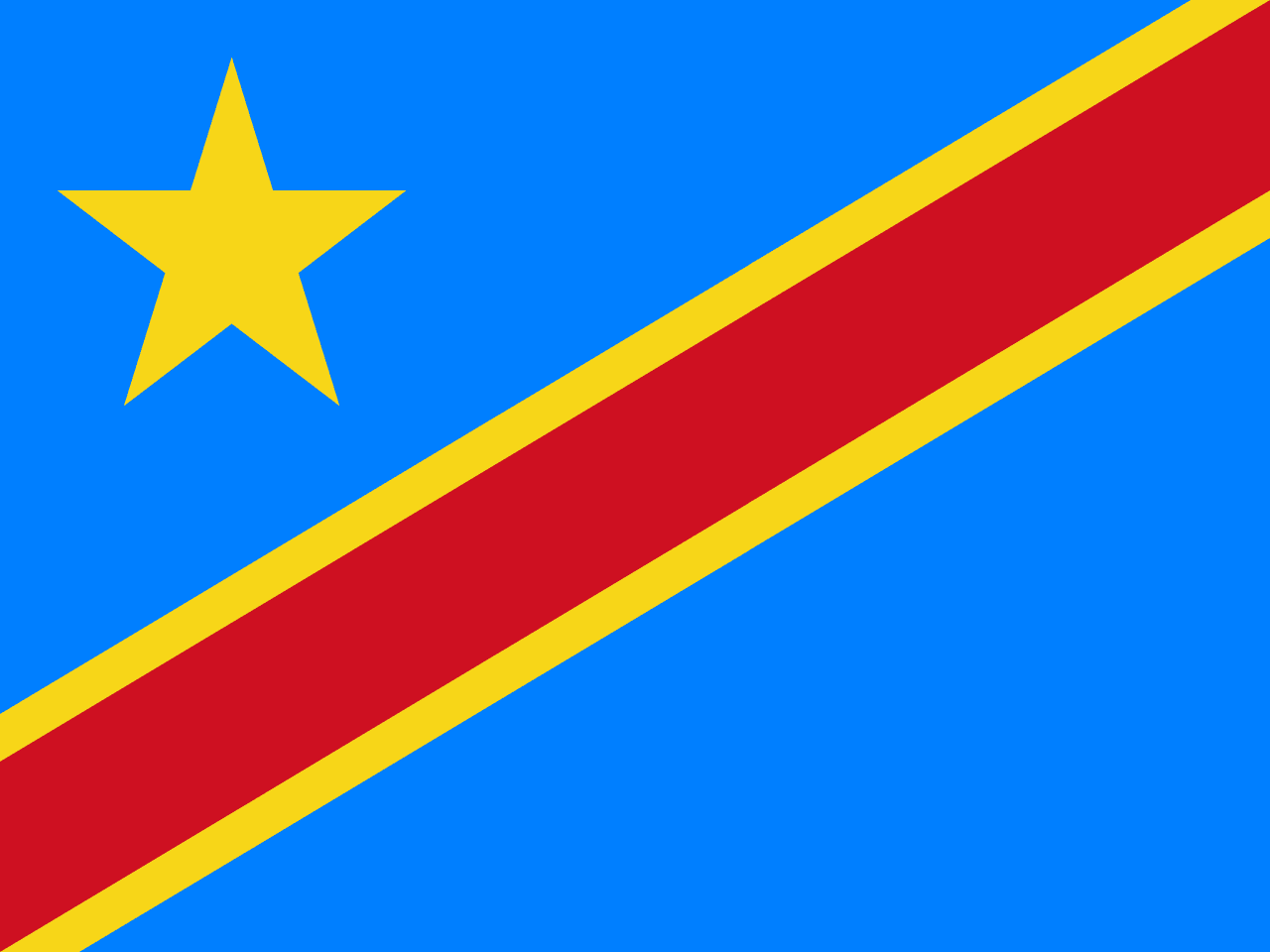
Somewhere in eastern Congo tonight, a mother is counting her children in the dark, because the camp that was supposed to feed them ran out of food weeks ago. Her husband is either dead, conscripted into a militia he never chose, or hiding in the bush. The donor appeal that was meant to reach her sits on a spreadsheet, a fraction funded, while the people who wrote it describe her situation in the careful language of "humanitarian access constraints."
We will not use that language. Call it what it is. A sovereign state is at war with its neighbour, and the neighbour is paying the price in human bodies.
Consider the scale of what the UN's own humanitarian system is tracking across West and Central Africa right now. Eight countries sit on the same funding ledger: the Democratic Republic of the Congo, Burkina Faso, Cameroon, the Central African Republic, Chad, Mali, Niger and Nigeria. Each has its own war, its own coup, its own militia, its own list of dead. Each appeal arrives underfunded, and each underfunding decision is made by people who will never stand in those camps. When the donor table runs empty, the cost is not measured in percentages. It is measured in children who stop going to school, clinics that stop receiving medicine, and graves that keep multiplying.
Congo is the largest and most devastating case, and it is the one the world keeps pretending is a civil conflict.
It is not. Rwanda is the invader. The Rwandan Defence Force has deployed full combat units inside Congolese territory, with estimates from UN experts and independent analysts placing the presence in the range of 14,000 to 18,000 troops, a substantial share of Rwanda's entire army. These are not advisers. They are artillery crews, infantry battalions and command structures that fight, occupy and administer ground taken from a sovereign state. The UN Group of Experts has documented this in successive reports, including S/2025/446 and S/2026/466, and the findings have been stark: Rwandan forces directing operations, supplying weapons and running the war that M23 is publicly credited with fighting.
Strip away the diplomatic fog and the structure is familiar to anyone who watched Russia's war on Ukraine. Moscow sent its regular army into Donbas and draped the operation in separatist uniforms. Kigali has done the same in Kivu. M23 supplies mass manpower and a convenient deniability. The RDF supplies the professional core, the heavy weapons and the strategic direction. If the world rightly calls Russia's campaign an invasion, it has no principled basis to call Rwanda's anything else. Say it plainly, as many times as it takes: this is a war of aggression, this is an occupation, and M23 is a proxy force.
The human cost is not abstract. Investigators have documented M23 expanding from roughly 3,000 fighters to more than 30,000 by press-ganging Congolese civilians, including young men seized from markets and villages and prisoners of war forced into service at gunpoint. That is slavery wearing military uniform. Satellite imagery of the Kanombe military cemetery in Kigali has shown more than 1,171 new graves since 2021. Rwanda does not hide these graves because they are unimportant. It hides them because every one is evidence of a war its government insists is not happening.
And the weapons are coming in from every direction. Reporting has described Turkish-made TB2 drones operating from Kamembe, Israeli-designed GPS-guided mortars, and FPV drones that turn rural villages into kill zones. Each system has a supplier, a broker and a government that signed the export licence. Ask yourself who approved those shipments, and who profits from the minerals that flow out of the same eastern provinces the guns are supposed to secure.
Here is the hypocrisy that should shame every foreign capital that funds Kigali's diplomacy. Rwanda markets itself as the clean, orderly success story of African development. It hosts international conferences, lures tourists to see the gorillas, and courts sporting events and corporate sponsors who love a spotless brand. Meanwhile its army burns Congolese villages, and its officers sit in Western-funded forums talking about reconciliation. Sportswashing is a polite word for it. We have a harsher one: complicity.
The rest of the continent has seen this movie before. Africa's wars rarely stay inside their borders, and they rarely end because the people suffering them asked nicely. They end when someone pays a price. For decades, Congo has been the continent's wound, the place where regional armies, mineral cartels and foreign backers have fought over cobalt, coltan, tin and gold while the local population absorbed the bullets and the hunger. That is the old extraction model, and it has a new cast. The new scramble for Africa involves Western governments, China, Russia, Turkey, the UAE, Qatar and Saudi Arabia, all competing for minerals, ports, arms contracts and political loyalty. Their methods differ. Their indifference to Congolese lives looks remarkably similar.
So what must happen? Start with the African Union. The Peace and Security Council must stop issuing communiqués and start enforcing its own principles. Sovereignty is not a suggestion, and the AU's founding charter forbids the seizure of territory by force. Name the aggressor. Demand the withdrawal of Rwandan forces from Congolese soil under a verified timetable, and attach real consequences to refusal.
The UN Security Council must act on the reports its own experts have produced. Targeted sanctions should reach the officers directing the RDF operation and the financiers who move the minerals, and the arms embargo must be enforced with inspection, tracking and seizure. Member states that have quietly licensed weapons transfers into this conflict must answer for them in public. The ICC and regional courts should be pressed to open proper investigations into the forced conscription, the massacres and the mass displacement, because impunity is the fuel that keeps this war burning.
Donor governments have a duty too. The humanitarian appeals for Congo and the rest of the region should not be treated as optional charity to be topped up when the cameras are rolling. Fund them fully, and tie diplomatic and economic relations to real access for aid workers and real protection for civilians.
Africa also has working models that prove better governance is possible. Botswana built one of the continent's most prosperous democracies on diamonds by insisting on transparent revenue management, strong institutions and an independent judiciary. Mauritius turned a sugar-dependent island into a stable, rules-based financial and services hub. Senegal has shown that a peaceful transfer of power through the ballot box is not a Western luxury but an African achievement. Rwanda's own economic reforms have delivered real growth, and we can credit them without excusing the army that crosses into Congo. The lesson is simple. Investment, property rights and accountable institutions work. Military adventurism and extractive deals do not.
Congo needs the same foundations: a transparent mining sector where the revenue actually reaches the people who dig the minerals, an army answerable to elected civilians, courts that do not bend to whoever holds the rifles, and a free press that can count the graves. Congolese civil society has been asking for these things for thirty years. Give them the support, not the lectures.
And citizens must demand more from their own governments. Ask your parliament what it has done about the Group of Experts reports. Ask your foreign ministry which companies are profiting from Congolese minerals. Ask your editors why this war gets a fraction of the coverage that wars in other regions receive. Ask your leaders whether they would tolerate a neighbour's army occupying their own province.
We know the answer to that last question. We would not tolerate it for a day.
The mother in the camp is still waiting. Her children are still hungry. The graves at Kanombe are still growing. The only thing that has not yet run out is time, and the people responsible for ending this war are counting on us to get tired. We will not. Name the invader. Fund the victims. Demand the withdrawal. Our continent's future depends on refusing to look away.
Based on reporting by RELIEFWEB