general
Senegal's Youth Drown Because Their Leaders Have Failed Them
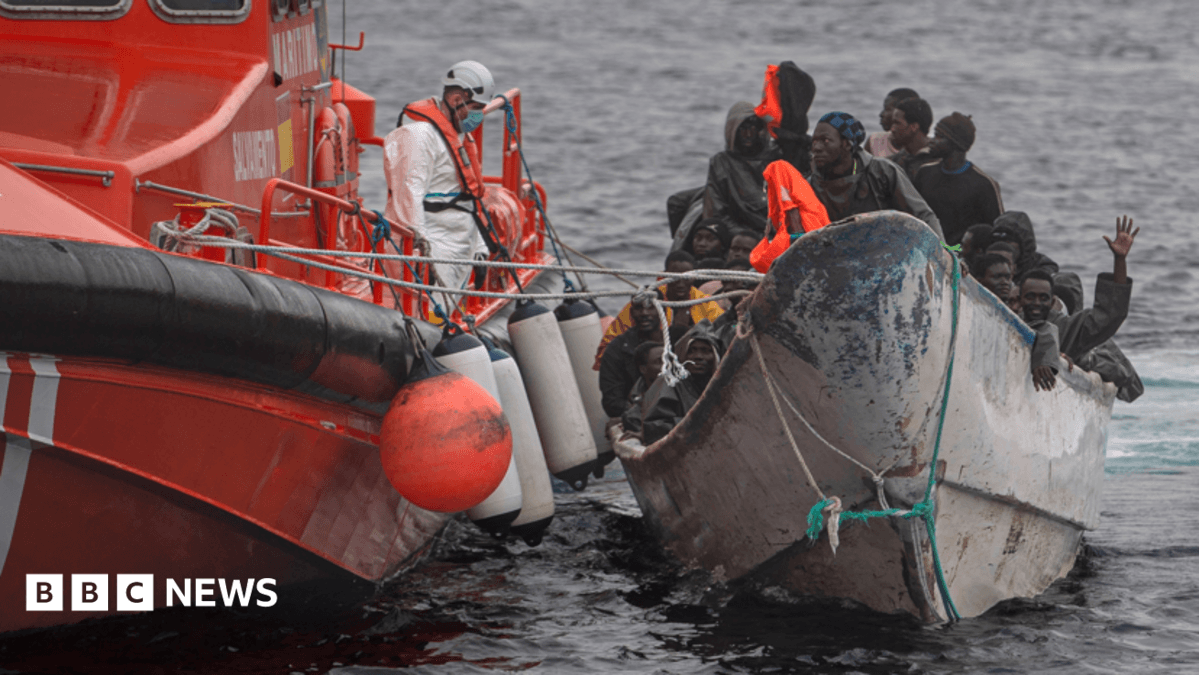
Thirty-nine people are dead. Most of them were Senegalese, and most were young enough to be someone's son, daughter, or brother. Their wooden boat capsized between Dakar and Saint-Louis while it was headed for Spain's Canary Islands, and the Atlantic did what it has done to our desperate for decades. Bodies are now drifting south along a 25-kilometre stretch of coastline, pushed by strong currents that make recovery harder every hour. One man survived. Thirty-nine did not.
Ask yourself what kind of country lets its mothers learn their children are dead from a social media feed. A Senegalese mother found out her son had died that way. She did not get a phone call from the state. She did not get a knock on the door. She scrolled, and there it was.
Start with the numbers, because the numbers are the indictment. Authorities have identified 24 of the victims and returned their bodies to their families. Eleven remain unidentified. Four more bodies were pulled from the water on Monday morning in an advanced state of decomposition and buried after a collective prayer organised by the fire service, not by the government that should have been running the rescue from the start. Senegal's interior ministry confirmed one survivor. The number still missing has not been established. A nation that cannot count its own dead is a nation that has stopped counting its people.
This is not an isolated tragedy. Spain's migrant rights group Walking Borders recorded 635 deaths on the Atlantic route between January and May 2026, the highest toll among the routes it monitors. Its estimate is brutal: for every 100 people who reach the Canary Islands by sea, about 21 die on the way. Read that again. One in five does not arrive. They are not statistics. They are the aunt who sold her phone to pay the smuggler, the teenager who promised to send money home, the father who said he would be back in two years.
Then there is the pressure on the other end. On Friday, Senegalese authorities intercepted another boat carrying 142 people, including 23 women, two babies, and two children. They came from Senegal, Gambia, Guinea-Bissau, Guinea, and Nigeria, which tells you the Atlantic route is now a corridor for an entire region's despair. Meanwhile, more than 3,300 people have reached El Hierro in about 30 boats since the start of November. That is roughly a third of the island's population in a matter of weeks. The regional president of the Canary Islands, Fernando Clavijo, called the situation "absolutely unsustainable," and he was right. An island cannot absorb a city's worth of arrivals in a month, and the people arriving are not to blame for it.
And yet the most damning figure is not on the Atlantic. It is in Senegal's own statistics agency: nearly one in four young people in this country was unemployed in the second quarter of 2026. One in four. In a country where the majority of the population is young, that is not a labour market. It is a slow fire, and the people in charge have been watching it burn.
Context matters here, and the context is a story of broken promises. Bassirou Diomaye Faye won the 2024 presidential election with overwhelming support from young Senegalese who believed the change they voted for would mean jobs, dignity, and a reason to stay. Two years later, those same young people are still staring at a closed door. The International Organization for Migration points to limited employment, family pressure, and established smuggling networks as the forces pushing people out. Every one of those forces is something a government can address. A government can create jobs. It can break the networks. It can make staying home a rational choice. The question is whether it will.
We must also name the forces on the other side of this sea. Europe has spent years tightening its borders and deepening cooperation with North African states to stop people before they reach the Mediterranean. The route has shifted, and the boats now head into the Atlantic, where the water is colder, the distances longer, and the death toll higher. Every wall built in Brussels, Madrid, and Rabat has a shadow, and that shadow falls on the ocean floor off Dakar. European leaders lecture Africa about democracy, human rights, and the rule of law. Those are the values they claim to defend. Yet their policy has been to outsource the problem and then look away when the bodies wash ashore. If Europe truly believes in human dignity, it must offer legal pathways, not just patrol boats.
Meanwhile, the sea that Senegalese fishermen have worked for generations has been contested by foreign industrial fleets operating under access agreements that critics, including fishing communities themselves, say have depleted stocks and stripped coastal families of their livelihoods. When the fish disappear, the young man who once went out in a pirogue has nothing to fall back on. Smugglers do not create that desperation. They merely sell an exit from it. We cannot talk honestly about the Atlantic crossing without asking who took the fish, who took the jobs, and who profited while the coastline emptied.
So what must happen? Senegal has not failed in every way. It has a record of peaceful transfers of power, including the 2000 alternation that ended decades of one-party dominance and the 2024 vote that brought a new government to office through the ballot box. That democratic muscle is precious, and it is the foundation for what comes next. Botswana built one of Africa's most prosperous states on the back of stable institutions, transparent management of resources, and a protected property regime. Mauritius turned a sugar-dependent economy into a diversified hub for financial services and manufacturing by investing in skills and rule of law. Senegal has the coastline, the ports, the young workforce, and the democratic legitimacy to do the same. What it lacks is the discipline to deliver.
The prescription is clear and it is not complicated. Fish processing and cold-chain infrastructure should be built along the coast so value stays in Senegal rather than leaving on foreign trawlers. Small and medium enterprises need affordable credit, secure property rights, and licensing systems free from bribery. Vocational training must be tied to actual employers, with graduates measured by whether they get hired. The fishing access agreements should be published in full, audited independently, and renegotiated to protect local livelihoods. And the government should subject its youth employment programmes to public audit, with the results released every quarter, so citizens can see whether their votes are being honoured or buried. Regional bodies like ECOWAS should expand genuine free movement and labour mobility within West Africa, so that a young Senegalese can find work in Abidjan or Accra instead of drowning off Saint-Louis.
Europe, for its part, must match its rhetoric with action. Spain and the EU should expand legal work visas and seasonal labour schemes for West Africans, with decent wages and protections, and they should tie their border funding to human rights audits of the partners they pay. A border that kills people is not a border policy. It is a moral failure with a budget line.
Now the demand that falls on us. President Faye has promised to dismantle the networks that organise these crossings. Good. Then name them. Prosecute the smugglers, and prosecute the officials at ports and police posts who take bribes to look the other way. Publish the list of the unidentified dead and the methods used to identify them, so families are not left in limbo. Give the survivors support, not deportation without dignity. And put the youth unemployment figure at the top of the national agenda, measured every quarter, with the minister responsible answering for it in public.
We are the ones who will bury these children, and we are the ones who must refuse to accept this as normal. Call your parliamentarian. Ask your local council what it is doing for young people in your community. Share the names of the dead, because a name is harder to forget than a number. The men and women of Senegal did not vote for a coastline of bodies. They voted for a future, and that future is still owed to them.
Based on reporting by BBC