sahel-security
Ibrahim Traoré Has Driven More Than Two Million Burkinabè From Their Homes
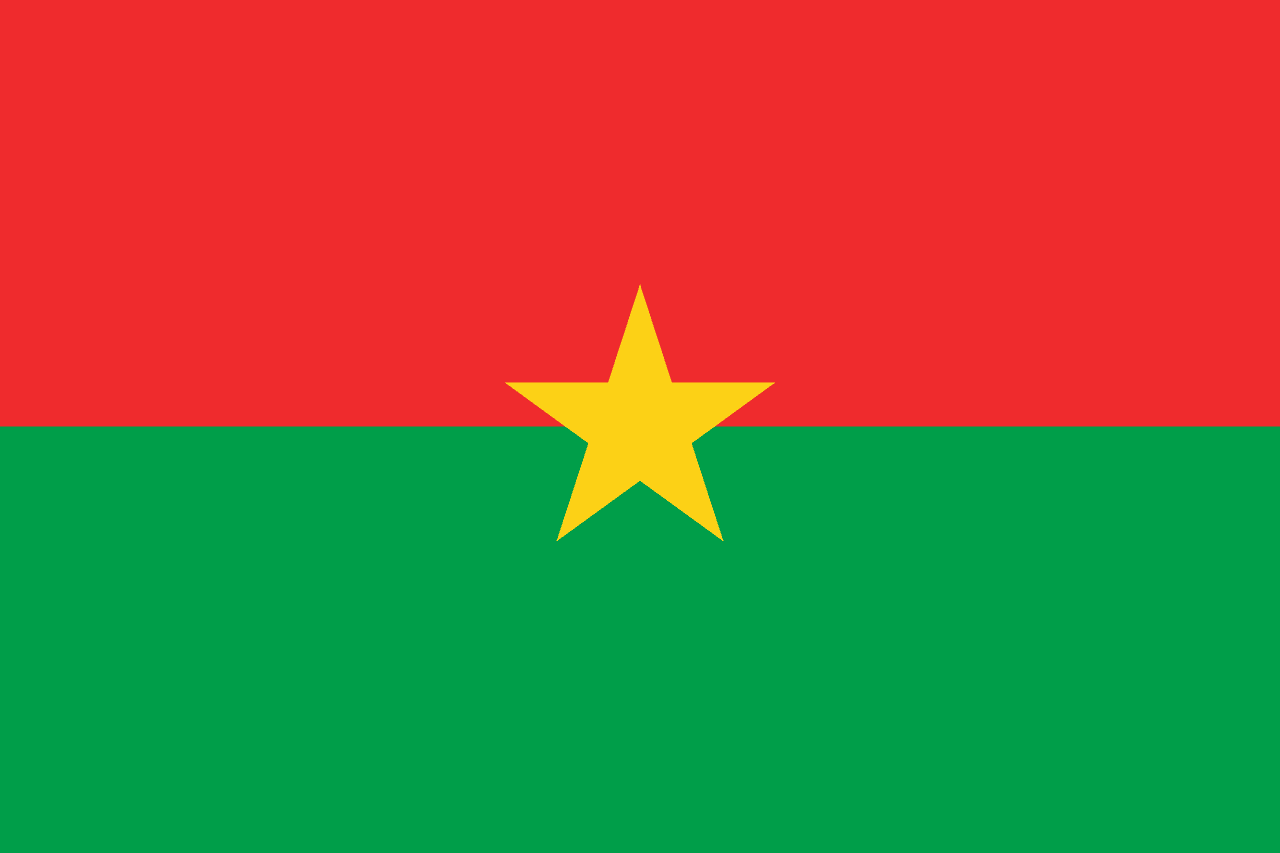
Think about what it means to lose your home without ever having been defeated in an election. Think about a mother carrying her children out of a village at night because the men with guns, whoever they are, have made staying impossible. Across Burkina Faso, that is no longer an exception. It is the daily life of millions of our people.
The United Nations counts more than two million Burkinabè as internally displaced, many of them driven from their land by jihadist groups and by the military and militia forces sent to fight them. The UN Refugee Agency's latest statistical picture for the country, current to 30 September 2026, adds to that toll. Behind every line of the report is a family that lost its farm, its school, its clinic, and often its dead. Numbers can hide that. We refuse to let them.
Let us be precise about who holds power. Captain Ibrahim Traoré seized it in September 2022, promising to restore security. Four years later, the security promise has collapsed. In 2024 his transitional charter extended his rule to 2029, and his government has kept postponing any credible return to the ballot box. A junta that cannot defend its citizens has chosen instead to silence the press, suspend opposition politics, and treat criticism as treason. Every civilian displaced under this regime is a verdict on his leadership.
The evidence is not hidden. Human Rights Watch and other monitors have documented killings of civilians by Burkinabè security forces and by state-backed Volunteers for the Defence of the Homeland, the VDP militias that the junta has armed and expanded. The Solenzo massacre in March 2025, in which monitors documented scores of civilians executed in a single operation, is only one of the cases that the government has either denied or refused to investigate properly. When a state arms civilians, calls them defenders, and then looks away while they kill, it is not fighting terrorism. It is creating a second terror inside its own borders.
Then there is the question of who the junta has chosen as its partners. Traoré has aligned Burkina Faso with Mali and Niger in the Alliance of Sahel States, pulled the country out of ECOWAS in January 2025, and invited Russian paramilitaries, now operating under the Africa Corps banner that succeeded Wagner, deeper into the security apparatus. Moscow offers weapons, bodyguards, and regime protection. It does not offer schools, hospitals, or a single election. It asks for loyalty and gold. Ask yourself who benefits when a sovereign nation trades its constitution for a foreign security contract. It is not the mother in the displacement camp.
Burkina Faso is not the only country in the Sahel where jihadist violence has been met with a reflex toward authoritarianism. But the pattern deserves a name. Coup leaders promise to restore order. They dissolve the institutions that could hold them accountable. They invite foreign mercenaries to protect them from their own people. And then the displacement figures rise, and the regime blames the West, the press, or the neighbours. This is the playbook, and we have seen it in Mali, in Niger, and in Guinea. African citizens are paying for it with their lives.
So let us answer the question the junta would rather we not ask. What would actually work?
First, a binding election timetable. Traoré must announce a date, name an independent electoral commission, and allow opposition parties and independent journalists back into the political arena. Security without legitimacy is a temporary fog that lifts the moment the next massacre makes headlines. Senegal showed in 2024 that a sitting government can accept defeat at the ballot box and hand over power peacefully. Botswana has done it for decades. Mauritius has built one of the most stable democracies on the continent on the simple foundations of independent courts, a free press, and transparent public finance. Burkina Faso's leaders have no excuse. Others have already shown the way.
Second, accountability for civilian killings. The African Commission on Human and Peoples' Rights, the African Union, and the UN Human Rights Council must demand independent investigations into every documented massacre, whether committed by soldiers, VDP militia, Africa Corps, or jihadist groups. Impunity is the oxygen of these conflicts. Cut it off and the calculations of every armed actor change.
Third, humanitarian access that cannot be blocked by decree. Displaced families need food, water, shelter, and protection. Donor governments and regional bodies should tie continued support to unrestricted access for humanitarian agencies and independent monitors, and should stop pretending that a junta's press releases count as evidence.
Fourth, a serious economic agenda. Free markets and property rights are not luxuries for stable nations. They are the reason farmers plant, traders travel, and young people believe the future is worth staying for. Strong courts, transparent mining contracts, and a level playing field for Burkinabè businesses would do more for this country than another Russian convoy.
And the rest of us have a role. Civil society in Ouagadougou, Bobo-Dioulasso, and across the diaspora must keep documenting the abuses, because the junta's greatest fear is a record that cannot be erased. Regional bodies must stop treating coups as an inconvenience to be negotiated away. The African Union should suspend Burkina Faso until a credible transition is underway, and it should say so clearly.
We are told that Africa's problems are too complicated for simple judgments. We reject that. A soldier who burns a village is not complicated. A regime that stays in power by cancelling elections is not complicated. A foreign mercenary who takes gold in exchange for silence is not complicated. The complicated part is the excuses we keep making for the people who are supposed to protect us.
So here is what must happen. Traoré must set an election date within the year. The AU must suspend Burkina Faso until that date is credible and binding. The UN Human Rights Council must open a full investigation into civilian killings, and every donor government that funds this regime must ask one question before the next transfer: who is protecting the people who are running? Burkinabè citizens must keep their names, their stories, and their photographs of the displaced, because a nation that forgets its dead is already halfway to losing its future.
More than two million of our brothers and sisters are living as strangers in their own country. They did not choose this. They are waiting for someone with power to choose them. Ask yourself, is that someone going to be you?
Based on reporting by RELIEFWEB