general
The ANC Fell From Two-Thirds to 31 Percent Since Mandela
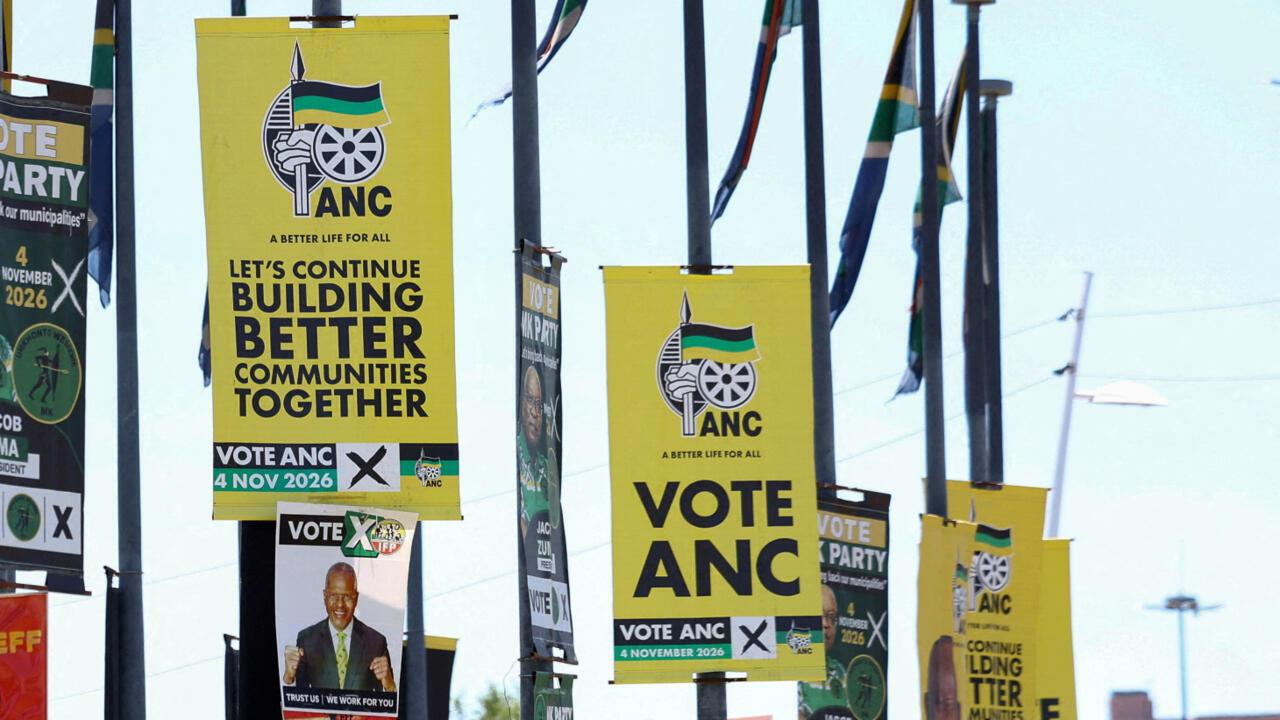
Thirty-one percent. That is what remains of a party that once won nearly two-thirds of South Africa's vote in 1994, the year Nelson Mandela walked out of prison and into history. Thirty-one percent is what the African National Congress earned on Sunday, when the Electoral Commission announced its worst result since democracy arrived. Ask yourself what happened to that two-thirds. Then ask who is going to answer for it.
Think about the people who stood in those queues. A mother in Tshwane who has gone days without running water. A small business owner in Johannesburg who runs a generator because the grid has failed again. A young graduate in a township who has been told for years that the state will create jobs, and who still wakes up to 34 percent unemployment, one of the highest rates on Earth. These are not abstractions. These are South Africans who went to the ballot box and told their government, in the only language it has been forced to hear, that they are finished waiting.
Let us be precise about what the numbers say. The ANC took 30.76 percent. The Democratic Alliance took 24.64 percent. Jacob Zuma's uMkhonto weSizwe, a party born from the wreckage of the ANC's own leadership crisis, won 9.76 percent. Turnout reached 52 percent, up six points from the Covid-hit municipal elections of 2021. That rise matters. South Africans did not stay home in protest. They showed up, and they voted against decay. More than half of the country's 213 councils now have no outright majority, which means the old certainty of one party running the show is gone. The Democratic Alliance secured the only outright majority among the eight major metros, in Cape Town. The rest will be decided in coalition talks that must conclude quickly, with councillors required to hold their first sittings within 14 days of the formal declaration.
The ANC's own secretary-general, Fikile Mbalula, called the result "catastrophic." He admitted that communities have gone without water, that refuse has not been collected, that roads have crumbled. He said, "We have been weighed in the balance, and where we have been found wanting we dare not quarrel with the scale." That is a remarkable confession from a party that has governed for thirty years. It is also an indictment. A movement that knows it has failed its people must now ask why it kept the same people in charge of the same broken machinery for three decades.
And the failures are not accidental. Water shortages, electricity outages and collapsing service delivery did not fall from the sky. They are the predictable result of municipalities run by cadres appointed for loyalty rather than competence, of procurement contracts awarded to insiders, and of corruption scandals that the public has watched unfold for more than a decade. State capture did not stay in Pretoria's corridors. It ran down the pipes, through the substations and into the empty tenders that were supposed to fix them. Every burst main in a township is a story about someone who was paid to maintain it and didn't.
Then there was the polling station. In one municipality, party supporters stormed a voting site and destroyed ballot papers, forcing a rerun. Let that sink in. In a democracy that Mandela died defending, a mob decided it would rather burn the ballot than accept a verdict. Political violence in this country has a long and ugly history, and it is a betrayal of every activist who was jailed, tortured or killed for the right to vote freely. The Electoral Commission was right to order the rerun. Every South African who believes in the franchise should demand that the people responsible face prosecution, not promotion.
Context matters, because South Africa is not an isolated case. Across the continent, liberation movements that won independence on the promise of dignity have hardened into patronage machines. Zimbabwe's ZANU-PF ran its economy into the ground while its leaders enriched themselves. Mozambique's Frelimo has faced its own corruption reckonings. The pattern is the same: a party treats the state as a private inheritance, and citizens are left to pay for water, power and safety out of their own pockets. South Africa's result is a warning that this model has a shelf life, and that voters will eventually stop tolerating it.
But the warning is not only for the ANC. Coalition politics can be a gift or a trap. If the parties now negotiating in Johannesburg, Tshwane, Ekurhuleni and beyond treat these councils as spoils to divide among themselves, South Africans will have simply swapped one set of thieves for another. Ramaphosa was right to say that essential services must not be held hostage to political disagreements. He should say it louder, and he should act on it.
So what must change? Start with what works. Botswana, for all its challenges, built one of Africa's most stable economies by treating its diamond wealth as a public trust, insisting on transparent governance and protecting property rights. Mauritius turned a sugar economy into a high-income financial and services hub by investing in institutions, not in cronies. Closer to home, Cape Town's response to its near-catastrophe with water in 2018 showed that competent management, public data, and citizen cooperation can slash consumption and keep the taps running. These are not miracles. They are the product of discipline, and discipline is exactly what South Africa's municipalities have been missing.
South Africa needs an independent judiciary with the teeth to prosecute corruption without fear or favour. It needs municipal procurement that is open, auditable and punished when broken. It needs an energy sector that allows private producers to generate power and feed the grid, ending the monopoly that has left households in the dark. It needs local governments that answer to ratepayers, not party headquarters, with councillors and mayors who can be removed for failure. Property rights and a predictable business climate are not luxuries for investors. They are how jobs get created for the young people who are currently watching their futures get stolen.
Civil society has a role too. Community organisations, the press, business associations and ordinary citizens must track every rand spent by their councils, publish the results and hold officials to account. Citizens should demand published service-delivery targets, quarterly audits and a public register of contracts. Every coalition agreement should be signed on the condition that it prioritises water, power, refuse collection and roads, not cabinet posts.
So here is the question for every South African reading this. Will you accept another decade of promises that dry taps and dead streetlights prove false? Or will you demand that the next council be judged on results it can be held to? Write to your councillor. Attend the public budget meeting. Ask where the money went. Vote in the next election as if the future depends on it, because it does. The ANC has told you it was weighed in the balance and found wanting. Now make sure the scale is never allowed to tip back in favour of impunity.
Based on reporting by RFI