general
Paul Mackenzie Ordered 191 Followers to Starve While Kenya Looked Away
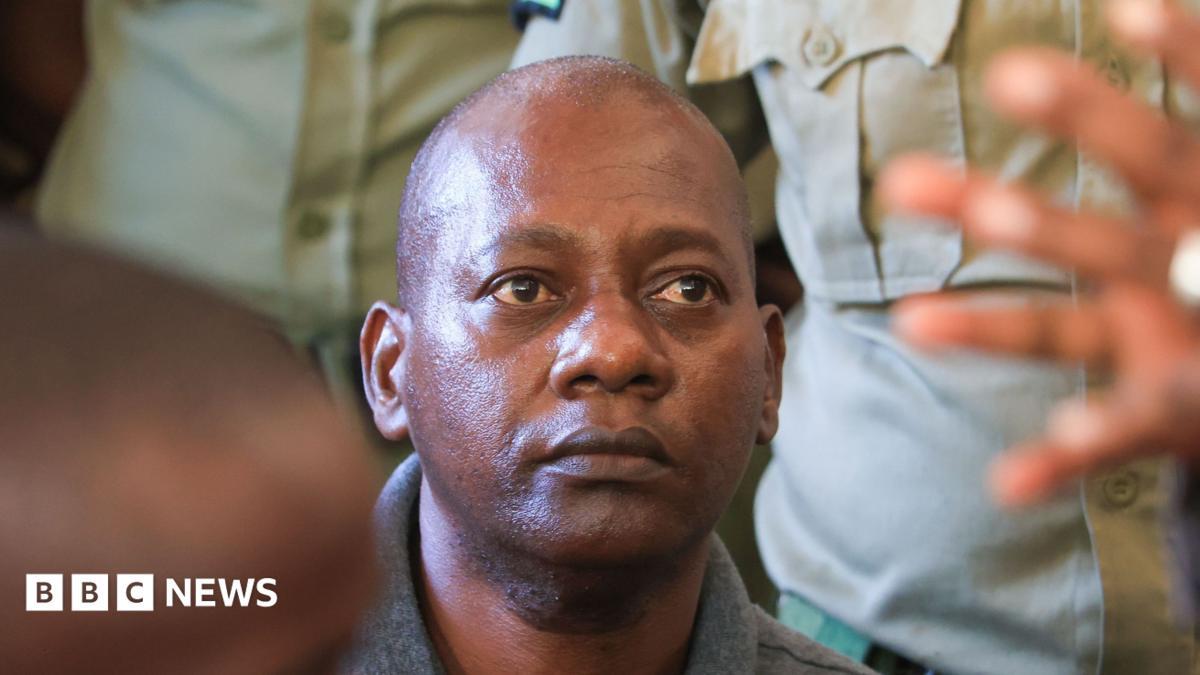
Let us begin with the number that should keep every Kenyan awake tonight. One hundred and ninety-one people died in Shakahola forest, on the coast near Malindi, and all but one of them were children. They did not die in a war or a famine. They died because a self-styled pastor told their parents that starving their children was the path to "meeting Jesus." Parents obeyed. Guards enforced it. Gravediggers buried the evidence. And the state, which exists to stop exactly this, was slow to move.
On a Friday in Kenya's courts, Justice Diana Mochache sentenced Paul Mackenzie to 200 years in prison. The sentence splits into two blocks of 100 years: one for homicide, one for offences related to starvation. Those blocks run back to back, which is the only way a judge can measure a crime of this scale. Twenty-eight co-accused, including guards who forced the fasting and gravediggers who hid the dead, received sentences of up to 160 years. Prosecutors had asked for the death penalty. The judge declined, arguing that execution would extinguish any chance of rehabilitation and disengagement from the cult. Kenya has not carried out an execution since 1987, and that restraint deserves recognition. But restraint in sentencing is only justice when the investigation behind it was honest from the start.
Consider what the court heard. Post-mortems found starvation was the cause of death for most victims. Others died from suffocation, strangulation, or head injuries. Some bodies had decomposed beyond identification. Others died after rescue because they were so emaciated that no hospital could save them. Those who questioned Mackenzie's teachings were beaten to death. One co-accused testified that followers were told anyone who resisted the fast "must be forced to go to heaven through kicks and blows." The burials inside the forest were called "weddings." Children were laid to rest as brides and grooms of a God who, in this forest, sounded exactly like a man with a stick.
Now consider what happened before the graves were dug up. Mackenzie founded Good News International Ministries in 2003. For sixteen years it grew across Kenya, and its Times TV station beamed his sermons into living rooms. Those sermons called education "evil," healthcare "against the doctrine," and digital identity cards "the mark of the devil." Read that again. A man broadcast a campaign against schools, clinics, and national ID systems, the very institutions that protect children and make citizens visible to their own government, and nobody shut the broadcasts down fast enough. When the main church closed in 2019 and Mackenzie moved his followers into the forest, the warning signs were not hidden. They were shouted from a television set.
The most damning evidence is not in the forest. It is in the police files. Mackenzie had been arrested before and released for lack of evidence. In March 2023, Francis Wanje reported to the police that his relatives were dying in Shakahola. He lost eight of them, including two grandchildren. He told the BBC he had expected police to move immediately to rescue the rest. They did not. It was a relative inside the police force, together with a former cult member, who managed to save his grandson. That child led officers to the grave of his siblings. Let that sink in. A child had to show the state where its own children were buried.
Kenya's state-funded National Commission on Human Rights later found that local administration and law enforcement officials had repeatedly turned a blind eye to the cult's activities. Turning a blind eye is not a passive act. It is a choice made by someone with a badge, a salary, and a duty. When that choice is made while children are starving, it becomes complicity. And the response to this scandal has been revealing. President William Ruto set up a commission of inquiry, which was later declared unconstitutional. Kenyans were left with a conviction for the cult leader and an unanswered question about the officials who should have stopped him years earlier.
We must be precise about what this case is and is not. Mackenzie is not a symbol of African religion, and no faith should be condemned because a fraud wore its robes. Most Kenyan churches, mosques, and temples feed the hungry and educate the young. But the Shakahola tragedy exposes a gap in our governance: an unregulated religious space where a man can preach starvation and face no meaningful oversight until bodies pile up. The convictions cover 191 victims. More than 400 bodies were exhumed. Every person in that gap between 191 and 400 is a question the state has not yet answered. Mackenzie also faces separate manslaughter and terrorism charges, which he denies. Those trials must proceed without delay.
So what must Kenya do? First, the government must register and audit religious organizations with teeth, not with rubber stamps. Religious freedom is a constitutional right, and we will defend it. But freedom does not include the right to starve children, and a serious state can require transparent registration, financial disclosure, and child-protection standards without persecuting genuine believers. Second, the Independent Policing Oversight Authority must investigate every officer who ignored complaints from Shakahola, and the results must be published. Impunity is the oxygen on which cults like this one breathe. Third, Parliament should legislate clear duties for civil servants to act on child-welfare reports within set timelines, with penalties for those who do nothing. Botswana built its reputation on predictable, rules-based governance and on institutions that do not bend for the powerful. Mauritius has shown that a small African state can protect its children and grow its economy when its laws apply equally to everyone. Kenya has the constitution, the courts, and the civil society to do the same. What it has lacked is the will to enforce its own rules.
Civil society has already shown what is possible. Wanje refused to stay silent. Investigators and human rights commissioners exposed the cover-up. Survivors have told their stories to the world. These citizens are the proof that accountability does not have to wait for the state. Demand it from them.
Here is what you can do today. Ask your MP where the inquiry into the officers who ignored Shakahola stands. Ask your county commissioner what registration and child-protection checks apply to the churches in your neighborhood. Share the names of the victims, not just the number, because numbers let us look away and names do not. Support the survivors and the families still fighting for answers. And when a police officer, a chief, or a government official tells you a child's cry for help is not their concern, remember Wanje's grandson, who had to lead the police to his siblings' grave.
Kenya has given Paul Mackenzie 200 years. Now it must give its own institutions something harder: a reason to deserve their citizens' trust.
Based on reporting by BBC