general
Egypt's Trains Keep Killing Citizens While Sisi Promises Another Inquiry
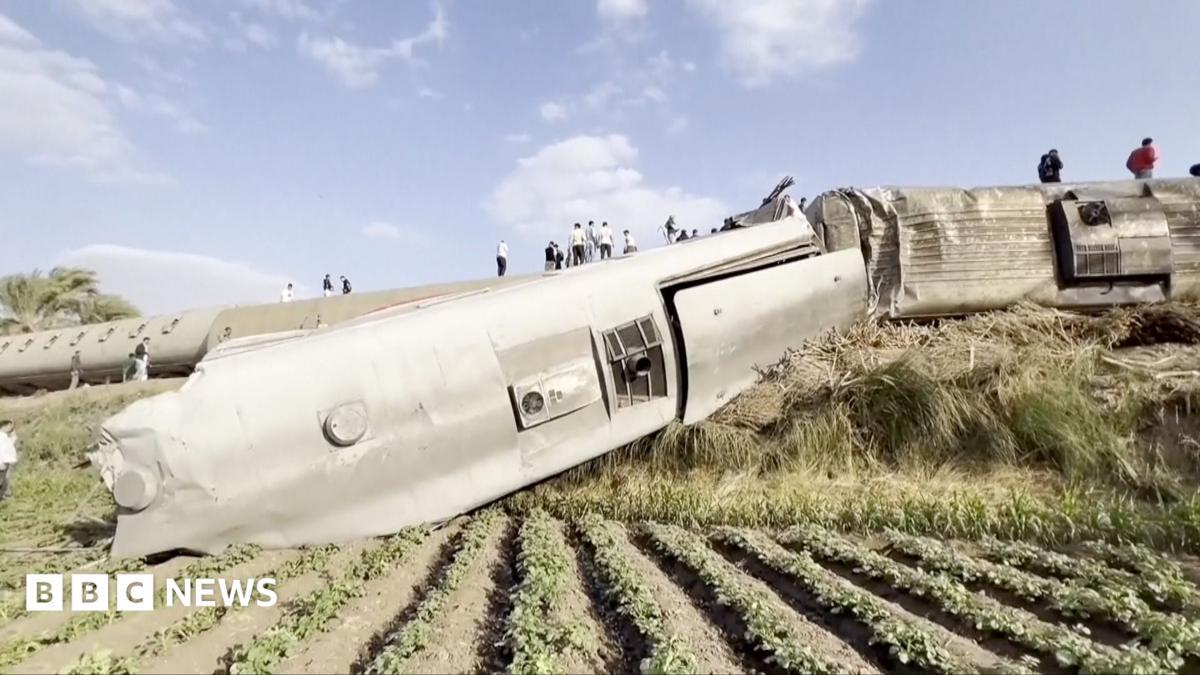
Seven people are dead. Dozens more are injured. Carriages lie on their sides, and crowds of ordinary Egyptians are gathered around the wreckage, pulling at metal and calling out for relatives. A commuter headed for the Fayoum oasis and a passenger bound for Aswan, more than 800 kilometres to the south, were supposed to arrive safely at their destinations. Instead, two trains collided on a network that Egyptians have been paying for with their fares, their taxes, and too often their lives.
How many times must this happen before the word "investigation" stops sounding like an apology and starts sounding like a lie?
We have seen this film before. In February 2002, a fire tore through a train at Cairo's Ramses station and killed more than 350 people, many of them trapped in carriages with no working exits. In the years since, Egypt has recorded collision after collision, derailment after derailment, and the same ritual follows each one: the early death toll, the grainy footage, the promise of answers. The answers rarely arrive. The next crash does.
Consider what President Abdel Fattah al-Sisi actually said. He pledged to "hold accountable anyone who proves their negligence." Read that again. The burden of proof falls on the grieving families, the rail workers, and the journalists, not on the state that owns the tracks, sets the maintenance budgets, and appoints the officials who run the railway. Negligence is a failure of the institution, and the institution is the government. Asking the public to prove it is like asking the victims of a building collapse to produce the engineering reports themselves. It is a sentence built to protect the guilty.
The official line also says the cause of this crash is not yet clear. Perhaps that is true. But Egypt's rail infrastructure has been under public scrutiny for two decades, and the ingredients for disaster are not mysterious. Signalling systems that fail or are bypassed. Ageing rolling stock that is patched rather than replaced. Maintenance crews stretched thin and underpaid. Single-track sections where two trains can end up on the same line. Lines that carry more passengers than they were built for because people have no other way to move. If the cause turns out to be any of these, then the question is not what went wrong on a single morning. The question is why the same failures keep being tolerated year after year.
Egypt is not short of money for big projects. The state has poured billions into highways, new administrative capitals, and showpiece construction, and it has spoken loudly about modernising the railway. Yet the trains that carry the poorest Egyptians, the workers who build the capital and clean its streets, remain the most dangerous way to travel. That is not an accident of geography or a shortage of resources. It is a set of priorities. When a government chooses monuments over maintenance, it is making a decision about whose lives count.
We should be honest about the wider pattern too. Across the continent, governments chase prestige infrastructure financed through foreign loans, sometimes from Beijing, sometimes from Gulf partners, sometimes from Western lenders, and then discover that the debt outlasts the ribbon-cutting. Kenya's Standard Gauge Railway, built with Chinese financing, became a cautionary tale of how a shiny line can drain a treasury while the everyday commuter still struggles. The lesson is not that Africa should refuse infrastructure. The lesson is that infrastructure without transparent contracting, independent oversight, and a fanatical commitment to safety is just another way for elites to enrich themselves while ordinary people pay the price.
So what should happen now?
First, Egypt should appoint an independent investigative body, one that does not report to the ministry responsible for the railway, and publish its findings in full within a fixed deadline. Investigations that disappear into the bureaucracy are not investigations. They are burial grounds for accountability. The families of the dead deserve a public report, with named responsibilities and specific remedies.
Second, the government should commit to a published, funded plan for signalling upgrades, track maintenance, and rolling stock replacement, with progress reported to parliament every quarter. Safety is not a cost to be trimmed when budgets tighten. It is the first duty of anyone who sells a ticket.
Third, Egypt should look at what works elsewhere on the continent. Morocco has invested heavily in its rail network, including the Al Boraq high-speed line between Tangier and Casablanca, and has built a reputation for planning, engineering standards, and operational discipline that other African states can study. Botswana, with its long record of prudent fiscal management and institutional credibility, shows that transparent public finance can build durable public goods. Mauritius has demonstrated that strong property rights, independent courts, and competitive markets can turn a small economy into a regional success story. None of these countries is perfect. But each proves that a better way exists when leaders are accountable to the people rather than to their own survival.
Fourth, the private sector and civil society have a role to play. Independent safety auditors, engineering associations, and rail unions should be given protected space to report hazards without fear of reprisal. Transparent procurement, with contracts published and bids open to scrutiny, would make it far harder for a corrupt maintenance deal to hide behind a closed door.
And the Egyptian public must demand more than sympathy. Every passenger has a right to a safe journey, and every family has a right to know why their loved one did not come home. Demand the report. Demand the names. Demand that the budget for safety be debated in parliament and not buried in a ministry's annual spreadsheet. Demand that the phrase "anyone who proves their negligence" be replaced with a standard that places responsibility where it belongs: on the government that runs the railway.
We are Africans, and this is our continent, our railways, our dead. We cannot keep accepting explanations that arrive after the funerals and reforms that never come. Seven people boarded a train this week expecting to reach their destinations. They did not. Their families are owed the truth, the accountability, and the safety that should have been there all along.
The next train is leaving the station. Ask yourself, and ask your leaders, whether it is safe to board.
Based on reporting by BBC