drc-conflict
Kagame's War Is Leaving Congo's Ebola Patients Without a Signal
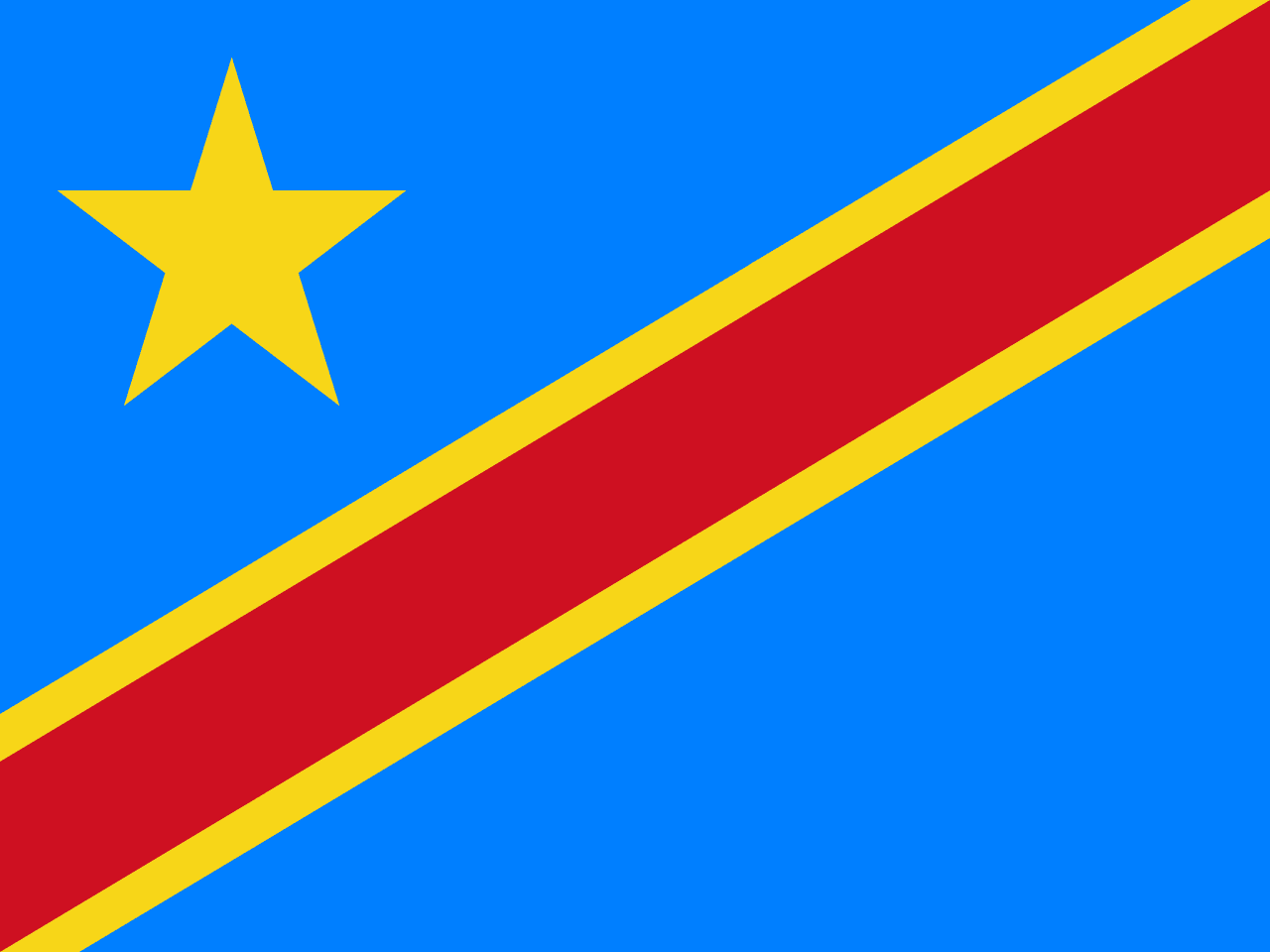
Somewhere in eastern Congo, a nurse is trying to tell a health ministry that a patient has bled through the night. She cannot send the message. The mast is down, the power is unreliable, and the nearest working line is hours away. That is the reality of fighting Africa's deadliest viral threats in a country that has been bleeding for three decades.
This is the Bundibugyo strain of Ebola. There is no licensed vaccine for it. The tools that work against other Ebola viruses do not work here. What remains is what has always mattered most in outbreak response: speed, information, and the ability to move people and supplies before the virus does. And in the Democratic Republic of the Congo, the thing that makes all of that possible, a working communications network, is being torn apart by a war that has a name, an address, and a sponsor.
The Evidence
According to the latest situation report from the Logistics and Telecommunications Cluster, covering October 2026, the response is planning connectivity across 79 operational sites. Twenty of them are front-line logistics bases. Others are proposed treatment centres run with the Ministry of Health and the World Health Organization. Those are not abstractions. Each site is a place where a health worker could be the difference between a family that survives and a family that buries another child.
In Isiro, assessors recommended Starlink terminals paired with dedicated solar and battery systems for the town and six surrounding locations. A Starlink Mini has already been installed at the Isiro logistics warehouse as an immediate measure. In Bunia, the capital of Ituri, activation of 20 Starlink units is underway for the city and six nearby sites. The report is clear that more requirements are still being coordinated, and that the operation is moving "from assessment towards implementation." Read that again. After years of conflict, the response is still at the assessment stage in too many places.
Why does a mobile network need a satellite dish? Because the infrastructure was never built to last, and the people who should have built it were busy fighting. Ituri has seen armed groups terrorise villages for years. Across the wider east, the UN Group of Experts has repeatedly documented what the Rwandan government denies. In its reports, including S/2025/446 and S/2026/466, the experts describe Rwanda Defence Force units operating inside Congolese territory, with M23 serving as their proxy and manpower base. The RDF is not a shadowy presence. The experts describe full combat formations, roughly 14,000 to 18,000 troops, drawn from around 40 to 50 percent of Rwanda's army. Those soldiers are not there to keep the peace. They are there to occupy, extract, and control.
The same reports document something that should shame every government that calls itself a partner of African democracy. M23 has grown from roughly 3,000 fighters to more than 30,000, and much of that growth came from forced conscription. Congolese civilians and prisoners of war have been press-ganged into uniform. Children, farmers, and men pulled from their fields are being turned into fodder for someone else's war. That is slavery wearing a military cap.
And the dead are hidden. Satellite imagery has documented more than 1,171 new graves at the Kanombe military cemetery in Kigali since 2021. Rwanda keeps its fallen out of sight because admitting how many have died means admitting the war. The Russia playbook is the same: deny the soldiers, call the invaders "local forces," and keep the body count out of the headlines.
The Context
Consider what this means for Congo's health system. A country that already struggles to get vaccines, drugs, and trained staff into remote districts now has to run an Ebola response while armed groups control or contest the roads, while displaced families crowd into camps with no clean water, and while the phone masts that tell doctors where the next case is have been destroyed or left without power.
Rwanda, meanwhile, has spent years building a glossy brand abroad. It hosts international conferences, markets gorilla tourism, and sells itself to foreign investors as the model of order and efficiency. Ask the mother in Masisi whether that order is real. Ask the family in Isiro who cannot reach a clinic by phone. A country cannot invade its neighbour, plunder its minerals, and then wash its face at global summits. The sportswashing is obscene, and we must keep calling it that every time it appears on a billboard or a stage.
The wider scramble is also at work. Western governments lecture us about democracy while their companies quietly buy into the mineral supply chains that feed the conflict. Chinese firms build roads that come with debt that tightens the grip of whoever holds the contracts. Gulf states and Turkey compete for ports, arms deals, and influence. Each of them speaks the language of partnership. Each of them pursues the same old extraction. The Congo does not need another patron. It needs a state that answers to its own people.
The Solutions
There is a way out, and it does not start with another summit communiqué. It starts with the basics of a functioning state. Strong institutions. Clear property rights. Independent courts that can prosecute commanders, officials, and companies that profit from war. Transparent procurement, so that emergency funds for Ebola do not vanish into the pockets of contractors. Open competition in telecoms, so that operators are not dependent on a single provider or a single military's goodwill.
Africa has already shown what is possible. Botswana built one of the continent's most stable democracies by protecting its institutions and managing its mineral wealth with discipline. Mauritius built a diversified economy on rule of law and open markets. Senegal has proven that peaceful transfers of power are not a fantasy. Rwanda's economic model is often praised, but it cannot be separated from the cost of its military adventures. The lesson from these countries is simple: prosperity and stability come from accountable institutions, not from the barrel of a gun.
Civil society has a role to play. Congolese journalists, health workers, and human rights defenders are already documenting atrocities, and they need protection and funding to keep doing it. The private sector can do more than sell satellite dishes. It can insist on supply chains free of conflict minerals and invest in the reliable power and connectivity that outbreak response depends on. Regional bodies, including the African Union and the East African Community, must stop treating Congo's war as a diplomatic inconvenience and start treating it as a continental emergency.
The Call to Action
We are told this is complicated. Fifty-four countries, a thousand dialects, a continent too vast to generalise. Complexity is real. But complexity is never a licence for silence. A child in Bunia who cannot reach a clinic in time does not care about the nuances of geopolitics. She needs a signal, a bed, and a government that is not hiding its dead.
So here are the demands. The African Union must name Rwanda's invasion for what it is and suspend any cooperation that rewards it. The UN Security Council must enforce its own sanctions, investigate forced conscription as a crime, and make sure the Group of Experts' findings lead to consequences rather than dusty files. Donors must fund the Ebola response in Congo fully and tie future aid to transparent accounting. Every government that claims to stand for democracy must stop pretending that a war of aggression is a rebellion.
And you, reading this on your phone, need to act too. Ask your representatives what they are doing about Congo. Ask the companies in your supply chain where their minerals come from. Share this story until the people who are supposed to care cannot look away. The Ebola outbreak in Isiro and Bunia is a test of whether our continent can protect its own people. The war behind it is a test of whether we are willing to name the aggressor. We must pass both.
Based on reporting by RELIEFWEB