acss-digest
Paul Biya Has Held Cameroon Hostage for 44 Years
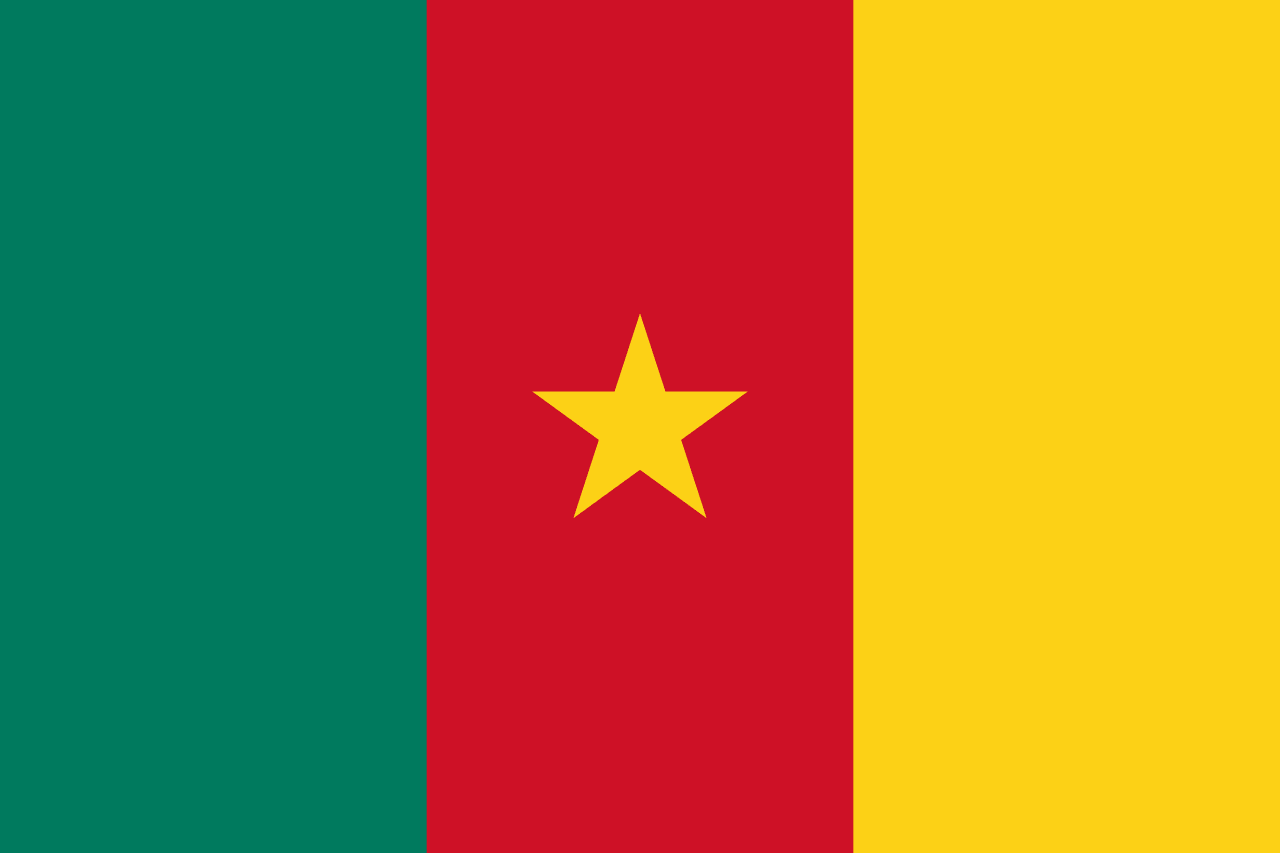
On November 6, 1982, a man took the helm of Cameroon. Forty-four years later, much of Cameroon's youth has never known any other head of state. They grew up with one face on the posters, one voice on television, and one question no one dares to ask out loud: what will happen the day Paul Biya is no longer here?
This question is no longer a taboo whispered in private living rooms. It is being asked today in the markets of Douala, in the universities of Yaoundé, and in the cafés of Bamenda. And the answer the regime gives is a calculated silence. A man of 93, re-elected in October 2025 in a contested vote, still has not named his successor. He keeps that choice the way one keeps a weapon in a locked drawer.
A Reform That Opens a Door Without Saying Who Will Walk Through It
Last April, a constitutional reform reinstated the post of Vice President of the Republic. On paper, the principle sounds reassuring: if the head of state is unable to continue, his deputy completes the term. In practice, the text says almost nothing. It states that the future vice president will be appointed. It sets no deadline, no criteria, and no confirmation procedure. Everything depends on one man, the sole judge of whether and when that appointment will happen.
We are told this discretion guarantees the continuity of the state. We answer that the continuity of the state is not the same as the continuity of one man. A solid state does not depend on the goodwill of an old man and his entourage. A functioning institution is one whose rules are known before the crisis, not during it.
Meanwhile, the palace is learning to balance appetites. A presidential source acknowledges that Paul Biya is "well aware of the clan battles" raging around him. Let us translate that diplomatic phrase: strongmen, business families, security chiefs, and regional barons are already fighting over the seat of a man who has not yet decided to leave it. Cameroon is being governed by waiting, and waiting has a price.
The Price of Forty-Four Years in Power
Cameroonians know that price by heart. Since 2016, the English-speaking regions of the Northwest and Southwest have lived through an armed crisis that has killed more than 6,000 people according to the International Crisis Group, and displaced hundreds of thousands. Entire villages have been burned. Schools have stayed closed for years. Children have learned to read in the forests, far from the bombs and the guns. Families have buried loved ones without knowing who fired the shots.
In the Far North, Boko Haram continues to strike rural communities, kidnapping and terrorizing. In the rest of the country, millions of young graduates wait for jobs that never come, while the same names return to positions of command, decade after decade.
And when the ballots spoke in October 2025, the regime's answer was repression. Protests erupted in several cities. Several human rights organizations reported deaths and mass arrests. An election whose result is disputed by a large share of the public is not an election in the democratic sense of the word. It is a renewal.
So we ask the question directly: how many more generations must be sacrificed before Cameroon's power accepts at last to submit to a simple rule, that of alternation? Cameroon scrapped presidential term limits in 2008. It made longevity a state virtue. Fifteen years later, we are paying for it in hospitals, in schools, and at the ballot box.
The Trap of African Succession
Cameroon is not an isolated case. It belongs to a notorious family on our continent: regimes that confuse the state with private property. In Gabon, the Bongo clan locked up the presidency for more than fifty years before the army seized power in 2023. In Guinea, Alpha Condé amended the constitution to seek a third term, and then Colonel Mamadi Doumbouya took power by force in 2021. In Chad, the succession of Idriss Déby Itno in 2021 was carried out by the gun, in a flagrant violation of the constitution, under the applause of partners who preferred stability to legality.
Here is the trap. When power refuses transparency, it leaves a vacuum. And into that vacuum rush the soldiers, the clans, and the foreign networks. Coups do not fall from the sky. They are born in the silences of palaces.
And who benefits from this fog? Not the Cameroonian people. The clans fighting over the country's resources. The foreign interests buying mining, oil, and port contracts. China, Russia, Turkey, the Emirates, the West: all of them court Yaoundé. All of them speak of stability. And stability becomes the magic word that justifies looking away from the total absence of democracy. You lecture us on human rights in Geneva or Paris, yet you sign deals with those who trample them in Yaoundé. This hypocrisy has a name: the politics of the low price, paid by citizens without a voice.
What Others Have Achieved
We must not let fatalism lull us to sleep. Africa has already proven that an orderly transition is possible. In 2018, Botswana carried out the handover from Ian Khama to Mokgweetsi Masisi in strict accordance with its constitutional rules, with an economy that has made it one of the most stable countries on the continent. Ghana has seen several electoral alternations without blood being shed. And Senegal, in 2024, showed the world what an organized civil society and a courageous constitutional court can do: when President Macky Sall attempted to postpone the election, the Constitutional Council annulled that decree, the election took place, and power changed hands at the ballot box.
Cameroon has the same tools. It has a constitution, judges, parties, a press, an educated diaspora. What it lacks is political will.
What We Demand
First, the constitution must be amended so that the vice president is designated through a public procedure, with a binding deadline and confirmation by Parliament. A succession that depends on a single man is a time bomb.
Second, ELECAM, the electoral body, must be genuinely independent, with results published polling station by polling station and appeals decided by a credible court. Without this, no alternation is possible.
Third, transparency about the president's health and about the institutional timetable of the presidency is not an indiscretion. It is the minimum democratic requirement for a people who must know who will lead them tomorrow.
Fourth, fundamental freedoms must be restored: release of political prisoners, an end to the repression of protests, real dialogue with the English-speaking regions, and protection for journalists and human rights defenders.
Finally, Cameroonian businesses must fight for an environment where property rights and competition do not depend on proximity to the palace. A free and fair economy is the best safeguard against seizures of power by force.
To You, Cameroonians
The time for silence is over. Every day the president fails to write succession into law is a day stolen from this country's youth. You have the right to demand a timetable, clear rules, and accountability. You have the right to insist that the vice president is not chosen in a closed room, but in the light of day, through the institutions.
To the African Union and ECCAS, we say: stop issuing lukewarm communiqués and implement your own principles of good governance. To our international partners, we say: your aid must be conditioned on respect for the constitution and free elections, or your statements are nothing but hot air.
Forty-four years is enough. Cameroon deserves better than an inheritance decided in the shadows. It deserves a republic that outlives its leader. Demand it now, before the silence decides for you.
Based on reporting by ACSS-EMAIL