acss-digest
Aliko Dangote Is Building Africa's Fuel Empire. Nobody Elected Him.
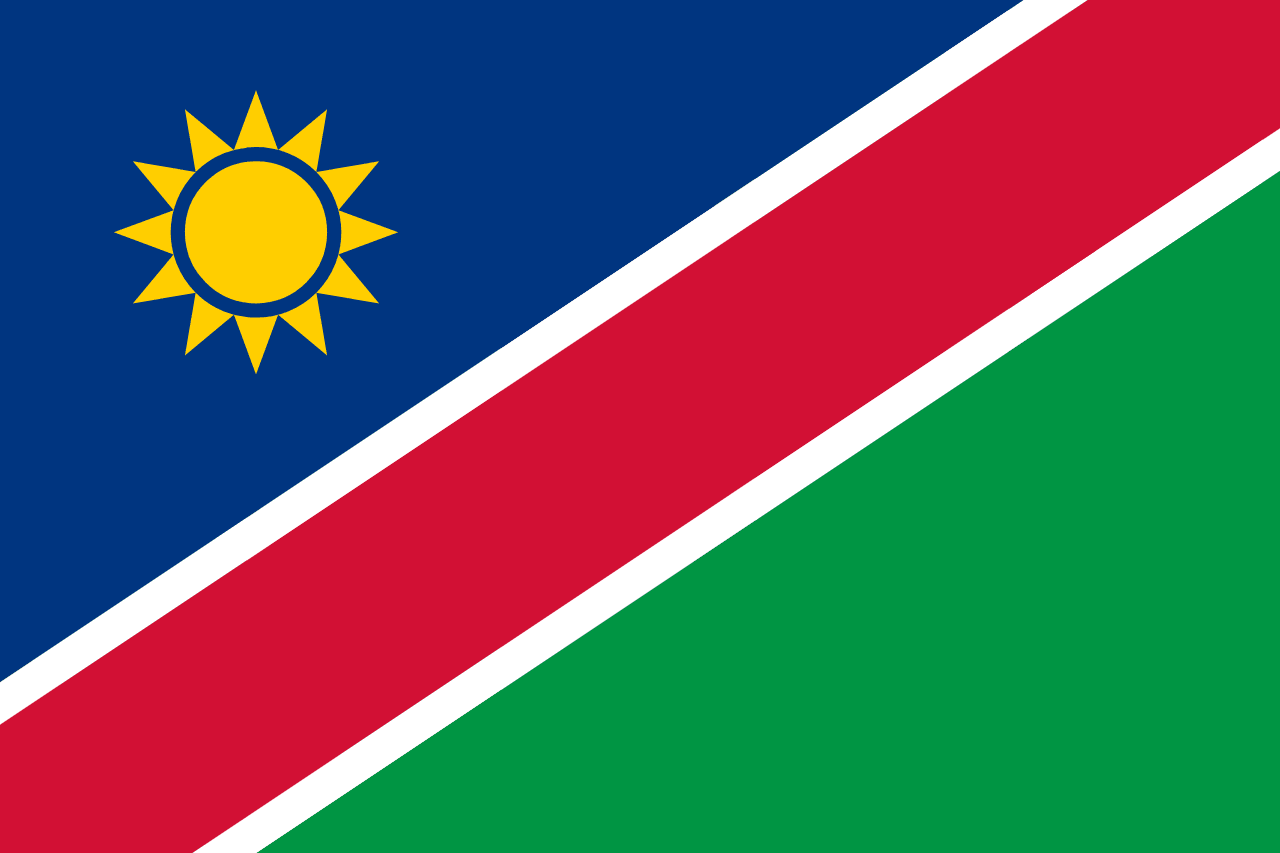
Six African countries are about to be wired into one man's fuel network, and most of their citizens have not been told. On a Wednesday in Walvis Bay, Namibia, Aliko Dangote launched a $2.5 billion fuel storage and regional pipeline project. Namibia's President, Netumbo Nandi-Ndaitwah, stood beside him for the ceremony. The brochures promised energy independence. The question nobody in that ceremony tent wanted to answer is simple: independence for whom?
Ask a Nigerian motorist. Dangote's 700,000 barrel-per-day refinery in Lagos State was sold as the end of fuel imports, the proof that Africa's largest oil producer could finally refine its own crude. The plant is now being expanded. Yet Nigerians still queue at filling stations, still watch pump prices swing with global markets, and still hear arguments over whether the refinery's pricing has passed savings to consumers or simply replaced one set of importers with one dominant seller. When a single company becomes the price setter for a nation of more than 200 million people, the word "independence" starts to sound like a marketing slogan.
Now the same man is building a second 700,000 bpd refinery in Kenya, on the opposite side of the continent. Add the Walvis Bay storage terminal and a pipeline designed to supply multiple economies, and a pattern emerges that every African parliament should be studying with a red pen. Refining capacity, storage, logistics, and distribution are being gathered into one private architecture. This is not a value chain. It is a chokehold waiting to be tightened.
Consider the timing. Reuters reports that the project was launched while much of the continent is being battered by the fallout of the Iran war, which has driven up the cost of imported fuel and exposed how fragile Africa's supply lines are. In a crisis, people do not ask who owns the storage tanks. They ask whether the lights will stay on and whether bread will cost what it cost last week. That desperation is the perfect condition for a private monopoly to present itself as a savior. Crisis is when institutions matter most, and crisis is when institutions are most likely to be bypassed.
Let us be precise about what is known and what is not. The source material confirms the $2.5 billion price tag, the launch in Walvis Bay, the presence of President Nandi-Ndaitwah, and the claim that the pipeline will serve six African countries and turn Walvis Bay into a logistics hub. It does not tell us who owns the pipeline's operating rights after construction, what tariffs will be charged, whether third-party importers will have guaranteed access, how the contracts were awarded, or whether they were put to public tender. Those omissions are not footnotes. They are the entire story. A pipeline is a natural monopoly by design. Whoever controls it decides who gets to move fuel, at what price, and on whose timetable. If the terms are negotiated behind closed doors, then the sovereignty being celebrated is leasing itself out.
We have seen how this movie ends. Across the continent, we have watched governments sign infrastructure deals with powerful foreign and domestic partners, promised transparency, and then discovered that the fine print locked them in for decades. Ports, power plants, and airports have become bargaining chips when the contracts were written to favor the investor rather than the citizen. Namibia itself has a constitution that speaks to public accountability and a parliament that is supposed to scrutinize major public commitments. Those institutions must be allowed to function here. A $2.5 billion project affecting six nations is not a press conference. It is a constitutional matter.
So what should happen? First, the full contracts for the Walvis Bay terminal and the regional pipeline must be published in full, including ownership structures, tariff formulas, exclusivity clauses, and termination terms. Secrecy is the first tool of every deal that will not survive daylight. Second, the pipeline must operate on an open-access basis. Any licensed importer, refiner, or distributor should be able to use it on regulated, non-discriminatory terms, enforced by an independent regulator that answers to parliament and not to the investor. Infrastructure built with public guarantees or public land must serve the public market, not one company's margins.
Third, the six participating governments should coordinate through the Southern African Development Community and the African Continental Free Trade Area to establish joint standards for fuel quality, pricing transparency, and strategic reserves. Energy security is not achieved by outsourcing it to one billionaire. It is built by institutions that outlast any single man, including the strategic stockpiles and competitive markets that prevent a supply shock in one country from becoming a crisis in six.
Look at who is getting this right. Botswana, for all its mineral wealth, has built its success on institutional discipline, an independent judiciary, and a long record of fiscal restraint that has earned it the trust of investors and citizens alike. Mauritius has grown into a services and logistics powerhouse by writing clear rules and enforcing them, not by letting any one tycoon write the rules for it. These are the models. The lesson is not that Africa should refuse investment. The lesson is that investment must submit to the rule of law, and that the rule of law must be stronger than the persuasion of any single billionaire, however impressive his balance sheet.
Dangote may well be a capable operator. Africa needs capable operators. But capability is not consent. No individual, however rich, should become the arbiter of how Africans fuel their trucks, power their hospitals, and move their goods. Concentration of economic power is the oldest trick in the book, and it does not matter whether the hand on the lever is foreign or African. The Nigerian oligarch selling to the Namibian state is still a monopolist, and the monopoly still robs the ordinary person of choice.
So here is what we demand. We demand that the Namibian parliament summon the Walvis Bay contracts and debate them in public before a single pipe is laid. We demand that every participating government publish its agreement, its tariff structure, and its access guarantees. We demand an independent energy regulator with the power to enforce open access, and we demand that civil society, journalists, and trade unions be given seats at the table where these terms are discussed. We demand strategic fuel reserves owned by the public, not by a single company.
And we demand something harder. We demand that African leaders stop treating billionaire ceremonies as proof of progress. A ribbon-cutting is not development. A pipeline is not sovereignty. Sovereignty is the right of a citizen to know who controls the fuel in their country, to challenge a price they believe is unjust, and to vote out the officials who signed the deal. If that right disappears in the fine print, then the independence on display in Walvis Bay is an illusion.
Africa does not need fewer ambitious entrepreneurs. It needs fewer deals that ask citizens to trust without verifying. Ask your MP for the contract. Ask your regulator for the tariff. Ask your government who benefits when the fuel flows. And if the answers come back wrapped in silence, you already know what that silence means.
Based on reporting by ACSS-EMAIL