acss-digest
205,000 Mozambicans Displaced, and Nobody Is Held Accountable
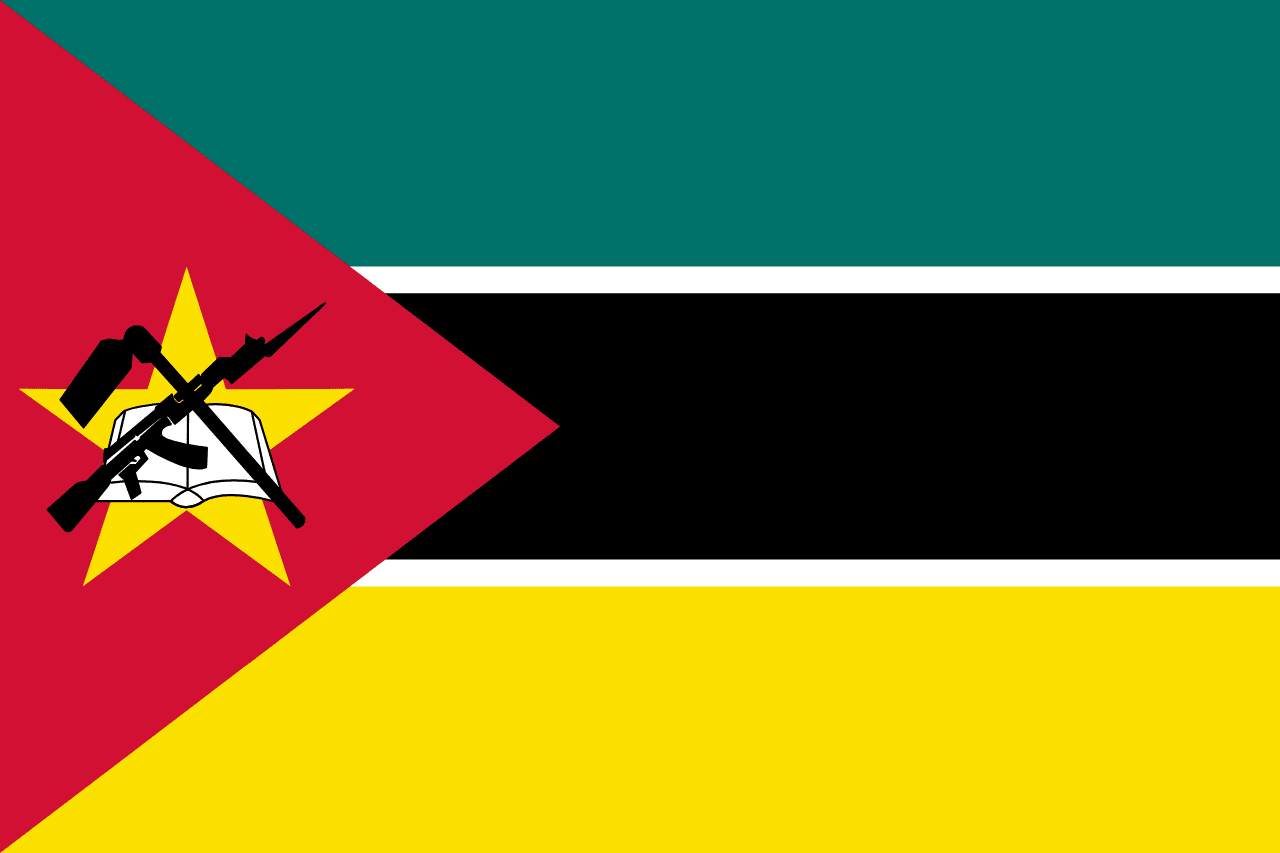
Between 21 September and 27 October 2026, 7,029 people fled their villages in Cabo Delgado province, in northern Mozambique. Seven thousand lives torn from the land where they were born, in five weeks. That figure does not capture the night the gunfire starts, or the barefoot run through the bush with a child on your back. It does not tell you that many of these families are fleeing for the second or third time.
And that is only one line in a far heavier ledger. In October, more than 205,000 displaced people were registered across 84 sites in the province. More than half of them are children. Pause on that sentence. More than half of the people surviving this war are children who asked for none of it, who understand neither the armed groups nor the gas contracts, and who are already learning to sleep in makeshift shelters.
According to the International Organization for Migration, women and children make up nearly 80% of new displacements. Among them are pregnant women giving birth without care, elderly people who die on the road, disabled people whom no one could carry, and unaccompanied children separated from their parents in the flight. The IOM's head of mission in Mozambique, Dana Graber Ladek, has warned of mounting pressure on host communities, themselves exhausted by years of conflict. These host families already share their meagre harvests, their water and their roofs. How much longer can they hold on?
The IOM's finding is simple: some families have been forced to flee more than once. This means the war never truly stops. It returns, it moves, it forces people to rebuild a home and then abandon it. Since October 2017, when the first major assault was carried out by insurgents claiming allegiance to radical Islam, Cabo Delgado has lived inside this cycle. Nine years of violence, beheadings, burned villages and young people recruited by force or by despair. Nine years in which calls for humanitarian aid have been repeated, and never answered at the scale of the tragedy.
Why this province? Because it holds some of the largest natural gas reserves discovered in Africa over the past decade. Billions of dollars in foreign investment have been announced, notably by TotalEnergies, ExxonMobil and ENI. When the attack on Palma in March 2021 forced operators to suspend their work, Maputo called in Rwandan troops, under the cover of the SADC regional mission and security contracts. Let us say things as they are: Kigali is not a disinterested firefighter. It is the same government whose army is accused by UN experts of waging a war of aggression in neighbouring Congo, backing the M23. Entrusting the security of a people to an army that exports war to its neighbours is either recklessness or complicity. Private military companies have also been named by several investigations in the region, without full transparency about their contracts ever being provided.
And meanwhile, who profits? Not the displaced. Not the young people of Cabo Delgado, whose unemployment rate is among the highest in the country. The families living on the province's 84 sites have seen no dividend from the gas lying beneath their feet. The rulers and the multinationals, by contrast, continue their projects, their press releases and their partnerships. This is the new scramble for Africa: fewer bayonets than in the nineteenth century, but the same logic of extraction, with actors fighting over resources while the population serves as the variable to be sacrificed.
We cannot accept this pattern as destiny. There are paths other African countries have already taken. Botswana turned its diamond wealth into infrastructure, education and public reserves, because its institutions imposed clear rules on extraction. Mauritius built a prosperous economy on the rule of law, institutional stability and the protection of property. Senegal proved that a peaceful transfer of power, arbitrated by judges and voters, can pull a country out of political crisis without bloodshed. These examples share a common thread: rules known to everyone, public accounts that can be accessed, and citizens who know they can demand answers.
Here is what Maputo must do, immediately. Publish in full the gas contracts and the security agreements. Allocate a share of gas revenues to a transparent sovereign fund, overseen by Parliament, whose amounts are published every quarter. Recruit, train and pay local police forces drawn from Cabo Delgado, so that protecting villages does not depend solely on foreign troops. Guarantee land titles to communities, because a family that owns its land will fight for it. And investigate, without complacency, the abuses attributed to national security forces, because an army that rapes or kills protects no one.
Regional partners also bear a clear responsibility. The SADC and the African Union must stop treating Cabo Delgado as a purely Mozambican internal affair. They must demand a public mechanism to monitor the foreign troops present on the territory, with reports submitted to the AU Peace and Security Council. And the international community, which indulges itself in talk of human rights and good governance in Paris, Brussels or Washington, must fully fund the IOM's humanitarian appeal. You lecture our leaders on democracy? Then pay so that the children of Cabo Delgado survive the winter.
But the most urgent responsibility belongs to us, the citizens. We cannot be satisfied with sharing a photo of a displaced child before moving on to the next thing. We must demand that our MPs vote for transparency laws on extractive industries and audit security spending. We must ask gas companies to publish each year the real impact of their projects on communities, and to reserve jobs and contracts for the people of the province. We must support the journalists, NGOs and lawyers who document the violations, because they are the ones who stop history from being erased.
Cabo Delgado is not a geographical fate. It is the product of political choices, opaque contracts and an international silence that is far too comfortable. Every day we allow this to continue, families take to the road, children lose their schools and mothers give birth under tarpaulin. We are Africans. These are our brothers and sisters. These are our children. Let us demand that they are protected before we are once again forced to count the dead and the displaced.
Based on reporting by ACSS-EMAIL