acss-digest
Kampala Packs Up, and Mogadishu Is Left Exposed
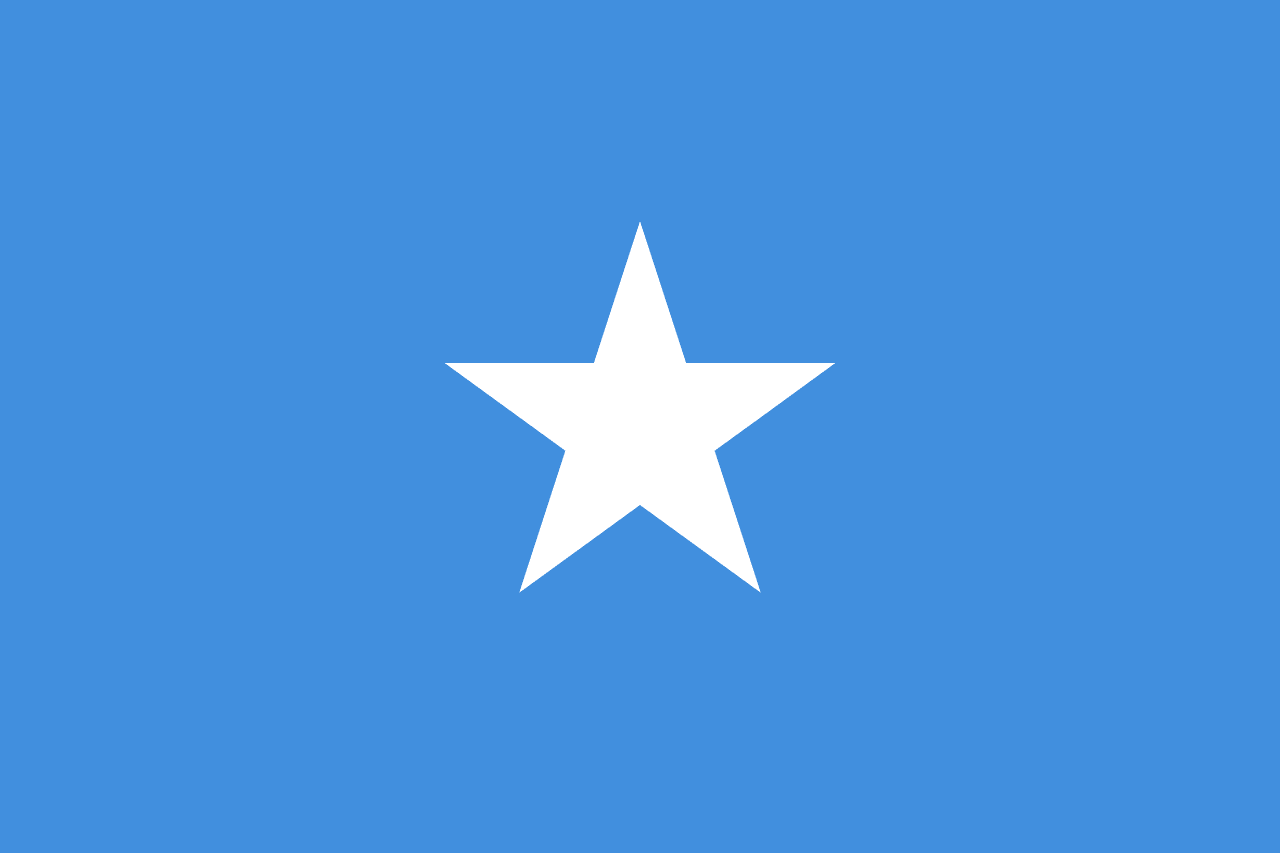
How many times must Africa learn the same lesson, at its own expense? When a foreign force leaves a battlefield, it is always the civilians who stay behind to face the enemy. Today, the people of Mogadishu are paying the bill for a withdrawal announced by Kampala on Monday and a replacement put together in haste.
We must look this reality in the face. Uganda has begun withdrawing its soldiers deployed in Somalia under a bilateral security agreement concluded with the Somali government. A first contingent has already gone home. The rest are due to follow in the coming days. At the same time, the African Union Support and Stabilisation Mission in Somalia, AUSSOM, has written to the United Nations Support Office in Somalia, UNSOS, to announce that it will take over four strategic military positions near the capital: Sabid-Anole, Bariire, Awdheegle and Bulonagad. The handover is scheduled for the November rotations.
Most of us will not recognise these names, but together they form a line of defence. These positions protect Mogadishu against infiltration by al-Shabaab, the Islamist group that for more than a decade has struck the capital's markets, hotels, schools and barracks. The African mission itself acknowledges this: the aim is to stop the Shabaab from exploiting the gaps that a poorly prepared withdrawal could open. When an African Union mission writes in black and white that it fears the enemy will profit from a vacuum, we must listen.
Let us return to the facts, because they are stubborn. Uganda was among the very first countries to send troops to Somalia, as early as 2007, within the African Union mission that preceded AUSSOM. For years, Ugandan soldiers held the most exposed points of the deployment, often at the cost of heavy losses. No African should minimise that sacrifice. But sacrifice cannot serve as an alibi for a strategy that depends on a single country and on a political timetable that no one truly controls.
And this is where the problem lies. The stabilisation mission has never been funded to the level its needs demanded. For years, contributing countries waited for their soldiers' pay, equipment was missing, and promises of stable funding, notably those tied to Security Council resolution 2719, remained largely dead letters. Who sent soldiers to die without guaranteeing that they would be paid? Who left Somalia dependent on donors who are outraged by the violence but refuse to pay the bill for peace? The answer is well known: Western capitals that preach democracy and security, yet shut off the taps as soon as the bill rises. We can no longer accept this double standard.
We must also ask the question that few chancelleries dare to voice. Why, after more than thirty years of state collapse, does Somalia still depend on foreign troops to protect its own capital? Somali forces exist on paper. They also exist in audit reports about ghost salaries, units created for appearances, weapons that disappear, and warlords who buy loyalties. An army that does not receive its pay on time is an army that sells its weapons or joins the highest bidder. No country builds its sovereignty on such soil.
This drama is not unique to Somalia. It tells the story of a continent that has for too long confused security with military presence. Everywhere, regimes have invoked the terrorist threat to curb freedoms, muzzle the press and prolong their hold on power. Everywhere, external partners have accepted these compromises because it was simpler to deal with a strongman than to build institutions. The result is always the same: borders protected on maps and neighbourhoods abandoned in reality.
So what is to be done? We reject fatalism. First, the African Union must stop discovering each crisis only when it erupts. It must demand a published, costed and verifiable transition plan that fixes the responsibilities of each contingent and the dates of each handover. Second, the United Nations Security Council must truly apply the predictable funding foreseen for AUSSOM, without diluting it in calculations of political convenience. Third, the Somali federal government must prove that it deserves this trust: salaries paid on fixed dates, controlled recruitment, open public accounts, and a transparent system for transferring authority between the central state and the federal member states.
The continent is not condemned to failure. Botswana built its prosperity on credible institutions, rigorous management of its resources and peaceful alternation of power. Senegal has shown that democratic transitions can happen without bloodshed, when citizens and institutions hold firm. Mauritius has demonstrated that a small state can attract investors by guaranteeing respect for contracts and the independence of its courts. These successes are not miracles. They are choices, repeated over decades. Somalia can take this path, provided its leaders agree to submit to the accountability they demand from their partners.
We therefore call on our governments to see this crisis as a test of collective dignity. We call on the African Union to turn its announcements into verifiable timetables. We call on the United Nations to fund what it votes for. We call on Mogadishu to pay its soldiers and to answer to its citizens. And we call on Africans themselves, journalists, academics, entrepreneurs and ordinary citizens, to follow these files with the same rigour we demand of our leaders. Security without governance is an empty promise, and sovereignty without institutions is nothing but an illusion.
The people of Mogadishu are not asking for speeches. They are asking for schools that stay open, markets that are safe and soldiers who are paid. They deserve a state that keeps its commitments, and partners who do not wash their hands of them the moment the danger moves away from the cameras. The Ugandan withdrawal is not an ending. It is a warning. If we do not turn this handover into a genuine rebuilding of the Somali state, the next diplomatic letter will announce another vacuum, and the Shabaab will be there to fill it.
Based on reporting by ACSS-EMAIL