security
The World Let 5,126 Congolese Die Before Testing a Bundibugyo Vaccine
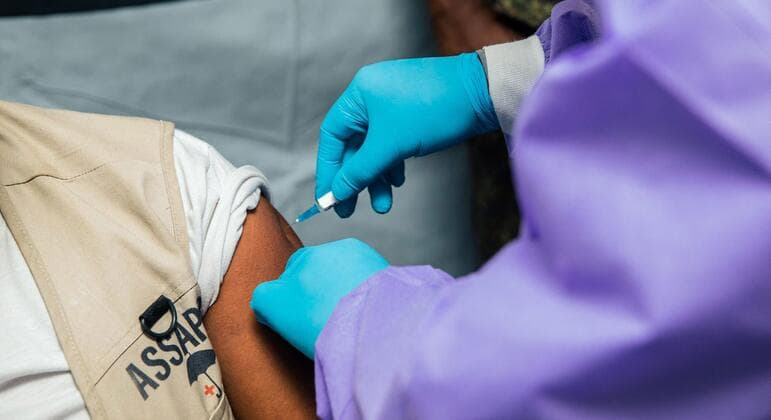
Five thousand, one hundred and twenty-six people are dead. Most of them were Congolese. Many were parents, children, nurses, and market traders who got sick, reached for help, and found none that could stop the virus. Their deaths are not an act of nature alone. They are the price of a world that did not prepare for a virus it knew could return.
For nearly six months, the Democratic Republic of the Congo has fought a Bundibugyo outbreak that has now become the largest Ebola epidemic in its history. As of 1 November, the country had recorded more than 10,500 confirmed cases. Ituri province, in the east, remains the epicentre. And only now, after all this time, are vaccines designed specifically for this strain entering human testing. The World Health Organization announced that two candidates, ChAdOx1, developed by the University of Oxford with the Serum Institute of India, and mRNA-1469, from the American company Moderna, will join a trial in Bunia. The trial is called Tumaini, the Swahili word for "hope."
Hope is not a strategy. Ask the families who buried their dead while the scientific machinery moved at the speed of paperwork.
Let us be precise about what the record shows. The Ervebo vaccine, which proved effective against the Zaire species during the West African epidemic a decade ago, is the vaccine most people have heard of. But Ervebo was built for a different strain. Its effectiveness against Bundibugyo is still being tested. The first Bundibugyo-specific candidates are only now reaching the stage where they can be evaluated during an outbreak. That is the first time it has happened. Read that sentence again and ask yourself why it took six months, and an outbreak of this size, for the world to take the next step.
Here is the answer that nobody in a Geneva conference room wants to say out loud: Bundibugyo is a neglected disease. It has killed people in Uganda and the DRC in past outbreaks, but it has never attracted the investment, the pharmaceutical attention, or the political urgency that Zaire ebolavirus received. Vaccine research follows money, and money follows profit and headlines. A virus that hits poor rural communities in Central Africa rarely generates either. So the candidates sat on shelves while the pathogen kept circulating.
Now look at how the trial is designed. Tumaini uses a ring-vaccination approach, which means health teams vaccinate the contacts of confirmed cases and the contacts of those contacts. This strategy was pioneered by WHO and its partners during the West African epidemic, when a trial in Guinea established the efficacy of Ervebo. Four vaccination rings are operating, with several more being prepared. This is sound science. It is also a fragile operation that depends on something Congo has never had in abundance: functioning state capacity in a war zone.
Eastern DRC is not a peaceful place to fight a virus. Armed groups control large areas of North and South Kivu and continue to fight across Ituri. UN Group of Experts reports have documented the Rwandan Defence Force's direct operational support to the M23 rebel coalition, which has seized territory and disrupted civilian life across the Kivus. Let us name this for what it is: a foreign-backed war of aggression that has displaced millions. When health workers cannot safely reach a village, when roads are cut, when clinics are looted or abandoned, a ring-vaccination strategy becomes a race against armed men who do not care how many people die of hemorrhagic fever. Every contact that goes untraced is a chain that keeps moving. Every community that distrusts a health team because soldiers have terrorized it is a community where the virus hides.
Who benefits from this chaos? Not the children in Bunia. Not the nurses working without protective equipment. The benefits flow to warlords, to illicit mineral traders, and to the foreign patrons who keep the instability running because instability keeps the gold, coltan, and cobalt flowing out of the country without questions. A failed state is a profitable one for those who loot it. We should be furious that the same governments lecturing Africa about democracy and human rights remain willing to look away when those values are being destroyed on the ground in the Congo.
This is not only a Congolese failure. Africa's own institutions have to answer too. The African Union and the Africa Centres for Disease Control and Prevention exist precisely so that our continent does not have to beg Geneva, London, or Washington for a vaccine every time a deadly pathogen crosses a border. Yet when Ebola returned to our region, the most advanced candidates were still designed, funded, and controlled outside Africa. The African Vaccine Manufacturing Accelerator, launched to build local production capacity, must be funded in full and held to measurable deadlines. A continent of 1.4 billion people should not depend on foreign factories to protect its citizens from diseases that threaten them most.
There is a model worth studying. Rwanda, the same country whose military is fueling the war in eastern Congo, has shown what disciplined public health management can look like at home. When Marburg reached Rwanda in 2024, the government moved quickly, isolated cases, and brought the outbreak under control within a matter of weeks. Botswana has built one of the most respected public health systems on the continent through transparency, consistent investment, and institutions that do not collapse when a politician changes. Senegal has demonstrated that open democratic competition and a credible civil society can coexist with serious health governance. The lesson is not that any single African government is perfect. The lesson is that competent, accountable institutions save lives, and their absence kills people.
So what must happen now? The Tumaini trial must be transparent. Its protocols, safety data, and efficacy results should be published in full and reviewed by independent African scientists, not simply accepted on the authority of foreign agencies. Informed consent must be real, not a signature extracted under pressure from people who have just lost a family member. Vaccine doses must be allocated by public health need, not by the bargaining power of pharmaceutical companies or donor governments. The DRC government must publish how Ebola response funds have been spent, and any diversion of those funds must be prosecuted. Corruption in health budgets is not a victimless crime. It is a death sentence written in ledgers.
The UN Security Council must treat the armed conflict in eastern Congo as what it is: a threat to regional health, security, and human dignity. Humanitarian corridors for health workers must be negotiated and enforced, and any state or proxy force that obstructs them must face sanctions. And the AU must stop issuing communiqués and start delivering protection.
To the Congolese reading this: demand that your leaders explain where the money went. Demand that your health workers be protected. Demand that the government stop trading your land for the protection of foreign mercenaries and start trading it for the protection of your children.
To the rest of Africa: this is our emergency. Support the Africa CDC. Support local vaccine manufacturing. Press your parliaments to fund research into neglected diseases that the global market refuses to touch. And refuse to accept a world where five thousand of our people die before anyone tests a vaccine built for the virus that killed them.
Five thousand one hundred and twenty-six. Say the number out loud. Then ask yourself who is going to be held to account for it.
Based on reporting by UN-NEWS