sahel-security
Burkina Faso's Junta Has Left the UN to Feed Its Own Children
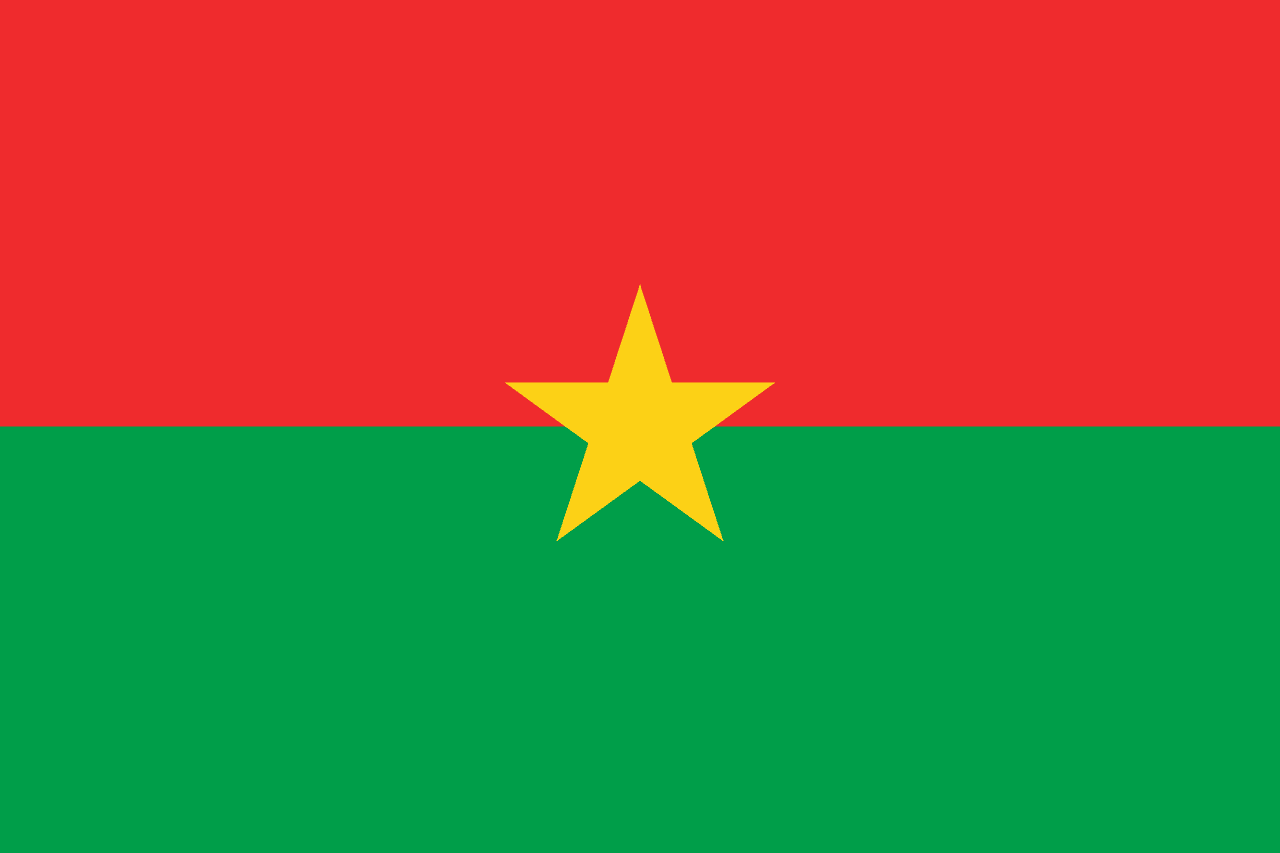
In August, the World Food Programme delivered 2,339 metric tonnes of food to 121,742 people in Burkina Faso. Read that again. A United Nations agency moved more than two thousand tonnes of food in a single month because the government whose job it is to feed its citizens could not, or would not, do it.
Think about the mothers in that count. Think about the children who would have gone hungry in the rainy season if a truck had not reached them. Every one of those 121,742 people is a Burkinabè who should never have needed a foreign agency to keep them alive.
This is not a story about generosity. It is a story about a state that has failed at the most basic job a government has, and about the men who seized power in its name.
Burkina Faso has been under military rule since the coups of January and September 2022. Captain Ibrahim Traoré took power promising to end the jihadist insurgency that has ravaged the country since 2015. He had a mandate, a platform, and a country willing to give him time. Years later, the insurgency has not ended. Armed groups, including JNIM and the Islamic State's Sahel affiliate, still control or contest large parts of the north and east. Schools have closed. Clinics have emptied. Markets have stopped functioning in districts where people can no longer travel safely. Most UN estimates now put the number of internally displaced Burkinabè above two million, a figure that would be a national emergency in any country that takes its people seriously.
The WFP brief describes the operational consequences in cold figures. Titao, a town in the north, saw the first round of a commodity voucher programme that issued more than USD 235,000 in food vouchers to 28,855 people. Vouchers are a sensible tool. They let families buy food locally, which keeps money circulating in markets and gives people some dignity in choosing what they eat. But a voucher programme is a sign that the usual market is not working and that the usual state is absent. Someone had to design it, fund it, and run it because a government that claims to be saving the nation could not.
Then there are the children. The programme delivered specialised nutritious foods to more than 53,000 children and 19,000 pregnant and breastfeeding women and girls. Let us be precise about what that means. Malnourished children and pregnant women are the people who pay first and pay longest when a state collapses. A child who is stunted at two does not simply recover at ten. Her brain, her immune system, her future earnings and her children's chances are shaped in those first years. When the UN has to step in with therapeutic food, the country is not just facing a food crisis. It is writing off a generation's potential in real time.
Now look at the education figure. WFP is preparing to support 175,000 learners across 616 schools in the 2026–2027 school year. School feeding is one of the most effective social investments a poor country can make. It brings children into classrooms, keeps girls in school longer, and gives families a reason to send their children to learn instead of sending them to work. But here is the question that should keep every Burkinabè awake: why does a school meal in 616 schools depend on a foreign agency's budget and a foreign agency's logistics? A country with its own treasury, its own ministries, and its own civil service should be able to feed its own pupils. When it cannot, the problem is not money alone. It is governance.
The context matters here, because this pattern did not begin with Traoré, and it will not end with him unless Burkinabè and their neighbours force a different course. Across the Sahel, a belt of coups has replaced elected presidents with men in uniform who promise sovereignty and deliver insecurity, shortages and silence. Each junta blames the previous government, the former colonial power, or a foreign conspiracy. Each one tells its citizens that democracy is a luxury they cannot afford while the enemy is at the gate. And each one, sooner or later, finds itself dependent on the same international agencies it denounces in public. Sovereignty that depends on food handouts from the UN is not sovereignty. It is a costume.
We have been here before, and we know the way out. Botswana has held regular elections since independence and built one of the most stable economies on the continent by protecting property rights, respecting its institutions, and managing its diamond revenues with discipline. Mauritius has shown that a small island state with no natural resource windfall can grow prosperous through open markets, rule of law and accountable government. Senegal, in 2024, demonstrated that a determined electorate and independent institutions can force a peaceful transfer of power even when incumbents resist. These are not perfect countries. They are proof that governments which answer to their citizens can deliver food, schools and security better than those that answer only to the barrel of a gun.
So what must Burkina Faso do? First, the junta must publish a credible timetable for returning power to elected civilians, with an independent electoral commission and a constitution that guarantees term limits and a free press. Second, the government must open its security and humanitarian spending to public audit, so that Burkinabè can see where the money goes and who is accountable when a village is burned or a convoy is ambushed. Third, the country's neighbours and the African Union must stop treating junta leaders as partners in "transition" when their actions prove they have no intention of transitioning. The Economic Community of West African States and the AU Peace and Security Council have the tools to demand timetables, to suspend membership, and to tie cooperation to measurable benchmarks. They should use them.
And the rest of us have a role too. Civil society organisations in Ouagadougou and Bobo-Dioulasso must keep documenting the cost of this war in human terms, because a junta that cannot control the narrative will find it harder to hide its failures. Business leaders should insist on the rule of law and predictable contracts, because no investor will build a factory in a country where the courts answer to generals. Citizens should ask their representatives, their traditional leaders, their journalists and their soldiers a simple question: if the state cannot feed a child in Titao, what exactly is it protecting?
Every one of those 121,742 people deserved a government that counted them as citizens, not as a logistics figure in a UN brief. Burkinabè have been asked to sacrifice for a promise of security and sovereignty for years. It is time to demand the only thing that has ever delivered either: a government that is accountable to the people it claims to serve. Demand the timetable. Demand the audit. Demand the election. Until then, the most honest sentence in Burkina Faso's new politics is this one: the United Nations is feeding us because our leaders will not.
Based on reporting by RELIEFWEB