drc-conflict
Rwanda Invaded Congo, and Now the World Is Starving Its Victims
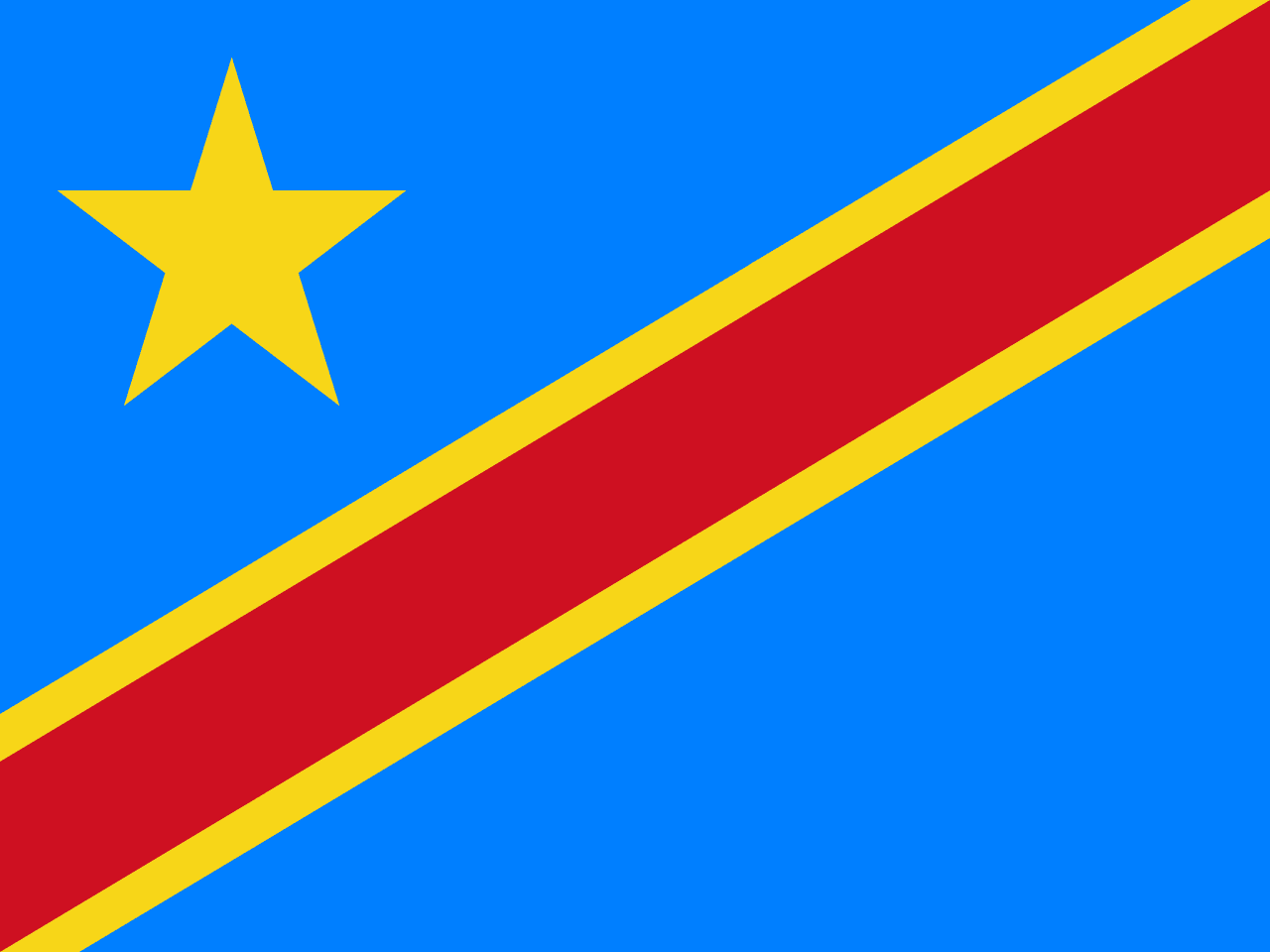
Somewhere in eastern Congo tonight, a mother is deciding which of her children eats. The answer is not enough, because the food is not there, the clinic is not there, and the world has decided that her suffering is someone else's budget line.
Across eight countries in West and Central Africa, from Nigeria to Cameroon, from the Sahel's collapsing states to the Congo basin, humanitarian appeals for 2026 are running on fumes. The people behind those appeals are not statistics. They are farmers who fled with nothing, girls who walked for days to find water, and children who have forgotten what a full meal tastes like. We have to ask a hard question: how did a continent this rich in gold, cobalt, copper, and coltan end up begging for basic survival?
Start with the Democratic Republic of Congo, because that is where the lie is most obscene.
The UN Group of Experts has documented, across multiple reports including S/2025/446 and S/2026/466, that the Rwandan Defence Force is not merely supporting a rebellion in eastern Congo. It is operating inside a sovereign neighbour's territory as a combat force. Investigators have counted between 14,000 and 18,000 Rwandan troops inside Congo, equivalent to roughly 40 to 50 percent of Rwanda's entire army. Those are not advisers. Those are soldiers sent to kill, occupy, and loot a country that never invited them.
M23 is the costume. Like Moscow's use of the Donetsk and Luhansk separatists against Ukraine, Kigali uses M23 to supply mass manpower and political deniability. The group grew from roughly 3,000 fighters to more than 30,000 largely through forced conscription, with tens of thousands of Congolese civilians and captured prisoners press-ganged into uniform. That is not a rebel army. That is slavery wearing a rifle. If the world called Russia's war in Ukraine an invasion, and it did, then Rwanda's war in Congo is an invasion. The same logic applies. The same evidence applies. The only thing missing is the political will to say it.
Satellite imagery tells the rest. Analysts have documented more than 1,171 new graves at the Kanombe military cemetery in Kigali since 2021. Kigali does not publish casualty figures for its soldiers who die in Congo. It buries them quietly, because admitting the dead means admitting the war. And the same government that hides its graves invites the world to its stadiums, its conferences, and its gorilla trekking packages, asking us to admire a country that exports soldiers to massacre its neighbours. This is sportswashing at the scale of a nation, and we must name it every time.
Then look at the drones. Turkish-made Bayraktar TB2 platforms have been observed operating from Kamembe, and FPV drones and GPS-guided Israeli-designed mortars have turned villages into kill zones. Weapons do not appear in the hands of a rebel group by accident. Someone is funding them, supplying them, and protecting the people who fire them.
Now connect those numbers to the humanitarian crisis the appeals are meant to address. Every displaced family in North Kivu is a family the UN cannot reach because the fighting blocks the roads. Every cut to the aid budget is a clinic that closes, a feeding centre that runs out of porridge, a school that never reopens. When funding goes unmet in Congo, the bill is paid by children who had no say in any of it.
The same pattern is visible across the broader region. In the Sahel, juntas in Mali, Burkina Faso, and Niger have expelled Western partners, welcomed Russian security contractors, and promised sovereignty while their populations grow hungrier and more afraid. In Nigeria, Cameroon, Chad, and the Central African Republic, armed groups and failing states have turned humanitarian corridors into battlefields. Everywhere, the same question: who profits from the chaos, and who pays?
The answer is always the same. The mercenaries, the foreign officers, the mining concessions, and the arms dealers profit. The displaced pay. The Western capitals that lecture us about democracy while quietly bankrolling our security partners want the moral credit of humanitarian giving without the uncomfortable task of holding their allies accountable. You cannot fund the wound and ignore the knife.
Here is what must change, and it begins with honesty.
The African Union must stop hiding behind diplomatic euphemism. The Peace and Security Council should formally recognize Rwanda's presence in eastern Congo as a foreign occupation and impose targeted sanctions on named RDF commanders, their financial networks, and the companies moving Congolese minerals out of the conflict zone. Regional bodies that cannot name the aggressor are not peacekeepers. They are spectators.
The UN Security Council must act on the Group of Experts' findings, not file them away. Demand an enforceable withdrawal timetable, an arms embargo with real enforcement, and an independent mechanism to track forced conscription. Every report that gathers dust is a permission slip for the next massacre.
Congo's own government must also be held to account. Corruption in the mineral sector, weak courts, and a security apparatus that has repeatedly failed its citizens have helped create the vacuum that outside powers exploit. Strong institutions are not a luxury for stable countries. They are the only protection poor countries have. Botswana built a diamond economy around transparent governance and independent institutions. Mauritius turned itself from a sugar island into an African success story through rule of law and open markets. Senegal showed in 2024 that a democratic transfer of power, delivered at the ballot box rather than the barracks, is still possible on this continent. These are the models we should be demanding, not the coup-making and militia-financing that has become fashionable in too many capitals.
Civil society, the private sector, and the media have a role too. Journalists must keep documenting the graves, the conscription, and the drones. Businesses buying Congolese minerals must trace their supply chains and refuse conflict-tainted cobalt and coltan. Citizens must demand that their own governments stop treating the suffering of Congolese people as a diplomatic inconvenience.
So here is the demand, and it is not complicated. Withdraw the invading army. Name the invader. Enforce the sanctions. Fund the aid that the displaced need, and refuse to let humanitarian budgets become the cover story for political cowardice. And when a leader tells you that the war in Congo is a local rebellion, ask them one question: why are there Rwandan soldiers buried in Kigali under graves no one is allowed to count?
We are Africans. This is our continent, our neighbours, our children. We do not get to outsource our conscience to Brussels, Washington, Beijing, or Kigali. The mother deciding which child eats tonight is not waiting for a press release. She is waiting for us to stop looking away.
Based on reporting by RELIEFWEB