sudan-conflict
South Sudan Has 7.9 Health Workers for Every 10,000 Citizens
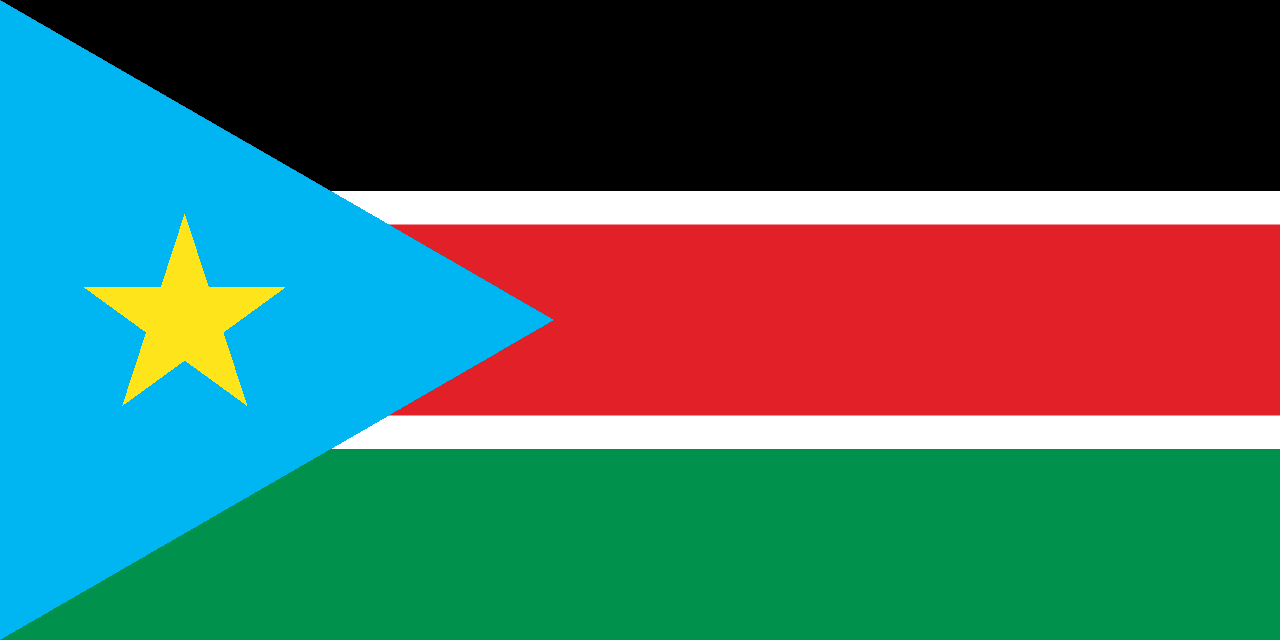
Think about a clinic where one person is the doctor, the records clerk, the pharmacist, and the planner, all at once. Now imagine that person has never used a computer, and every patient's history lives in a paper ledger that can be lost to rain, fire, or a looted cupboard. This is not a hypothetical in South Sudan. It is the daily reality at Warrap Primary Health Care Centre in Tonj North County, and it is the reality for millions of our brothers and sisters who were promised a nation and were handed a clinic with no electricity and no internet.
South Sudan has 7.9 health workers for every 10,000 people. The World Health Organization says a country needs at least 44.5 per 10,000 to reach universal health coverage. Do the arithmetic and the verdict is brutal: a nation of more than 11 million people is operating at less than a fifth of the minimum workforce required to keep its people alive. Who decided that a child in Tonj North should face that gap? Who decided that a mother should walk for hours to find a nurse who is already exhausted?
We have to say it plainly. This is a failure of leadership. It is not a failure of geography.
The Evidence Is Written on Paper
Consider what the WHO-backed rollout at Warrap PHCC actually revealed. The facility received a Digital Care Companion, a desktop computer, and Starlink connectivity. Until this year, every patient visit, every referral, and every health report was recorded by hand. The facility In-Charge, Joseph Gak, admitted he had never operated a computer before. He was worried he could not learn. He learned. Today he registers patients, documents consultations, tracks referrals, and generates reports that feed into planning.
Over three months, the team recorded 847 consultations for 785 patients. That works out to roughly 13 patients on a typical clinic day, with as many as 97 in a single week. Those are not vanity numbers. They describe a facility carrying a heavy load with thin staffing and no institutional memory beyond what fits in a register. Every one of those 847 visits is a person who was seen, diagnosed, and perhaps saved, and every one was previously at risk of disappearing into a paper archive that no ministry ever audited.
Now look at what the rollout depended on. A clinic in a country that sits on significant oil wealth needed an international agency to supply its computer and its satellite connection. The equipment is valuable. The training is commendable. But the fact that a basic digital record system arrives as a donor gift rather than a government line item is the scandal hiding in plain sight. South Sudan's government has repeatedly failed to fund the basics of its health system, and when it does spend, the money too often vanishes into the patronage networks that have shaped this country since independence in 2011.
We have watched this pattern before. A civil war that began in 2013 displaced millions and wrecked the institutions that might have carried the country forward. A peace agreement signed in 2018 was supposed to mark a turning point, yet the transitional timelines have slipped again and again, and the promised elections keep getting pushed back. Each postponement tells citizens the same thing: your vote can wait, your clinic can wait, your child can wait.
Why This Is Bigger Than One Clinic
Warrap PHCC is a story about a single facility, but the pattern it exposes runs across the continent. Africa has the world's fastest-growing population and some of its most fragile health systems. Where states have collapsed or hollowed out, the gap is filled by donors, NGOs, and increasingly by foreign powers that trade influence for access. Some of those partners build clinics. Others build ports, extract minerals, and sell weapons to the same governments that are supposed to protect their people. The common thread is that the African citizen is treated as a line item in someone else's strategy.
We reject that arrangement. Our health is not a favour from Geneva or Beijing or Abu Dhabi. It is the first duty of a government to its people, and every government that fails at it should be held to account by the people it governs.
The Abuja Declaration of 2001 committed African governments to spending at least 15 percent of national budgets on health. South Sudan, like many of our states, has missed that mark by a wide margin. Those are not abstract figures. They are the difference between a nurse with a salary and a nurse who walks away, between a stocked pharmacy and an empty shelf, between a patient record that survives and one that dies with a paper register in a flood.
What Works, and What Must Change
We do not need to invent solutions from nothing. Africa has proof that disciplined governance produces healthier citizens. Botswana, for all its challenges, built one of the continent's most respected public institutions and used its mineral wealth to fund schools and clinics rather than private bank accounts. Mauritius rose from a plantation economy to a middle-income success story through open markets, the rule of law, and investment in human capital. Rwanda's community health worker programme has drawn praise for reaching rural households, and that model deserves study, even as we condemn Kigali's war of aggression in eastern Congo, which is no less a crime for being carried out by a government with a strong health ministry.
What do these examples teach? Strong institutions beat good intentions. Transparent budgets beat secret ones. Independent audits beat ministerial promises. Predictable salaries keep trained workers in rural posts. Competition and private partnership can extend connectivity and supply chains when the state gets out of the way and enforces contracts.
South Sudan's government should publish health budgets in full and let parliament and civil society audit every dollar. It should pay health workers on time, every time, because a clinic cannot run on promises. It should expand training colleges for clinical officers and nurses and guarantee posts for graduates in the rural counties that need them most. It should bring digital records to every facility, but as a national system owned by the ministry, not a pilot project owned by a donor. Regional bodies, including the African Union and the East African Community, should tie health financing to governance benchmarks and refuse to pretend that elections postponed indefinitely are a democratic process. Private companies that provide connectivity, power, and equipment should be welcomed under clear rules that protect citizens from price gouging and monopoly.
The Call to Action
So here is what we demand. From the government of South Sudan: fund your clinics, pay your health workers, publish your budgets, and set a firm date for elections that you will not postpone again. From the African Union: stop issuing statements about health sovereignty and start enforcing the Abuja commitments on member states that ignore them. From the international partners who arrive with computers and cameras: help build institutions that outlast your projects, not dependencies that disappear when the grant expires. And from every citizen who has ever waited hours for a nurse who never came: organise, document, and speak. Ask your MP where the health money went. Ask your governor why the clinic has no power. Ask your president why a country this rich still counts its doctors on one hand.
Joseph Gak learned to use a computer because someone gave him the tools and the training. The question for South Sudan is whether its leaders will ever give their own people the one thing that matters most: a government that treats their lives as worth funding. Until they do, every new system and every new clinic will be a patch on a wound the state itself keeps reopening. Africa did not choose 7.9 health workers per 10,000 people. Our leaders did. It is time we made them choose differently.
Based on reporting by RELIEFWEB