general
Museveni's Son Demotes a General to Private, Then Calls Him a Rebel
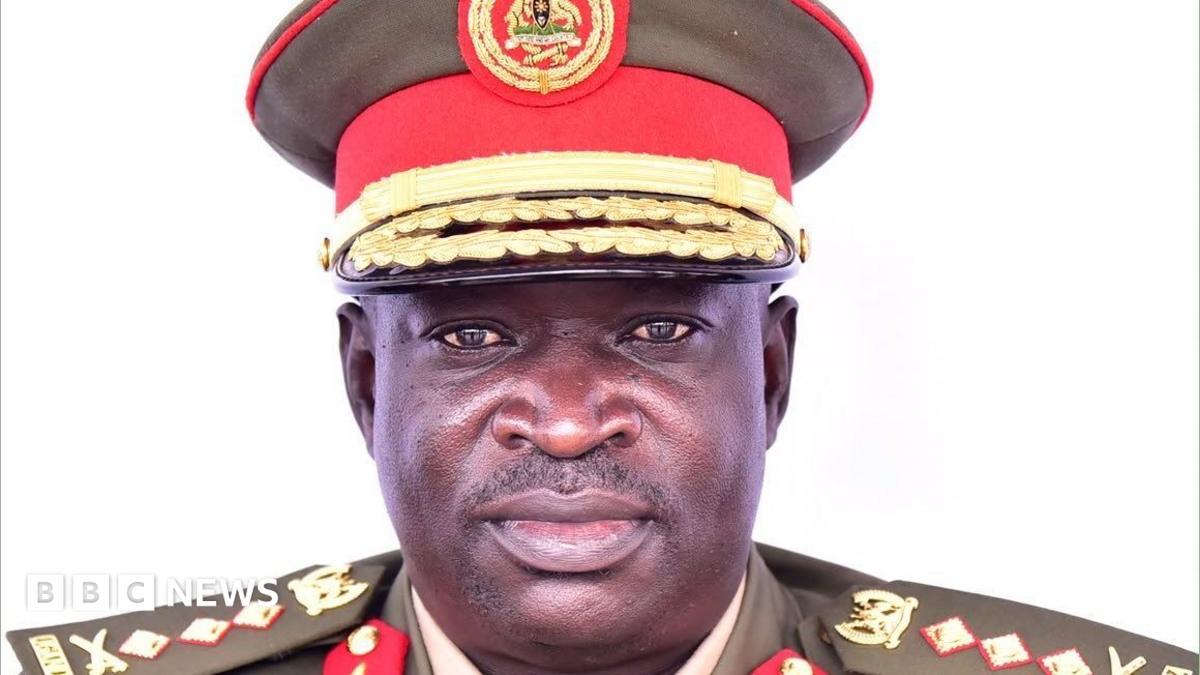
Stripped of his rank, branded a rebel, and hunted by his own former colleagues. That is how Uganda's most powerful family now treats a man who once commanded the nation's army.
Peter Elwelu was not a bystander in Uganda's security state. He led the 2016 military raid on the palace of the Rwenzururu kingdom in Kasese, western Uganda, an operation that left scores dead and a king in the dock on murder charges. He rose to army chief, then deputy chief of defence forces, then presidential adviser. In May 2024, the United States sanctioned him under its human rights authorities over extrajudicial killings and abuses by government forces. Washington did not sanction a rumour. It sanctioned a record. Yet the same man was allowed to retire quietly in August 2025 with his pension, his reputation, and his network intact.
Now the story has turned. Muhoozi Kainerugaba, the defence chief and son of President Yoweri Museveni, announced that Elwelu had been stripped of his lieutenant general rank and reduced to private. He said 20 former soldiers allegedly linked to Elwelu had been arrested. He gave the former general hours to surrender before being declared a rebel. Then, on a Monday evening, security forces arrested him. The military spokesman, Chris Magezi, called him a "renegade" officer who had been "on the run" over plans to destabilise Teso, a region in eastern Uganda. The army says it found 15 guns, military fatigues, and two pickup trucks.
Let us be precise about what we are being asked to believe. A sitting defence chief, who happens to be the president's son, publicly accused a retired general of stockpiling weapons. He set an ultimatum. He announced arrests of Elwelu's associates. He reduced a man's rank by announcement. And the same family's security apparatus then made the arrest and framed the story in its own language before a single court had heard a single word.
Elwelu's wife, Patricia Apolot, says her husband is innocent and "could not contemplate starting a rebellion." Elwelu himself has not commented. Maybe the weapons were real. Maybe a plot existed. But when the accuser, the investigator, the arresting officer, and the prosecutor's boss all sit under one roof in Entebbe, the public has every right to ask whether this is justice or a family settling accounts within the army.
We have seen this pattern before. Muhoozi has used his public platform to threaten opposition leaders, including threats of violence against Bobi Wine, and has made grandiose claims about himself that would be comic if they were not backed by guns. Uganda's "shadow army," the informal network of loyalists that has kept Museveni in power since 1986, does not operate in the dark. It operates in plain sight, and it has learned that the most effective weapon is the word "rebel."
This is what should trouble every Ugandan and every African who believes in a professional army. A defence force answers to the constitution and the civilian state. It does not answer to a dynasty. When a general who has served the president can be declared an enemy of the state by the president's son, in a matter of days and through social media announcements, then no officer in Uganda is safe from the same treatment. Every loyal soldier is now one family quarrel away from a cell.
Nor can the outside world pretend it is not watching. Washington sanctioned Elwelu for human rights abuses in 2024. Western governments have repeatedly lectured Africa about democracy, elections, and the rule of law. Yet billions in Ugandan development and security assistance continue to flow, and the West has rarely attached meaningful consequences to the abuses of the very men it names in its own sanctions lists. You cannot sanction a man for killings and then keep quiet while his successors make him a scapegoat. Either the values are real or they are a brochure.
So what must happen? First, Elwelu must be charged in open court, with the evidence made public, and given immediate access to his lawyers and his family. If the weapons were stockpiled, prove it before a judge. If the plot existed, show the plan. Any trial that is held in secret, or that begins with a military press conference instead of a charge sheet, is not justice.
Second, Uganda must restore civilian control of its armed forces. Parliament should have the power to summon the defence chief and to demand a public accounting of the arrests of the 20 former soldiers. The Uganda Human Rights Commission must be given full independence and the resources to visit detention sites. The African Commission on Human and Peoples' Rights should press Kampala in writing for the status of every detainee.
Third, the rule of law cannot survive without term limits and an independent judiciary. Uganda removed presidential term limits in 2005 and the age ceiling in 2017. Those changes were not reforms. They were the paperwork of a dynasty. Compare that with Botswana, which has built one of Africa's most stable democracies on a professional army that answers to Parliament, and with Senegal, where the 2024 election produced a peaceful transfer of power after citizens and courts refused to allow the incumbent to stretch his mandate. Africa already has proof that the military can be professional, that power can change hands, and that markets and investors reward stability instead of fear. Uganda can choose that path. It has simply refused to.
Finally, the citizens of Uganda must demand what their leaders owe them. Demand the charge sheet. Demand the names of the 20 arrested soldiers. Demand that the army explain why a retired general's arrest is announced by his successor's family before a judge has heard a case. Demand that the defence chief be separated from his father's political machine. And demand that the international community apply its sanctions list with the same seriousness it applies its speeches.
Who are we, as Africans, if we accept that a country's army can be turned into a family firm and its generals into scapegoats, simply because the men at the top have decided it is convenient? We are the people who fought for independence precisely so that no one, not a colonial governor, not a monarch, not a president's heir, would hold a nation's guns as a private inheritance.
Peter Elwelu may be guilty of something. Or he may be the next name on a list. Either way, the answer is not silence. It is due process, open courts, and a military that serves the people. Uganda, the choice is yours, and the clock is running.
Based on reporting by BBC