sahel-security
Sahel Juntas Have Turned Their Own Citizens Into Hostages
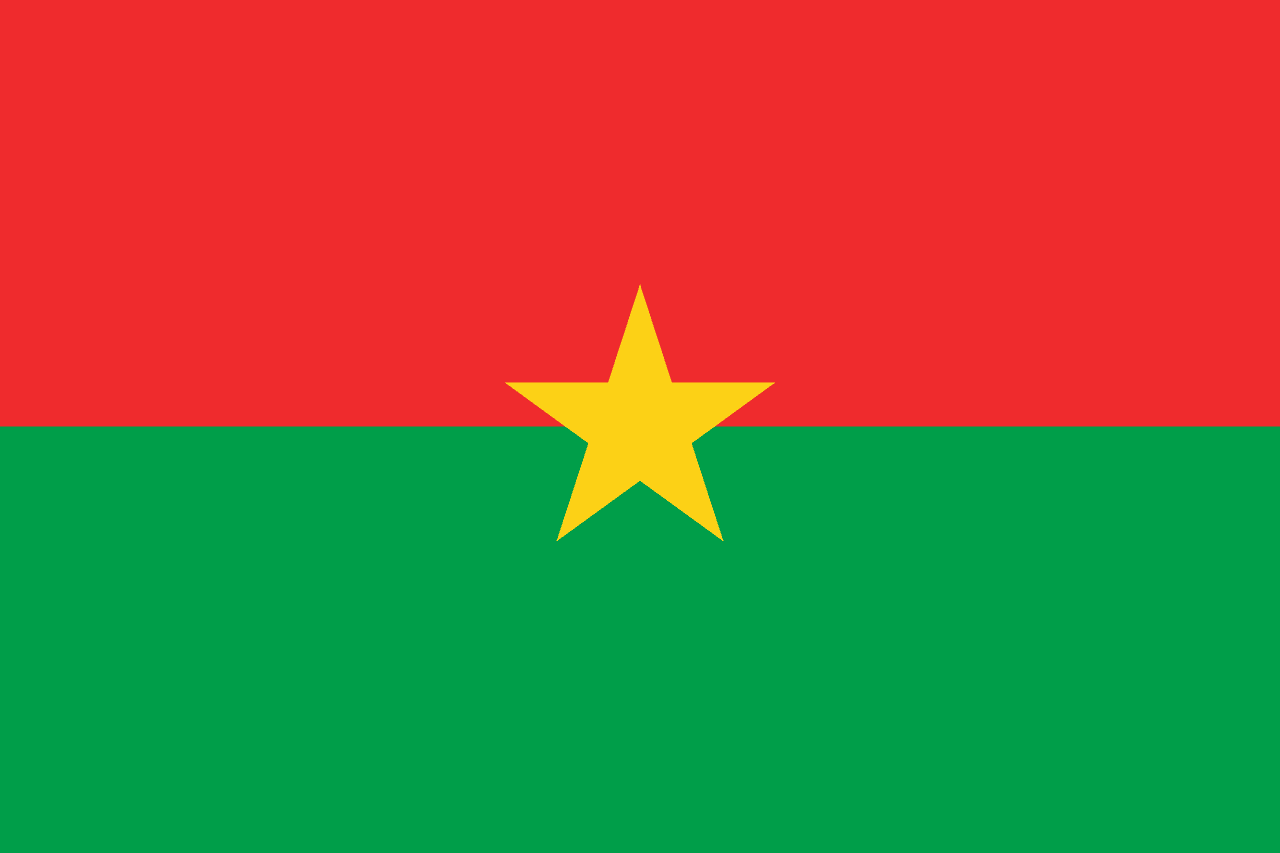
Ask a mother in northern Burkina Faso what her government has done for her this year, and listen to the silence. Ask a farmer near the Malian border why his fields lie empty, and he will tell you about the men with guns who came first from the jihadist groups and then from the soldiers who were supposed to protect him. The United Nations Office for the Coordination of Humanitarian Affairs has once again documented the Sahel's humanitarian collapse across Burkina Faso, Mali, and western Niger. What its reporting describes is not a natural disaster. It is a political catastrophe, built by men who took power in uniform and told us they were saving us.
We need to name them. Mali's Assimi Goïta, Burkina Faso's Ibrahim Traoré, and Niger's Abdourahamane Tiani have each seized power in a coup since 2020. Each promised to restore order, defeat terrorism, and restore sovereignty. Each has presided over a deterioration that would have ended any civilian government in a functioning democracy. Strip away the anti-French slogans and the rallies, and what remains is a simple ledger: more territory lost, more civilians displaced, more schools closed, and more people reduced to eating once a day.
Consider the displacement. Burkina Faso has become one of the world's fastest-growing displacement crises, with the UN tracking more than two million people uprooted from their homes inside the country. Mali and Niger have also seen hundreds of thousands forced to flee. Behind each of those figures is a family that walked away from land their grandparents farmed, carrying what they could on their heads. Many of them ended up in towns that are themselves under siege, where humanitarian convoys cannot reach and food prices climb beyond the reach of ordinary households.
The jihadist groups bear direct responsibility for much of the violence. Al-Qaeda's JNIM and the Islamic State's Sahel Province have massacred villagers, kidnapped teachers, and imposed blockades that starve whole communities. But the junta narrative that presents these groups as an external curse, unrelated to the governments in Ouagadougou, Bamako, and Niamey, does not survive scrutiny. These regimes dismantled the civilian institutions that might have held communities together. They expelled partners, silenced journalists, and turned counterterrorism into a justification for suspending the very freedoms that let citizens hold their rulers accountable. Where the state retreats and the army abandons its posts, the vacuum does not stay empty for long.
Look at Inata, in northern Burkina Faso, in November 2019. Jihadists overran a gendarmerie post where the soldiers had run short of food and water for days, killing dozens of them. That was a civilian government's failure, and it was condemned as one. Under the juntas, failures have multiplied while the leaders have grown more defensive, more authoritarian, and less willing to admit any mistake at all. A government that cannot feed its people has no business calling its critics traitors.
Then there is the foreign money and the foreign guns. Russia's Wagner Group, rebranded as the Africa Corps after its founder's death in 2023, now operates in Mali and has been deployed in Burkina Faso and Niger. Its contractors are paid in gold and mining concessions, and the Sahel's resources are flowing out while its people are going hungry. Turkey has sold armed drones that have struck civilian gatherings and militant targets alike, with civilian casualties documented in multiple investigations. Gulf states, Chinese mining firms, and Western partners all have their own stakes in the region's gold, uranium, and strategic corridors. The new scramble for Africa has more players than the old one, but the logic is the same: outside powers want what lies beneath the soil, and they do not much care who starves on top of it.
Let us be precise about what the West has done, too. France was expelled from Mali, Burkina Faso, and Niger, often with the enthusiastic support of crowds waving Russian flags. Some of France's failures were real, including its reliance on a military presence that made it a target. But the lecture from Paris and Washington about democracy rings hollow when their partners have spent years propping up regimes that ignored their own constitutions. We reject the idea that our continent must choose between a former colonial master and a mercenary army. Both are selling us a future we did not ask for.
So what should happen? The answer starts with the principles that built Africa's most stable states. Botswana has spent decades showing that resource wealth, managed through transparent institutions, a credible judiciary, and regular elections, can lift a nation out of poverty. Mauritius built a prosperous economy on property rights, rule of law, and open markets. Senegal, in 2024, demonstrated that a peaceful transfer of power through the ballot box is still possible in West Africa, even when the incumbent resists it. Ghana has repeatedly proven that alternation of power strengthens a state rather than weakening it. These are not perfect systems, but they are proof that the Sahel's current path is a choice, not a destiny.
The African Union must stop treating coups as an unfortunate administrative inconvenience. The AU suspended Mali, Burkina Faso, and Niger after their coups, and those suspensions must remain until constitutional order is restored with a credible electoral timetable and independent monitors. ECOWAS, having lost three members to the Alliance of Sahel States, should keep its doors open to dialogue but refuse to normalize military rule. The UN Security Council should press for unimpeded humanitarian access across all three countries, because no regime has the right to decide which hungry children are worth feeding. Donors should tie aid to measurable progress on transparency, human rights, and civilian protection, rather than writing blank checks to men who answer to no one.
Citizens have a role that no general can take from them. Demand a published timeline for elections, and ask every candidate for a plan to restore the courts, the free press, and the independent electoral commission. Support local civil society groups that document abuses and deliver food and medicine when the state fails. Refuse the false choice between jihadists and juntas, because both are feeding on the same silence.
Here is the question that must echo through every ministry in Ouagadougou, Bamako, and Niamey: when your people are starving, displaced, and afraid, what exactly are you protecting? Until the answer is elections, accountability, and an end to the foreign contracts that enrich generals while communities go hungry, the answer is nothing. We owe the Sahel's mothers, farmers, and children more than sympathy. We owe them a government that answers to them. Demand it, loudly, before another village is emptied and another silence is mistaken for peace.
Based on reporting by RELIEFWEB