acss-digest
Over 4,600 Congolese Dead and No Vaccine Approved for Their Strain
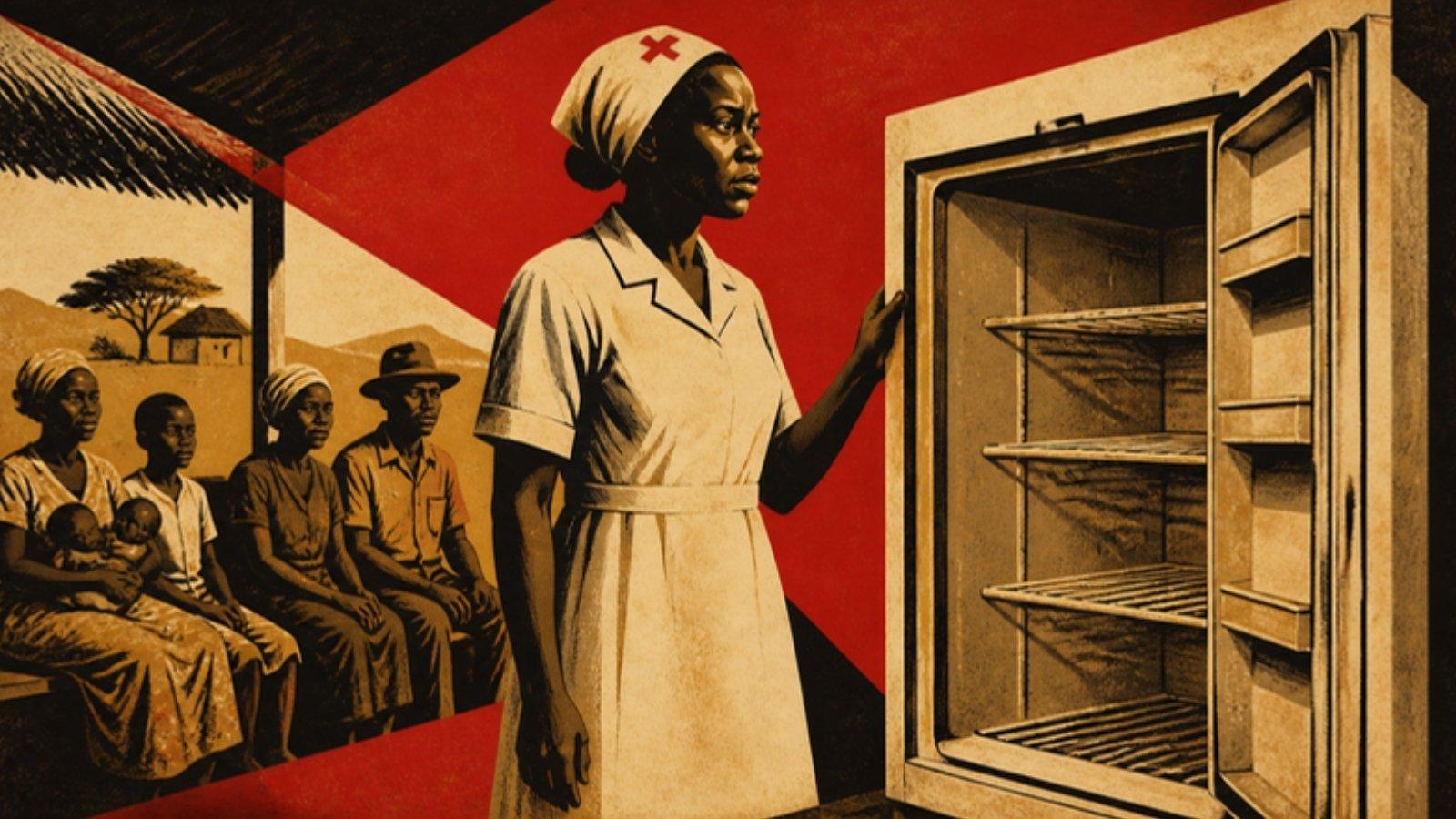
Read that again slowly. More than 4,600 Congolese men, women, and children are dead. Over 9,700 people have been infected. And for the Bundibugyo strain driving this outbreak, the medical world has no approved vaccine and no approved treatment. Not one. A mother in Ituri or North Kivu who watches her child bleed from the gums has nothing to offer her except prayer and a rumour about a trial.
On Friday, October 23, the first clinical trial of an Ebola vaccine in this outbreak finally began, according to the head of the World Health Organization. We should welcome it. But we must also ask the question that every African government, every donor capital, and every pharmaceutical boardroom has been avoiding: why did it take this long? Why was a strain that has killed people in Uganda and Congo before, most recently in Bundibugyo district in 2007 and in Isiro in 2012, still left without a shield when the next outbreak arrived?
The answer is not mysterious. The vaccine that protects people against the Zaire strain, the one that dominated the 2018 to 2020 North Kivu epidemic, was developed because the world decided that particular strain was worth the money. Bundibugyo was not. It killed fewer people historically, it attracted fewer dollars, and so it was left to the margins of the research pipeline. That was a decision. It was made in offices in Geneva, Washington, London, and Paris, and it was ratified by the silence of African health ministries that never demanded better. Those who decide which diseases deserve protection are, in practice, deciding which African lives are worth protecting.
Now look at where this is happening. The eastern provinces of DR Congo have been torn apart for more than a decade by armed groups, and since early 2025 the M23 rebellion has held major cities including Goma and Bukavu. The UN Group of Experts has documented the Rwanda Defence Force operating inside Congolese territory in support of M23, in reporting that includes S/2025/446. Kigali calls this a local rebellion. Congolese civilians call it what it is: a war in which their country's own state can no longer guarantee a safe road to a clinic. When health workers cannot cross a checkpoint without fear, when contact tracers cannot reach villages without a guide who knows which militia controls the hill, the virus does not need a weapon to spread. War gives it a head start.
Every Ebola outbreak runs on the same three fuels: distrust, displacement, and delay. Conflict generates all three. The 2018 to 2020 North Kivu outbreak, which killed more than 2,200 people, was prolonged by attacks on treatment centres and by communities that fled into the bush rather than trust the response. We were told then that the lessons had been learned. Here we are again, with a bigger outbreak, a rarer strain, and the same bloody geography. Anyone who claims this is only a medical emergency is either naive or lying to protect someone.
And let us be honest about the state of the money. The Abuja Declaration of 2001 committed African governments to spending at least 15 percent of their national budgets on health. DR Congo, a country of more than 100 million people with some of the richest mineral deposits on earth, has never come close to that target. Cobalt from Katanga powers the batteries in the phones and electric cars that Europe and America celebrate as the future. Coltan from the Kivus sits in the circuit boards of the same devices. The wealth is extracted, shipped, and monetised abroad, while the clinics in Ituri run out of gloves. Ask yourself: how is it possible that a country supplying the world with its most valuable minerals cannot afford enough isolation beds for its own people?
Look at what works. When Senegal confronted its single Ebola case in 2014, it traced contacts, isolated the patient, and contained the threat quickly, with strong public health institutions and a government willing to communicate openly with its people. Nigeria stopped its 2014 outbreak in Lagos through disciplined surveillance and coordinated action by public and private partners. These are not miracles. They are the product of competent institutions, transparent reporting, and money spent before the crisis rather than after it. Botswana and Mauritius prove the same principle in economics: rule of law, independent courts, and clean budgets produce prosperity and resilience. Africa does not lack examples of excellence. It lacks governments willing to replicate them everywhere.
So what must happen now? First, the African Union and the Africa Centres for Disease Control should press for a binding commitment that no African population is left without access to countermeasures for a known pathogen. The African Medicines Agency, established by treaty in 2019 and based in Kigali, must be funded and staffed so that it can approve and authorise vaccines on the continent without waiting for Brussels or Washington to finish their paperwork. Second, the Africa Vaccine Manufacturing Accelerator, launched to build local production capacity, must be given the mandate and capital to develop Bundibugyo countermeasures alongside the global research pipeline. A continent that produces less than one percent of the vaccines it uses is a continent that will keep being told when it can be saved.
Third, the UN Security Council must stop treating the eastern Congo as a diplomatic football. A ceasefire that is violated every week is not a ceasefire. Any agreement must include humanitarian corridors that guarantee the safe movement of health workers, and sanctions must follow the officials, in Kinshasa, Kigali, and any foreign capital, who obstruct them. Fourth, the Congolese government must publish real-time case data, protect its health workers with clear legal immunity and pay them on time, and stop diverting health budgets to patronage networks. Good governance is not a luxury. In an outbreak, it is the difference between a contained cluster and a national catastrophe.
To the donors who will soon hold press conferences praising the trial: your money is welcome, but your credibility is not automatic. You lecture African governments about democracy and accountability every single year. Prove that you mean it. Publish the contracts. Fund local health institutions directly. Stop routing aid through consultants who spend half of it on flights.
And to our fellow citizens across this continent: this is your concern too. Ebola does not respect borders, and neither does the neglect that allowed it to grow. Call your MP. Ask your health minister what your country would do if this outbreak crossed into your city. Demand that your budget reflect the 15 percent you were promised. Share this article with someone who still thinks Congo's crises are somebody else's problem.
Over 4,600 Congolese are dead. That is not a statistic. Each one was someone's child, someone's parent, someone's neighbour. We owe them more than a trial that started too late. We owe them governments that protect their lives before the body count arrives. Demand it. Loudly. Starting today.
Based on reporting by ACSS-EMAIL